


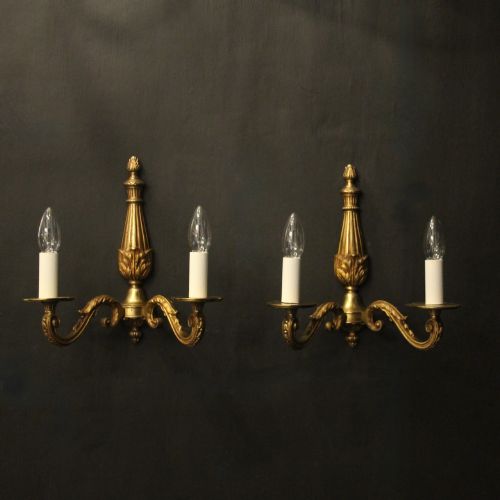
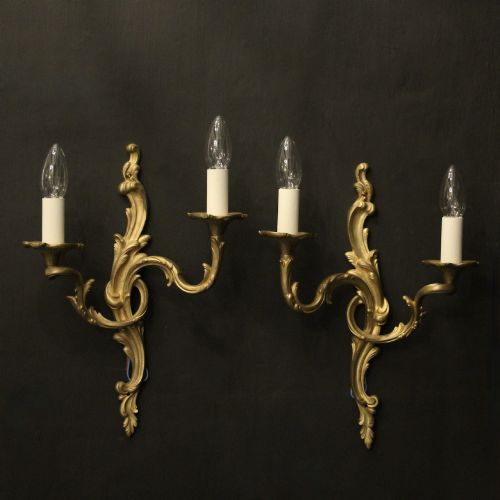

Brass Twin Sconce
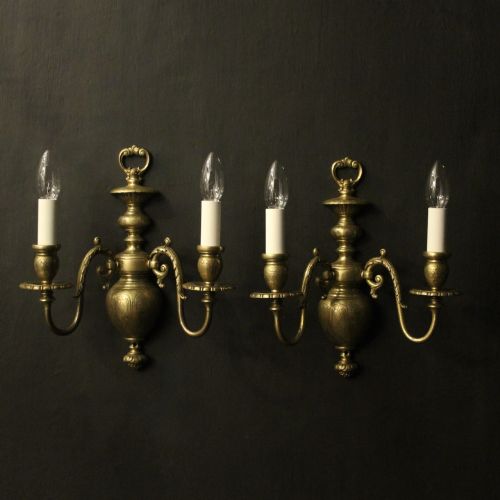
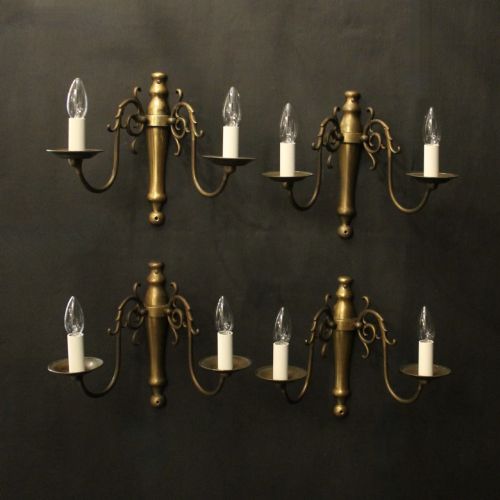
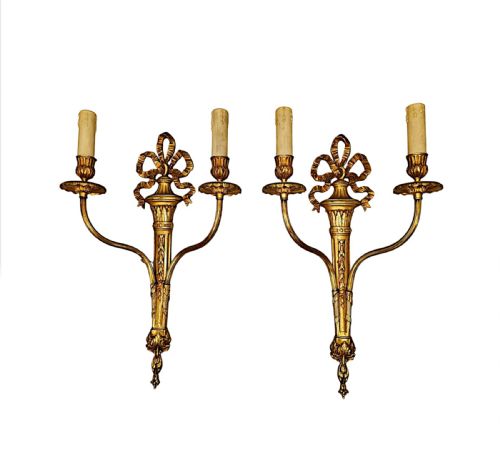
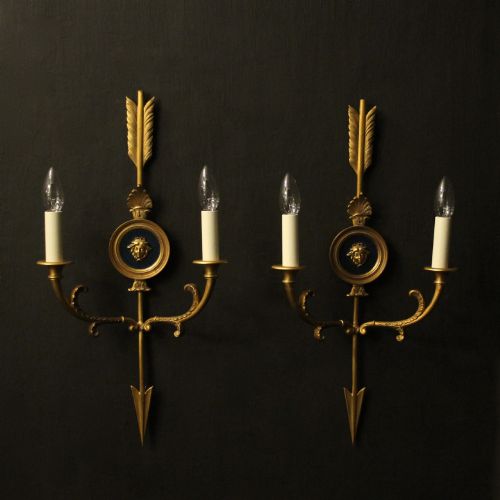
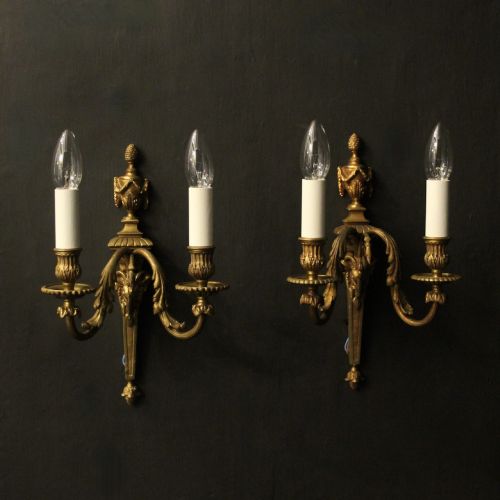
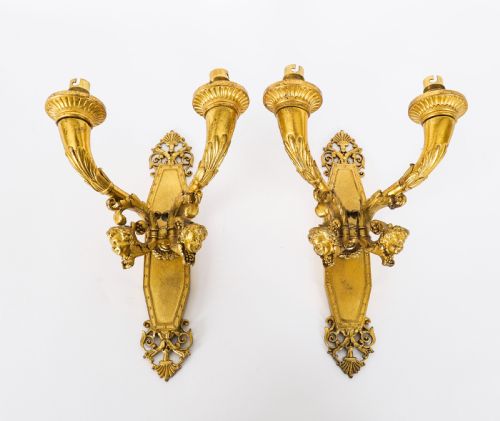
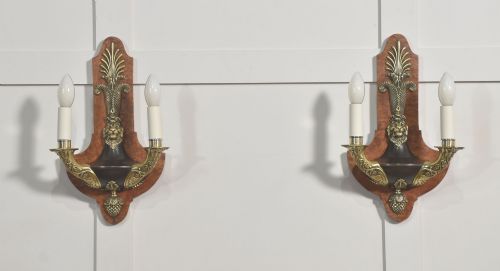
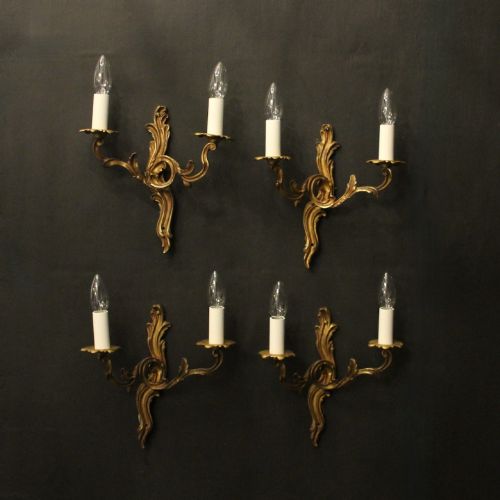
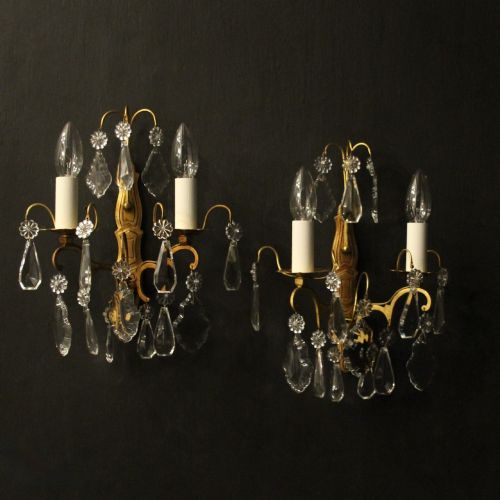
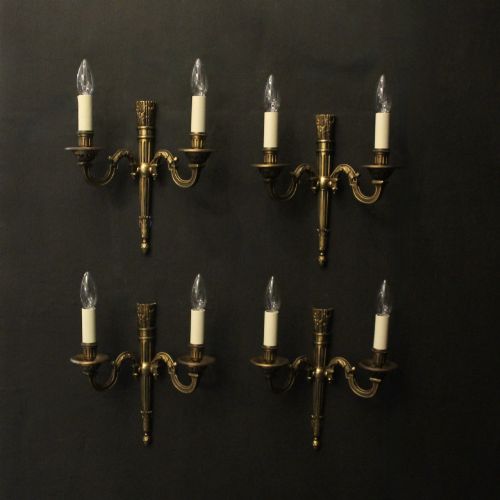
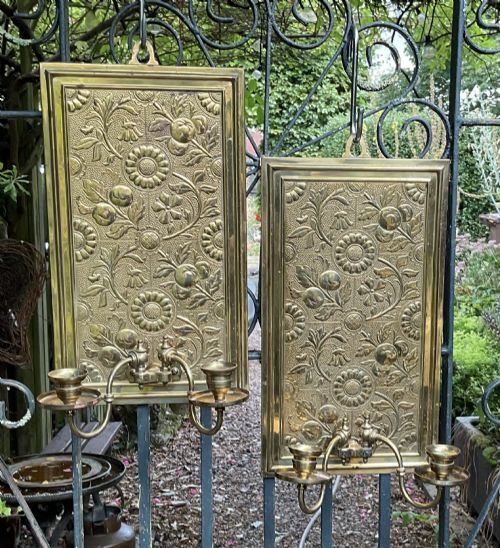
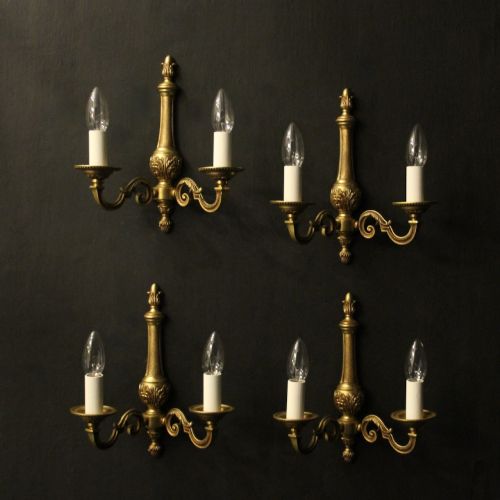
These brass twin sconce fixtures bring dual-armed candle or electric illumination to period interiors.
Brass Twin Sconce
English examples also appear alongside continental work, often rendered in simpler bronze or silvered brass rather than heavy gilding. Buyers encounter both candle-adapted configurations and mid-century electric conversions.
Materials and Making
Foundry cast brass forms the structural backbone for the majority of these fixtures, often enhanced with fire-gilding or ormolu finishes. Bronze and metal variations also emerge, utilising traditional casting techniques to shape intricate scrollwork and ribbon motifs.
Gilded bronze and gilt brass surfaces reflect period preference for rich, reflective metalwork that amplified candlelight. Secondary materials such as crystal drops and burr walnut occasionally integrate into the brass armatures to add textural contrast.
Brass Twin Sconce Retail Price Guide 2026
Typical asking prices for brass twin sconce among the pieces listed under this phrase on Sellingantiques today, from the lower quarter to the upper quarter. They describe what is for sale here now, not the wider market.
A pair of sconces featuring green enamel alongside brass proves that mid-century tastes loved a pop of colour.
Assessing Quality
The refinement of the casting defines the upper tier of these pieces, separating sharp, hand-chased foliage from soft, generalized forms. Superior examples retain crisp detail in floral garlands, cherubs, and rocaille scrollwork.
The depth and application of the original gilding or ormolu further distinguish finer workshops from mass production. Complete matching sets and intact original components elevate a fixture's integrity.
Bruce Talbert·Casier·F & C Osler
The Brass Twin Sconce Glossary
- Ormolu
- Gilded bronze produced by applying a mercury-gold amalgam to a bronze base and heating it until the mercury vaporised. This French technique created a durable, rich golden surface found on finer nineteenth-century sconces.
- Rococo
- A decorative style characterised by asymmetrical curves, C-scrolls, and naturalistic plant motifs. It appears frequently on French wall lights from the nineteenth and early twentieth centuries.
- Neoclassical
- A revival style drawing on classical Greek and Roman motifs such as urns, swags, and symmetry. Pieces in this idiom display disciplined geometry rather than exuberant curves.
- Backplate
- The flat or shaped metal section that fastens directly to the wall and supports the branching arms of the sconce. It serves both structural and decorative purposes.
Brass Twin Sconce: Frequently Asked Questions
How were brass twin sconces originally used?
These fixtures functioned primarily to illuminate hallways, drawing rooms, and dining spaces by holding two wax candles or tapers. Positioned alongside mirrors or paintings, they maximised the available light through reflection.
Over time, many of these wall lights underwent conversion to electricity to suit modern domestic requirements. Original candle pans and sockets often remain visible beneath twentieth-century wiring.
Are these wall lights wired for modern electricity?
Many surviving examples have been rewired for contemporary electrical standards, while others retain their historic conversion fittings. Buyers should inspect the listing details to confirm whether a fixture arrives ready for installation.
Professional rewiring ensures the internal components meet current safety expectations without compromising the antique metalwork. Qualified electricians should handle the final wall mounting.
How do I distinguish French styles from English ones?
French pieces frequently display elaborate gilt bronze or ormolu casting with distinct Rococo, Empire, or Neoclassical motifs. They often feature ribbons, cherubs, and complex scrolling arms produced in Parisian workshops.
English variants tend toward restrained bronze or silvered brass constructions, reflecting the aesthetic preferences of the Arts and Crafts movement or Edwardian period. Their backplates are often simpler and more utilitarian.
Can I buy matching sets of wall sconces?
Matching sets ranging from pairs up to sets of six appear regularly across nineteenth and twentieth-century inventory. These larger groupings usually originated in grander salons or dining rooms where uniform lighting was essential.
Pairs remain the most common configuration for residential placement beside mantelpieces or doorways. Sets larger than pairs offer cohesive illumination for extended wall spaces.