

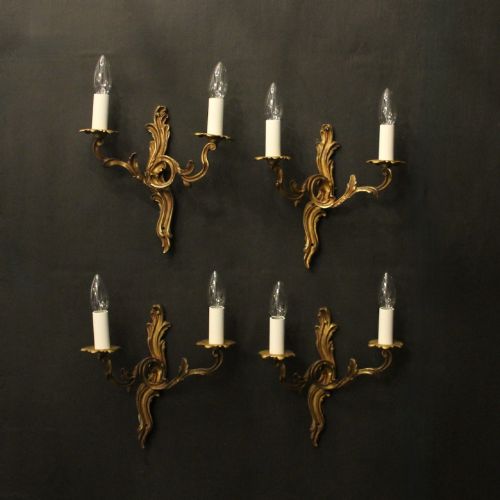
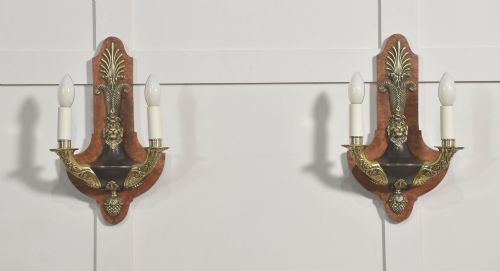
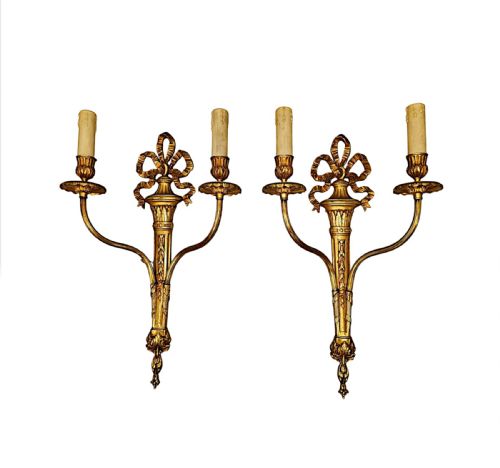
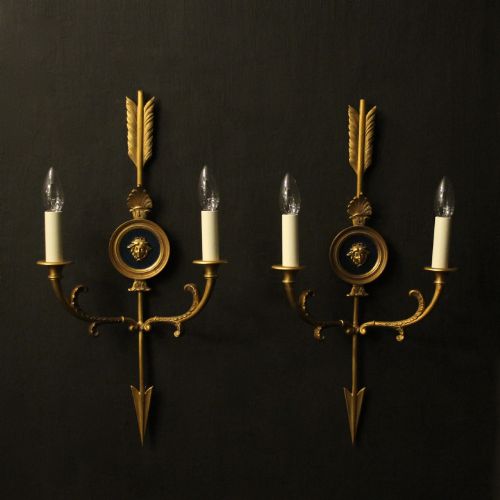

Brass Twin Lights
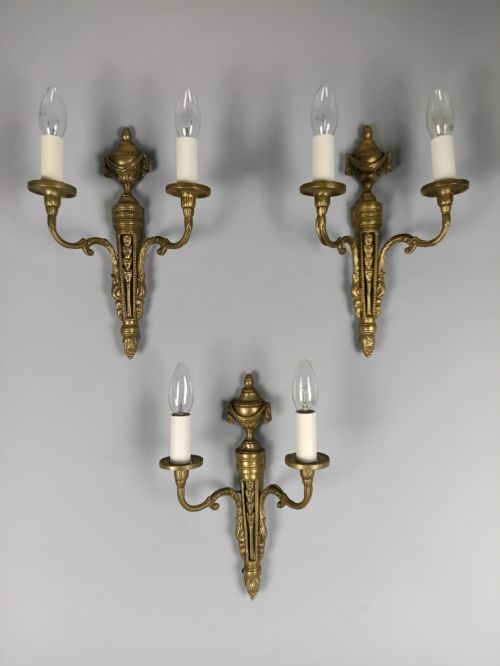
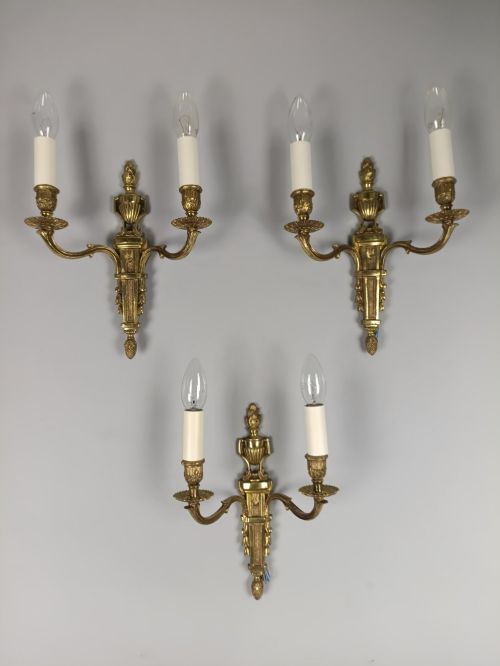
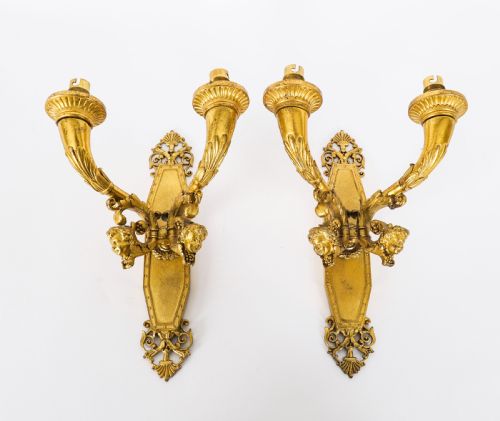
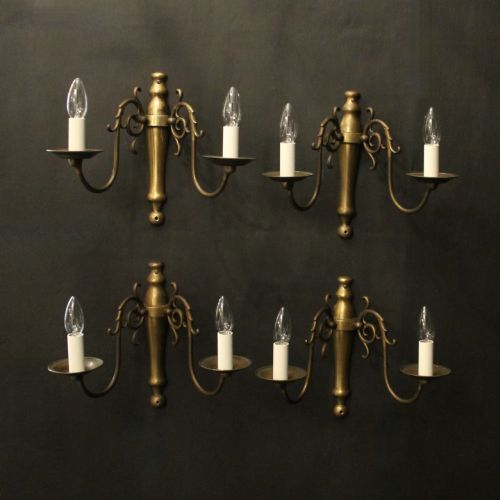
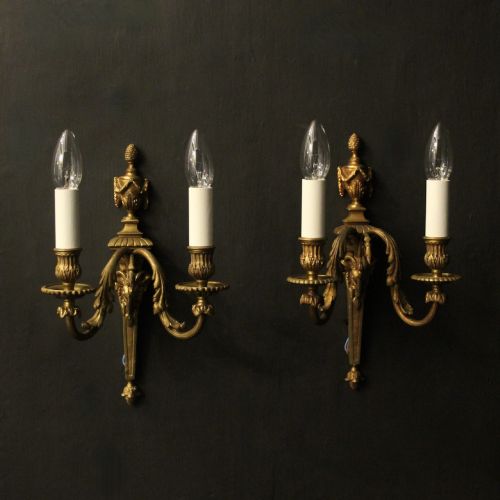
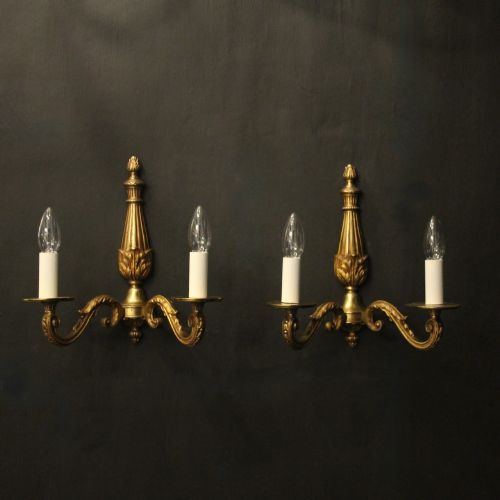
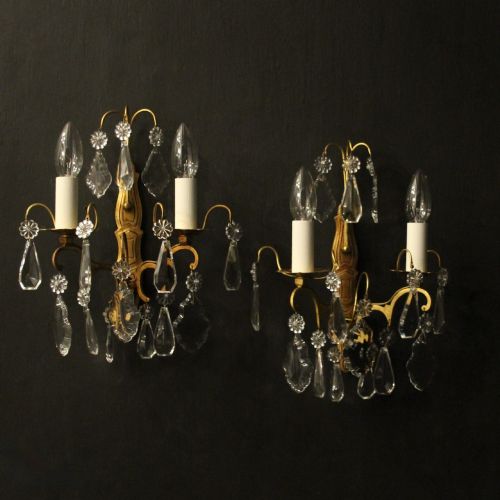
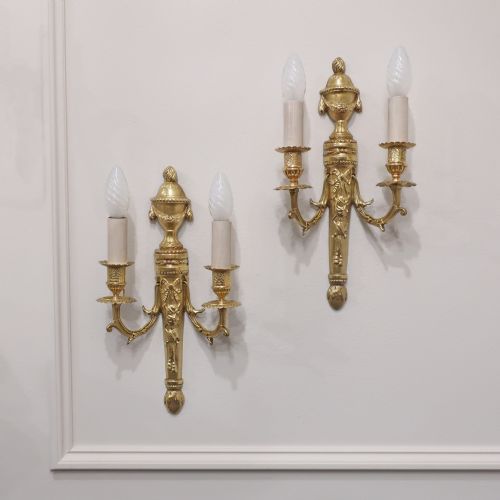
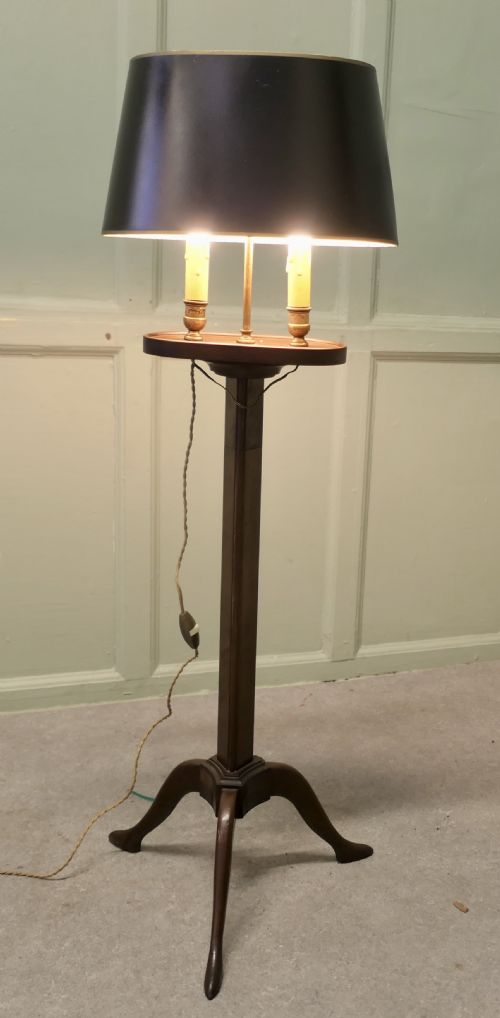
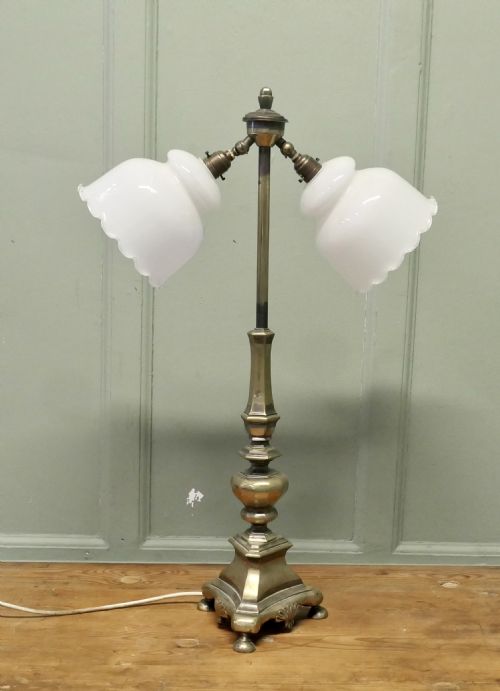
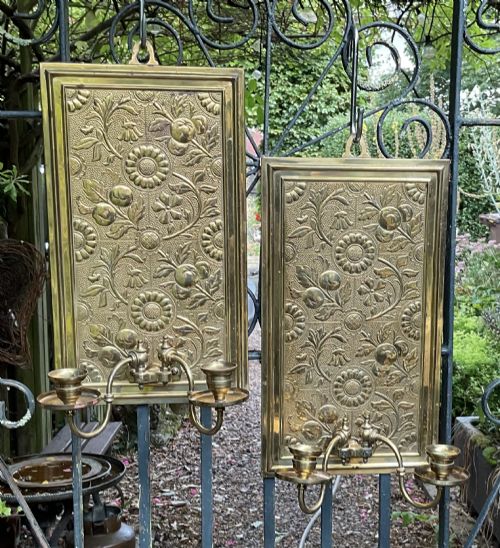
Brass twin lights offer dual illumination in brass, bronze, and gilt metal, bringing period character and warm metallic reflection to interior walls and desks.
Brass Twin Lights
Brass twin lights encompass dual-branch wall lights, sconces, bouillotte lamps, and student lamps produced across the nineteenth and twentieth centuries. These fixtures provide paired arms or burners designed to spread light evenly across a room or workspace.
The selection on this page leans heavily toward French and English manufacture, spanning Victorian, Edwardian, and interwar periods. Buyers frequently encounter matched pairs or sets of four in gilded finishes alongside functional desk and reading lamps.
Forms range from ornate rococo revival wall lights adorned with ribbons and crystal to utilitarian adjustable student lamps. Each piece reflects the lighting technology and interior fashion of its specific decade of origin.
How they were made
Manufacturing methods rely heavily on cast brass, bronze, and ormolu, often enhanced through fire-gilding or applied surface gilding. Metal components are frequently paired with contrasting materials such as green toleware shades, ceramic bases, hand-blown glass, and burr walnut.
Many wall lights and lamps incorporate articulating joints, adjustable stems, or twin candle branches assembled from multiple cast and turned parts. Surface decoration involves chased detailing, relief ornamentation in French neoclassical or rococo styles, and ribbon motifs.
Brass Twin Lights Retail Price Guide 2026
Typical asking prices for brass twin lights among the pieces listed under this phrase on Sellingantiques today, from the lower quarter to the upper quarter. They describe what is for sale here now, not the wider market.
Listings span from the nineteenth century through the 1950s, featuring materials such as ormolu, gilt brass, bronze, and toleware.
What varies in quality
Quality rests in the crispness of the casting and chasing, where sharper relief work on acanthus leaves, ribbons, and rococo scrolls separates finer pieces from softer, more generalized production. The weight of the metal and the depth of the gilding or bronze patina also dictate the visual presence of a fixture.
Originality of components, including matching bobeches, authentic toleware shades, and intact glass elements, elevates a piece. Structural integrity in the arm joints and candle branches ensures the fixture maintains its balance and symmetry when mounted or placed.
Casier·Bruce Talbert
The Brass Twin Lights Glossary
- Ormolu
- Finely ground high-carat gold applied to a bronze or brass base using mercury amalgamation. This technique creates a durable, warm metallic lustre characteristic of luxury French decorative objects.
- Bouillotte lamp
- An adjustable desk lamp featuring a central metal shade, usually green toleware, positioned above two or more candle arms. It originates from the French card game of the same name.
- Bobeche
- A small collar or drip pan fitted below a candle nozzle to catch melting wax. They are frequently removable for cleaning and can be made of glass, metal, or porcelain.
- Rococo revival
- A nineteenth-century design movement inspired by the asymmetrical curves, C-scrolls, and naturalistic plant motifs of the mid-eighteenth century. It appears frequently in ornate wall light castings.
- Toleware
- Enamelled and painted sheet metal used to form lamp shades and canisters. The painted surfaces often feature hand-gilded borders or decorative motifs.
Brass Twin Lights: Frequently Asked Questions
How do I mount brass twin wall lights?
Most antique wall lights attach via a backplate secured directly to wall studs or a standard electrical junction box.
Professional installation is recommended to support the weight of cast bronze or brass fixtures and to ensure safe internal wiring.
Can I use modern bulbs in these lamps?
Many of these fixtures accommodate standard modern Edison screw or bayonet bulbs, though some retain original candle-sized fittings or require specific small-cap lamps.
Check the lampholder type carefully before installation to match the correct wattage and voltage limits.
How do I clean gilded brass safely?
Dust surfaces gently with a soft, dry microfibre cloth to remove daily buildup without disturbing the underlying metal finish.
Avoid chemical polishes, abrasive cloths, and water, as these can strip thin layers of gilt or antique bronze patination.
Were these lights originally electric?
Earlier examples were designed exclusively for candles or oil burning, and were subsequently converted to electricity during the twentieth century.
Wiring is typically updated during restoration to meet current safety standards while preserving the original metalwork.