
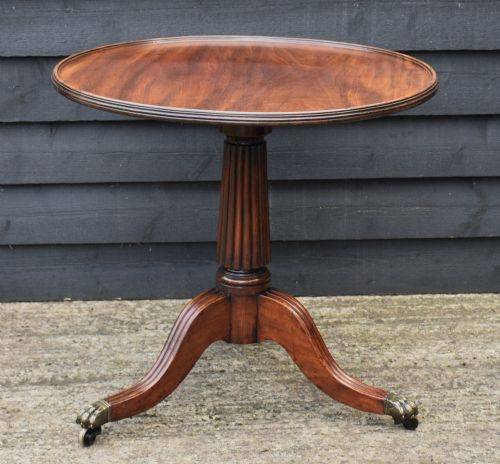
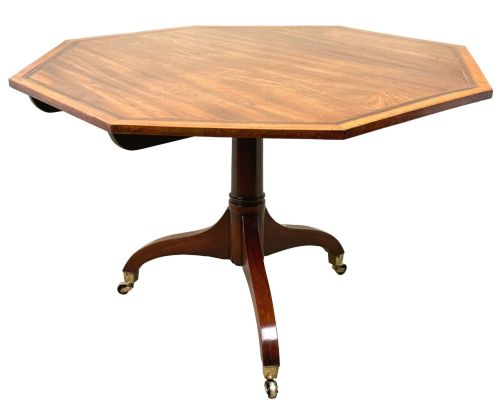
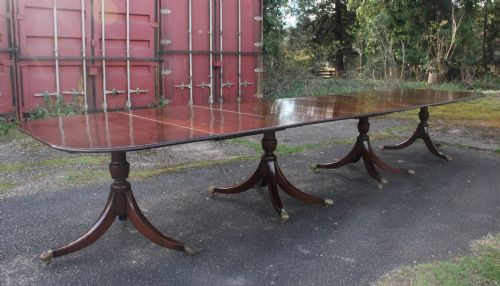
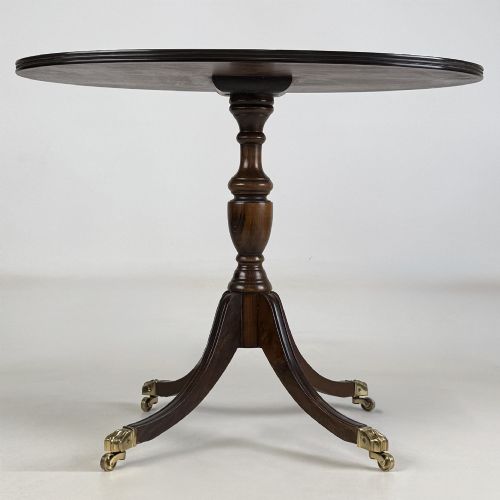

Brass Tripod Table
A brass tripod table brings together sturdy metalwork and flexible three-legged proportions, offering a stable surface with historical character.
Brass Tripod Table
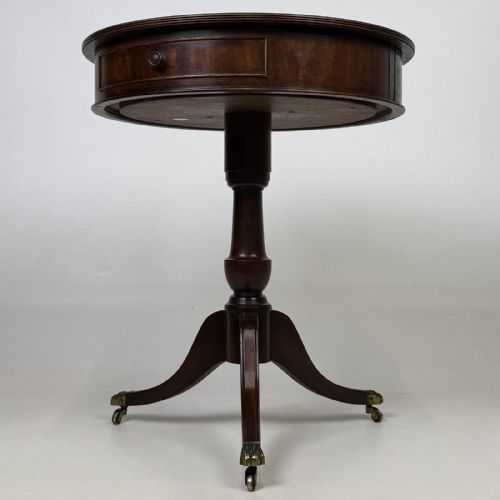
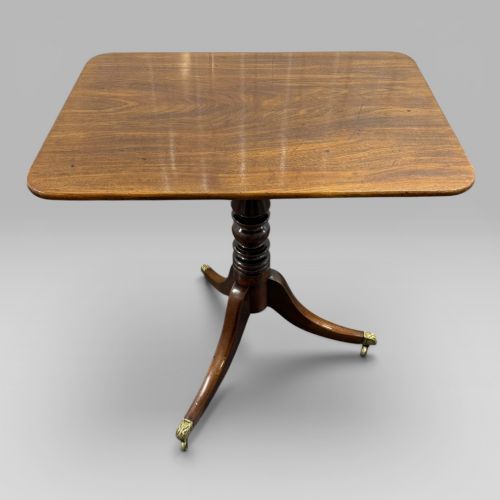
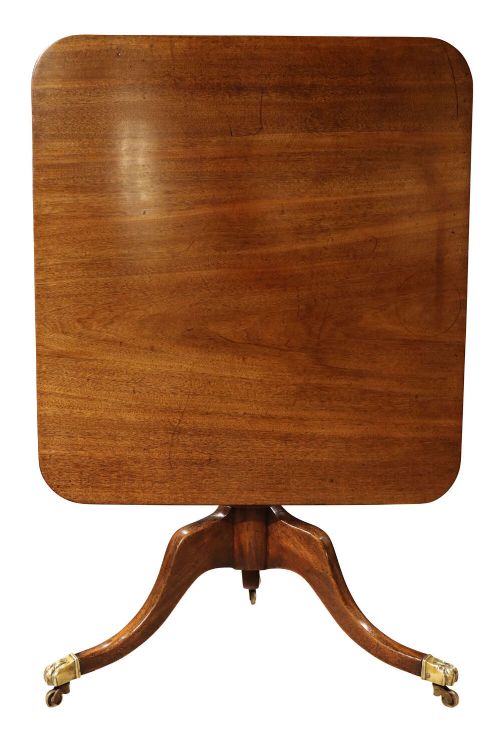
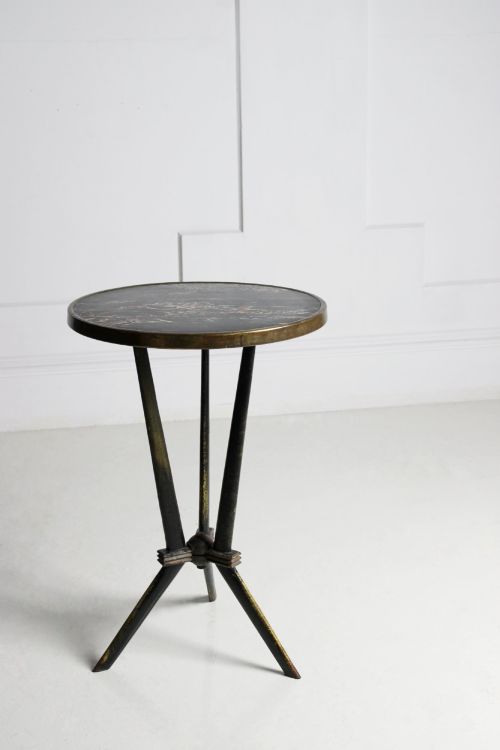
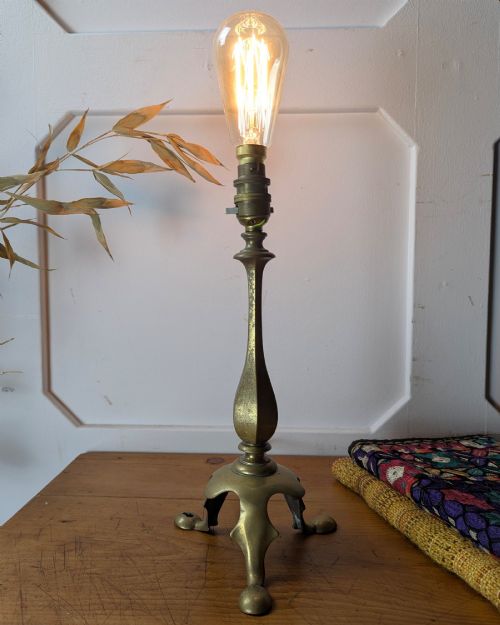
When you search for a brass tripod table, you encounter a distinct mix of structural metal supports and occasional tables featuring brass mounts, inlays, or cast tripod bases. The selection bridges formal mahogany and rosewood examples with brass accents from the Georgian and Regency eras alongside later cast brass lamp stands and gueridons.
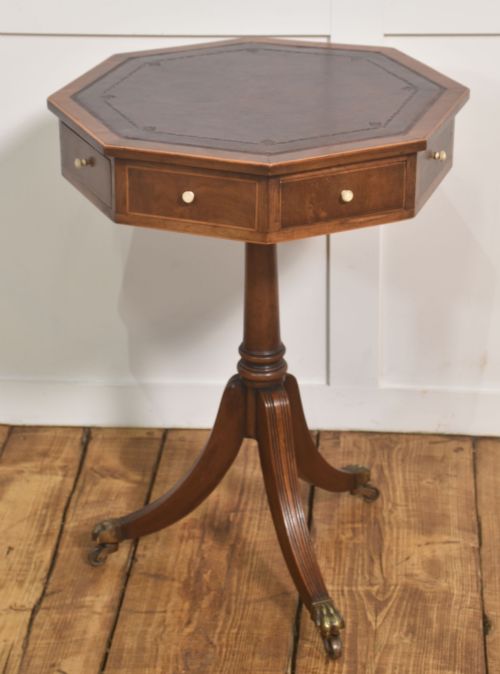
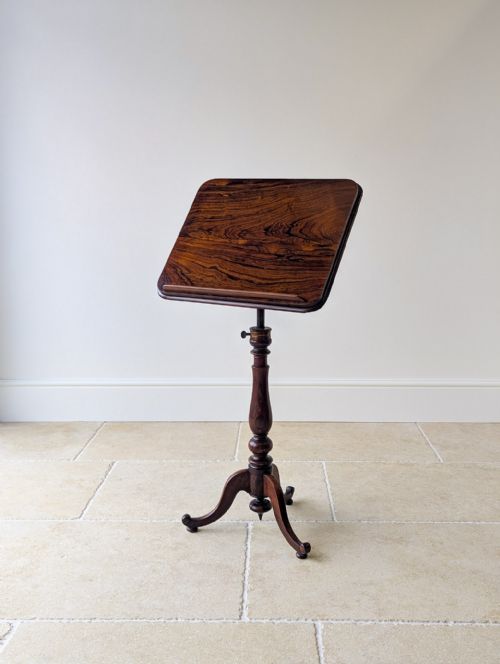
The pieces appearing on this page span centuries of design, covering the Georgian, Regency, and Victorian periods as well as early twentieth-century Arts and Crafts examples. Forms range from revolving tea tables and occasional stands to adjustable lighting supports and miniature tripod novelties.
Makers and designers working in these styles utilised three-legged supports to prevent wobbling on uneven floors, a practical feature that persists across centuries of domestic furniture and lighting.
How they were made
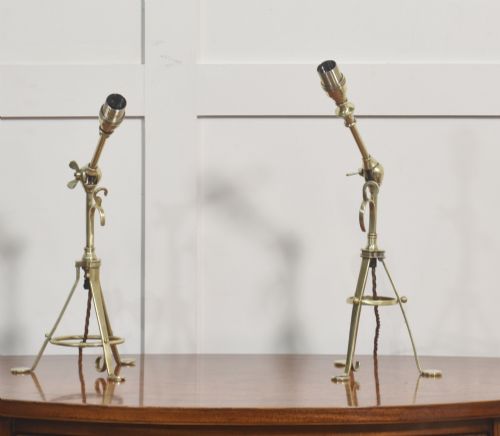
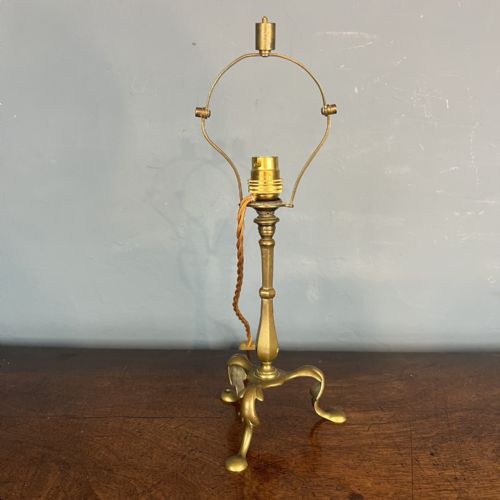
Craftsmen built these items using heavy cast brass for adjustable lamp standards and trivets, often combining solid brass components with turned mahogany, rosewood, walnut, or burr oak for table tops and columns.
Finer examples incorporate brass stringing, ormolu mounts, and cast brass paw feet or casters to accent rich timbers like amboyna and rosewood.
Structural stability relies on the three-legged tripod base configuration, joined either through traditional woodworking joints or metal collars and screws in lighting and telescopic stands.
What varies in quality
Quality rests on the crispness of the casting in metal components and the selection of timber veneers on the top surface. Heavy, solid brass elements and finely reeded sabre legs indicate superior manufacture.
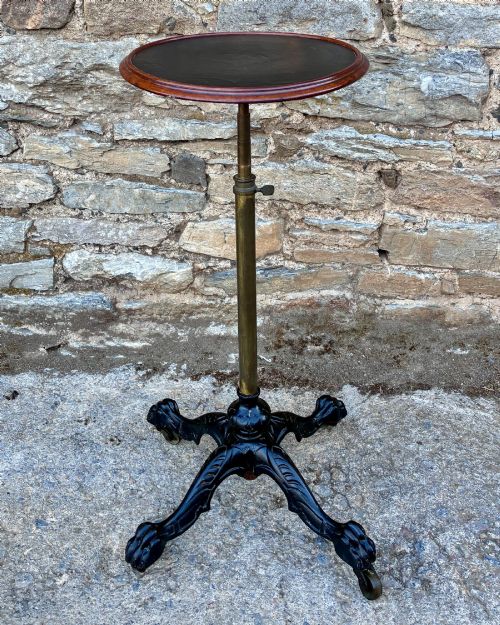
The integrity of mechanical adjustments, such as tilting mechanisms, telescopic risers, and revolving tops, separates standard production from finer workshop output.
W.A.S. Benson·Faraday & Sons·R. Adie Liverpool·C Winn·George Bullock·Gillow's
The Brass Tripod Table Glossary
- Tripod base
- A three-legged support structure designed to maintain stability on uneven floors. This configuration appears on tables, stands, and telescopic lamps throughout the periods.
- Tilt-top
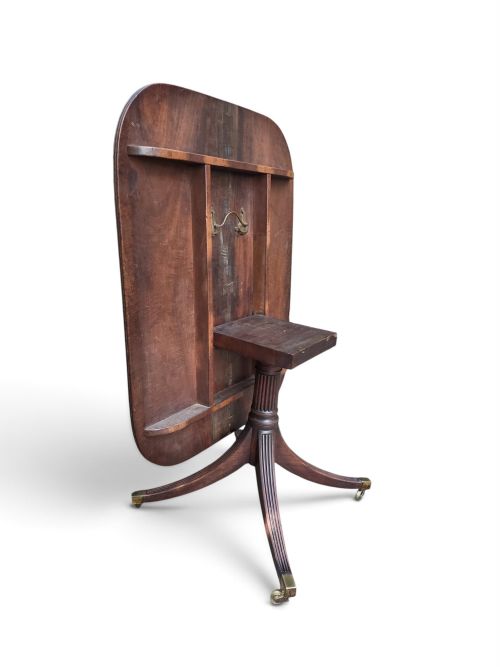
- A hinged table top that folds vertically when not in use to save space. This mechanism is frequently found on Georgian and Regency occasional tables.
- Ormolu
- Gilt bronze or brass applied as a decorative mount. Makers used it extensively on neoclassical and Regency furniture.
- Gueridon
- A small occasional table, often round and supported by a central column or figures. The form originated in France and frequently incorporates marble or glass tops.
- Brass stringing
- Inlaid thin lines of brass set into the wood surface of a table top. This technique defined many Regency rosewood pieces.
Brass Tripod Table: Frequently Asked Questions
What is a brass tripod table?
A brass tripod table typically refers to a piece featuring a three-legged metal support or a wooden table with prominent brass mounts, inlays, or cast feet.
These items range from small occasional tea tables and tilt-top designs to adjustable reading stands and floor lamps.
How were they used historically?
Such tables served flexible roles in domestic interiors, functioning as movable surfaces for tea service, reading, or holding lighting.
Their lightweight three-legged construction allowed occupants to reposition them easily near firesides or windows as daylight shifted.
How do I care for rosewood and brass?
Rosewood surfaces benefit from periodic application of appropriate furniture wax to preserve the grain and prevent the timber from drying out.
Brass components can be dusted gently with a soft cloth, avoiding aggressive metal polishes that strip historical patination.
How can I tell a Regency piece apart?
Regency items often display classical restraint, featuring dark timbers like rosewood contrasted with bright brass stringing or ormolu mounts.
Look for specific details such as reeded sabre legs and revolving table tops supported by a central turned column.