

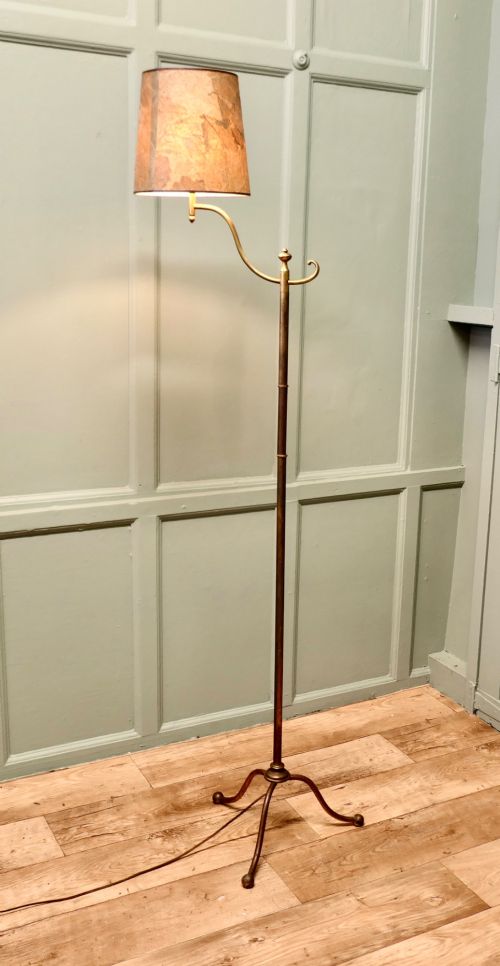
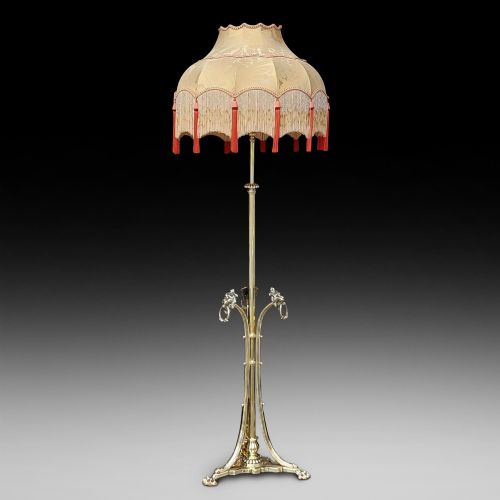
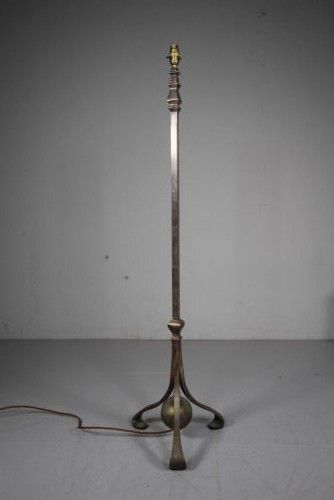
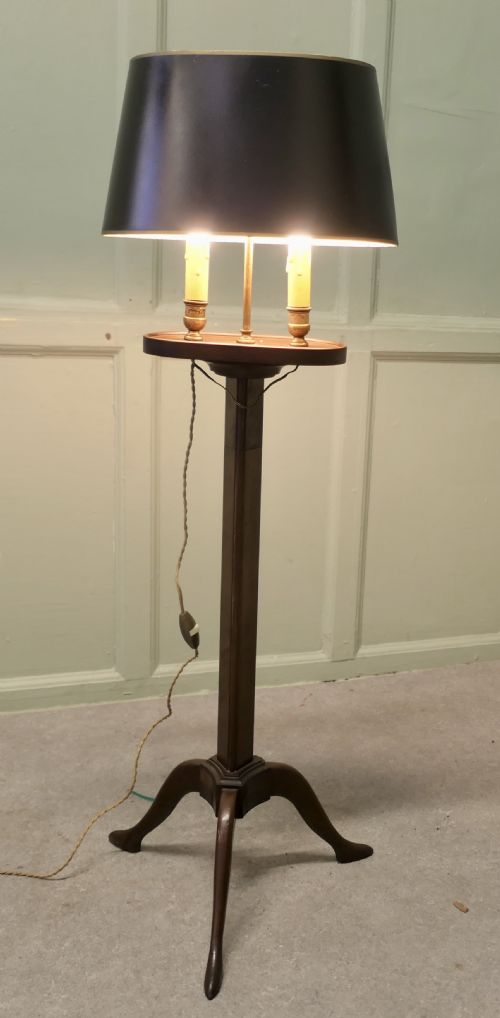
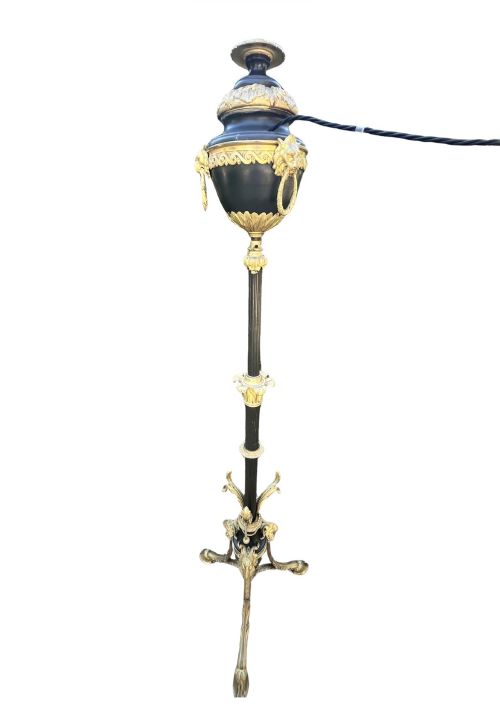


Brass Tripod Floor Light
A brass tripod floor light brings steady, warm illumination to a room, combining practical height adjustment with enduring metalwork.
Brass Tripod Floor Light
A brass tripod floor light stands on three legs, offering a stable and adjustable base for interior illumination. These pieces bridge the gap between functional room lighting and decorative metalwork.
You will most commonly encounter examples dating from the Victorian and Edwardian periods, alongside Arts and Crafts and Art Nouveau designs. Many originate as standard oil lamps or telescopic uplighters later converted for electrical use.
Forms vary from simple upright standards to sophisticated telescopic columns paired with fabric shades or opaline glass. Makers utilised the natural strength of brass and copper to create sturdy tripod frames that support considerable height.
Materials and construction
Makers built these lamps primarily using solid brass and copper, sometimes incorporating mahogany, glass, or onyx elements for contrast and weight. Metal components were cast, spun, or hammered by hand depending on the prevailing style.
Telescopic mechanisms allowed users to alter the height of the standard using sliding brass tubes secured by threaded keys. Tripod legs were frequently joined by structural stretchers to ensure stability beneath the tall stems.
Brass Tripod Floor Light Retail Price Guide 2026
Typical asking prices for brass tripod floor light among the pieces listed under this phrase on Sellingantiques today, from the lower quarter to the upper quarter. They describe what is for sale here now, not the wider market.
One listed steamer lamp includes a heavy weighted base designed to stay upright while a passenger liner rolled on the North Atlantic.
Quality and distinction
The distinction between ordinary and superior examples lies in the weight of the metal and the precision of the telescopic mechanism. Better pieces display clean casting, substantial gauge brass, and well-fitted joints that hold their position securely.
Stylistic integrity also separates standard production from finer workshop pieces, particularly within Arts and Crafts and Art Nouveau designs where hand-beaten surfaces and integrated brass work reflect deliberate artistic intent.
The Brass Tripod Floor Light Glossary
- Standard lamp
- A tall floor-standing lamp designed to illuminate a room from a raised position. These often feature adjustable height columns.
- Telescopic
- Describing a shaft composed of concentric tubes that slide inside one another to raise or lower the lamp height. This mechanism allowed users to direct light precisely.
- Opaline
- A milky, translucent glass used for shades or reservoirs, diffusing light evenly. It appears frequently on Edwardian uplighters.
- Bouillotte
- A type of lamp featuring candle arms arranged around a central column, often fitted with an adjustable metal shade. Originally designed for card playing.
- Pole screen
- A decorative panel mounted on a vertical pole, sometimes converted into a lamp stand by replacing the screen with a light fitting.
Brass Tripod Floor Light: Frequently Asked Questions
How do I adjust the height?
Most period lamps utilise a thumb screw or collar on the central telescopic column. Loosening this allows the inner brass tube to slide up or down before tightening to secure the desired position.
Older mechanisms require gentle handling to avoid scoring the inner brass tubing. Ensure you support the weight of the upper fitting while making adjustments.
How do I clean antique brass?
Gentle dusting with a soft, dry cloth is usually sufficient for regular maintenance. Avoid aggressive chemical polishes that strip away the aged patina accumulated over decades.
If cleaning is necessary, use a mild soap solution and dry thoroughly immediately. Preserving the natural oxidation often enhances the character of nineteenth and early twentieth-century metalwork.
What styles are available?
The selection spans several distinct aesthetic movements from the late nineteenth and early twentieth centuries. Victorian and Edwardian examples sit alongside decorative Arts and Crafts and flowing Art Nouveau designs.
Each style employs different decorative details, from hammered copper surfaces to classical Neoclassical columns. Tripod bases vary from slender cabriole legs to sturdy industrial frameworks.