


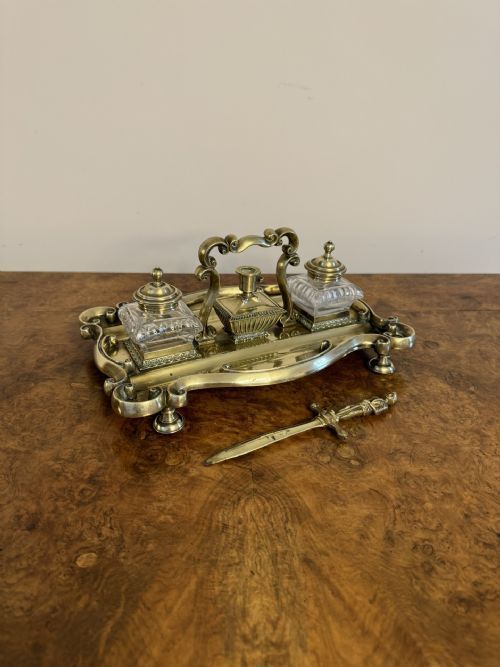
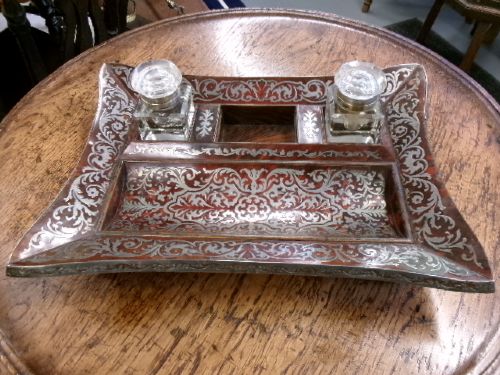


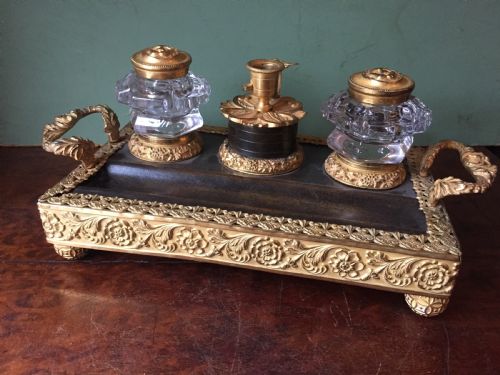


Brass Tray Inkwell Set
A brass tray inkwell set provides a tidy writing surface, combining heavy metal stands with glass or ceramic inkwells for the desk.
Brass Tray Inkwell Set
A brass tray inkwell set gathers writing implements onto a single designated stand, serving as a practical desk accessory. These pieces span the eighteenth, nineteenth, and early twentieth centuries, reflecting changing domestic habits.
The Victorian era supplies many examples found on this page, often combining heavy brass frames with wood bases like walnut, coromandel, or oak. Some incorporate pen rests, letter holders, or double inkwells for heavier correspondence.
Continental pieces introduce gilt bronze, ormolu, and champlevé enamel into the design, while English iterations lean towards solid brass or mounted wood. Simpler stands sit alongside ornate French Empire and Art Nouveau styles.
Materials and construction
Foundry work dominates these pieces, utilising cast brass, gilt bronze, and ormolu for the trays and inkwell lids. Metal elements frequently pair with cut glass or ceramic inserts that hold the ink.
Woodwork forms the foundation for many stands, utilising coromandel, walnut, rosewood, and oak enriched with tortoiseshell, mother of pearl, or inlaid brass stringing. Boulle work and ebonising appear on mid-nineteenth-century items.
Makers integrated pen rests and hinged lids directly into the cast or assembled frames, ensuring the inkwells remained secure within their designated tray recesses.
Brass Tray Inkwell Set Retail Price Guide 2026
Typical asking prices for brass tray inkwell set among the pieces listed under this phrase on Sellingantiques today, from the lower quarter to the upper quarter. They describe what is for sale here now, not the wider market.
Listings feature brass, glass, gilt bronze, ormolu, coromandel wood, tortoiseshell, and cut glass across Victorian, Art Nouveau, and Regency styles.
Factors of distinction
The crispness of the brass casting determines the visual impact of the stand, separating sharp ornament from softer, worn detail. Heavier gauge metal provides greater stability for daily writing tasks.
Materials integrated into the brass framework indicate quality, with tortoiseshell, coromandel, and champlevé enamel marking out higher-tier pieces. Matched glass or ceramic liners that fit precisely into their wells complete a superior standard of manufacture.
James Cartland & Sons·Elkington
The Brass Tray Inkwell Set Glossary
- Standish
- A portable desk stand incorporating inkwells, sanders, and penholders. This term often applies to grander eighteenth and nineteenth-century examples.
- Ormolu
- Gilt bronze mounted onto furniture or used for decorative metalware. The technique involves applying a gold amalgam to bronze.
- Boulle work
- Marquetry technique utilising brass and tortoiseshell inlaid into wood surfaces. Named after French cabinetmaker André-Charles Boulle, it appears on mid-nineteenth-century desk stands.
- Champlevé
- Enamelling technique where troughs are dug into metal and filled with coloured glass paste before firing. It decorates French desk stands from the nineteenth century.
- Coromandel
- A dense, dark wood with contrasting lighter grain imported from Asia. Nineteenth-century desk accessories frequently employ this material for bases.
Brass Tray Inkwell Set: Frequently Asked Questions
What is a brass tray inkwell set?
It is a desk accessory featuring a metal or wood tray that holds one or more inkwells, often with space for pens and letters.
These sets kept writing materials organised and protected desk surfaces from ink spills in nineteenth-century offices and homes.
How do I date an inkstand?
Dating relies on stylistic clues, such as the flowing organic lines of Art Nouveau or the heavy classical mounts of the French Empire period.
Materials also help establish age, as coromandel wood and boulle work point firmly towards the mid-nineteenth century.
Were these sets used for daily writing?
Yes, they sat upon writing desks to provide a ready supply of ink for dip pens during the eighteenth and nineteenth centuries.
Many incorporate pen rests on the tray edge to prevent wet nibs from staining the desktop.
How do I clean brass and glass?
Brass components benefit from gentle dusting or appropriate metal cleaning depending on the desired level of shine. Glass inkwell inserts lift out for washing in warm soapy water.