


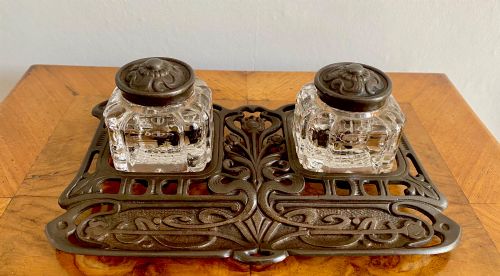


Vintage Brass Ink Stand
These vintage brass ink stands are desk accessories designed to hold ink and pens, bringing period character and tactile history to a modern workspace.
Vintage Brass Ink Stand
A vintage brass ink stand serves as a functional desk accessory, combining metalwork with glass or ceramic inkwells to hold writing implements in place. These pieces span the Victorian, Edwardian, and 1900 periods, reflecting changing domestic and office habits.
The versions most commonly met on this page include heavy cast metal trays, solid oak bases mounted with brass fittings, and elaborate Continental examples. Desk sets often incorporate hinged lids, pen rests, and fitted glass bottles designed for daily use.
Stylistic influences range from French Empire and Chinoiserie to Art Nouveau and Aesthetic Movement designs. Makers and workshops utilised diverse decorative techniques, from champleve enamel to porcelain inserts, creating varied forms for the nineteenth-century desk.
How they were made
Maker workshops utilised solid brass, cast metal, and gilt bronze, often combining these metals with oak, ceramic, or porcelain bodies. Metal components were frequently cast and chased, yielding crisp decorative details and durable desk trays.
Fittings include original glass ink bottles and ceramic inserts, whilst enamel and porcelain provide contrasting colour and texture. Artisans mounted glass vessels securely within brass collars and hinged lids to protect the ink from dust.
Vintage Brass Ink Stand Retail Price Guide 2026
Typical asking prices for vintage brass ink stand among the pieces listed under this phrase on Sellingantiques today, from the lower quarter to the upper quarter. They describe what is for sale here now, not the wider market.
Napoleon watches silently over the desk from a small bronze bust mounted directly onto the inkwell.
What varies in quality
Quality rests in the weight of the metalwork, the complexity of the casting, and the retention of original components such as glass bottles and enamel work. Heavier brass and gilt bronze bases demonstrate greater substance and finer chiselling.
The integration of materials also defines the tier of the piece, where matched ceramic inserts or signed maker details elevate the design above standard production models.
James Cartland and Sons·Elkington
The Vintage Brass Ink Stand Glossary
- Inkstand
- A desk stand designed to hold one or more inkwells alongside pen rests and sometimes stamps or wafers. It forms the central apparatus of the nineteenth-century writing desk.
- Champleve enamel
- An enamelling technique where troughs are dug into a metal surface and filled with vitreous paste before firing. This method creates vibrant decorative bands and panels across brass frames.
- Gilt bronze
- Bronze treated with a layer of gold, providing a rich metallic sheen that resists tarnishing. It appears on decorative French and Continental desk pieces.
- Aesthetic Movement
- A late nineteenth-century design style emphasising visual beauty over narrative content. Pieces from this movement often feature stylised natural motifs and disciplined geometric lines.
Vintage Brass Ink Stand: Frequently Asked Questions
What is a vintage brass ink stand?
A vintage brass ink stand is a desk accessory used during the nineteenth and early twentieth centuries to hold writing ink and pens.
These stands combine metal bases with glass or ceramic vessels to keep ink accessible while protecting wooden desk surfaces.
How do I date an ink stand?
Dating relies on stylistic clues such as Art Nouveau curves, Victorian oak mounts, or Edwardian manufacturing marks.
Comparing the materials, such as champleve enamel or gilt bronze, helps place the object within its specific period.
Are the ink bottles usually original?
Many surviving stands retain their original fitted glass bottles, though replacements do occur due to breakage over decades of use.
Matching glass inserts with appropriate collars ensures the piece functions as intended by the original maker.
How do I care for brass desk accessories?
Care involves gentle dusting with a soft cloth to preserve the natural patina accumulated over the years.
Aggressive cleaning should be avoided to protect applied finishes like enamel, porcelain, or gilt bronze.