



Antique Inkpot Tray
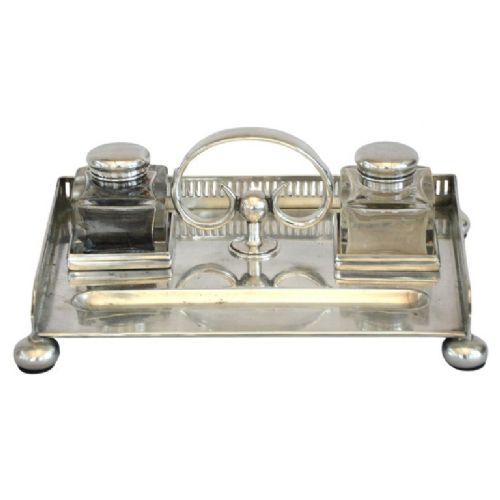
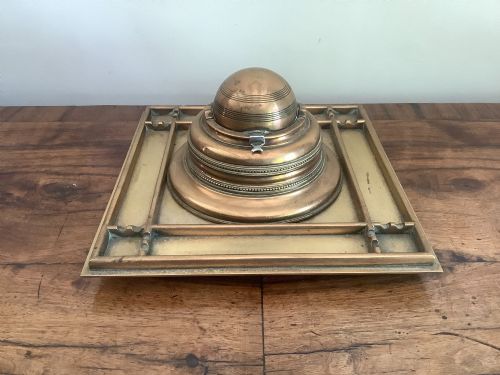
These antique inkpot tray pieces sit upon the writing desk to hold your inkwells and pens.
Antique Inkpot Tray
An antique inkpot tray provides a dedicated spot on the writing desk for inkwells and pens, keeping the desk tidy and protecting the surface from spills. When you search for an antique inkpot tray, you encounter desk sets, inkstands, and mounted inkwells that range from the Georgian era through to nineteen hundred.
The versions most commonly met on this page date from the Victorian period and nineteen hundred, taking the form of brass stands, silver plated trays, and porcelain bases. Makers fashioned these desk accessories in various styles including Art Nouveau, Aesthetic Movement, and Continental designs.
Simpler models provide a modest ceramic or glass inkwell on a brass base, whilst larger desk stands incorporate pen rests and multiple inkpots. Examples span from early nineteenth century porcelain pieces to late Victorian novelty owl designs with glass eyes.
How they were made
Craftsmen shaped brass, bronze, and ormolu into ornate stands, utilising casting and metalworking techniques common to Victorian and Georgian workshops. Sheffield plating and silver plating added a bright metallic finish to copper bases.
Ceramic, porcelain, and cut glass formed the inkpots and trays, often decorated with blue and white glazes or moulded details. Gilt metal mounts and fitted brass bases secured the glass and ceramic components to the stands.
Antique Inkpot Tray Retail Price Guide 2026
Typical asking prices for inkpot tray among the pieces listed under this phrase on Sellingantiques today, from the lower quarter to the upper quarter. They describe what is for sale here now, not the wider market.
What varies in quality
The distinction between standard examples and superior pieces rests upon the weight of the metal, the crispness of the cast ornamentation, and the integrity of the materials. Heavier brass and bronze castings demonstrate finer detail in the chasing and finishing.
Quality also shows in the harmony of mixed materials, such as the precise fitting of porcelain or cut glass into metal mounts, and the presence of makers such as Daniel Holy or Walker and Hall.
Walker And Hall·Daniel Holy
The Antique Inkpot Tray Glossary
- Inkstand
- A tray or stand holding one or more inkwells, often incorporating pen rests and stamp boxes. These pieces formed the centrepiece of the nineteenth century writing desk.
- Ormolu
- Gilded bronze, where a gold amalgam is applied to a bronze base and heated to drive off the mercury. This technique produced a rich golden finish seen on nineteenth century desk stands.
- Sheffield Plate
- A fused combination of silver and copper produced by heating the metals together. This method preceded electroplating and appears on Georgian desk sets.
- Aesthetic Movement
- A late nineteenth century design style emphasising visual beauty over narrative meaning. Pieces in this style often feature stylised natural motifs and refined forms.
- Novelty Inkwell
- An inkwell fashioned into a figurative shape, such as an animal or bird. These whimsical desk accessories often feature hinged heads revealing the inkpot within.
Antique Inkpot Tray: Frequently Asked Questions
What is an antique inkpot tray?
An antique inkpot tray is a desk accessory designed to hold inkwells and pens securely in one place. These trays protect writing surfaces from ink stains and organise writing equipment.
They appear as silver plated stands, brass trays, and ceramic bases dating from the Georgian period to nineteen hundred.
How were desk stands used?
Desk stands sat on writing tables and bureau desks to provide a ready supply of ink for correspondence. The tray kept the inkwell stable whilst writers dipped their nibs.
Larger stands included compartments for sand, wafers, and pens alongside the central inkpot.
How do I date a brass inkstand?
Dating relies upon the stylistic indicators of the metalwork, such as the flowing lines of Art Nouveau or the heavy ornamentation of Victorian brass sets. Material choices like early nineteenth century porcelain or Georgian Sheffield plate also indicate the period.
Maker marks stamped into the metal provide further evidence for precise attribution.
What materials appear on these trays?
Materials include brass, bronze, ormolu, silver plate, and sterling silver for the metal stands and frames. Porcelain, ceramic, glass, and cut glass form the inkpot containers.
Combinations of brass with porcelain or glass occur frequently across Victorian and Edwardian examples.