


Brass Tiered Light
These brass tiered light selections bring multi-level illumination and hanging crystal drops into a room, spanning periods from the eighteenth century to the twentieth.
Brass Tiered Light
A brass tiered light brings together multi-level arrangements of metal arms, most commonly seen as chandeliers and wall lights across this selection. These pieces originate from French, Italian, Dutch, and English workshops, spanning periods from the eighteenth century through to the 1930s.
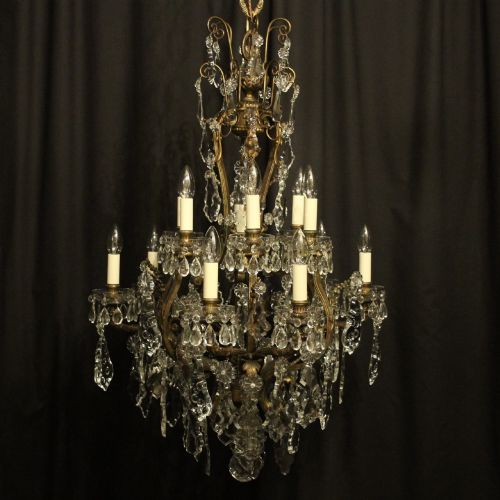
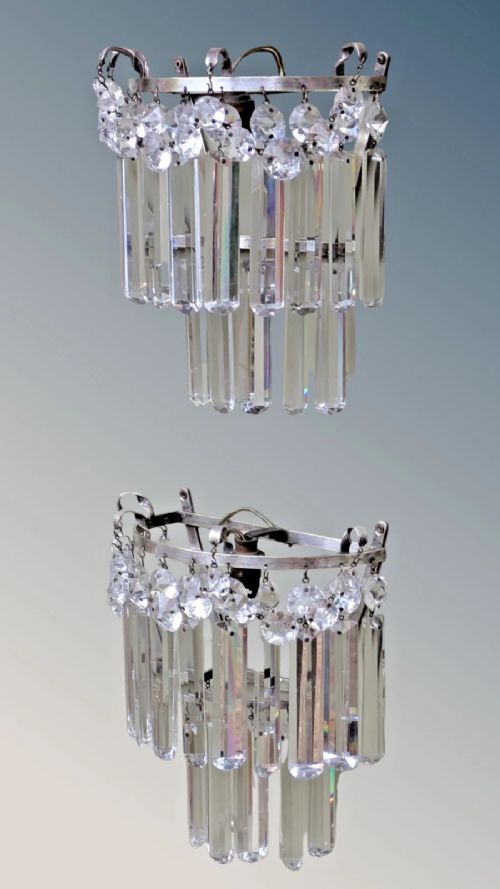
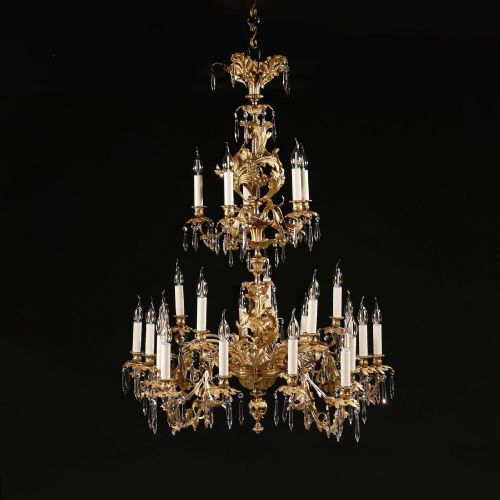
The multi-level design creates vertical presence within a space, organising numerous candle or bulb holders across ascending tiers. The selections recorded here range from compact single-light plafonieres and pairs of wall lights up to expansive multi-armed examples holding eighteen or twenty-five lights.
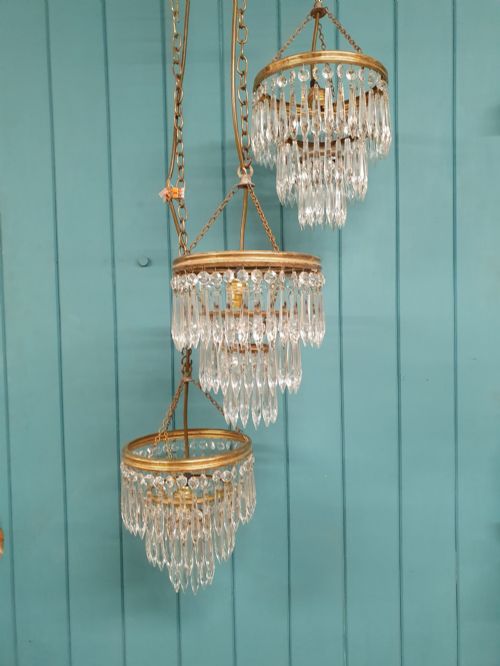
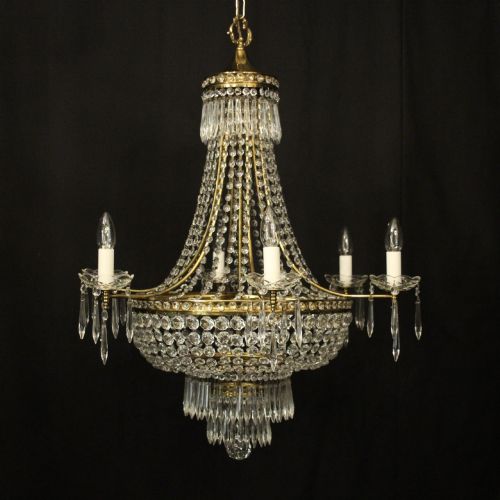
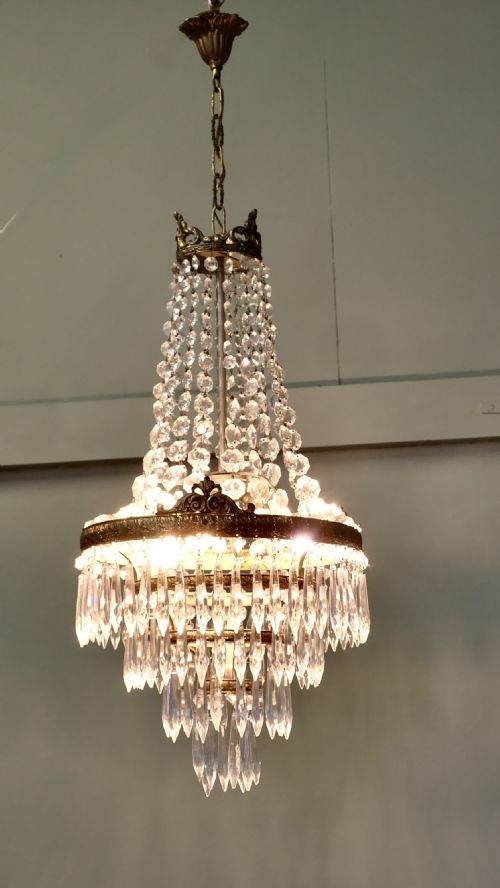
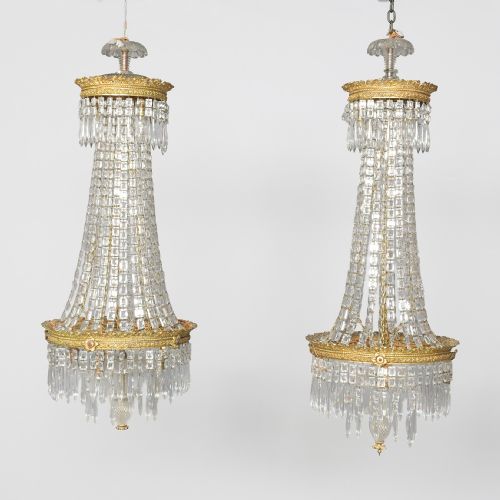
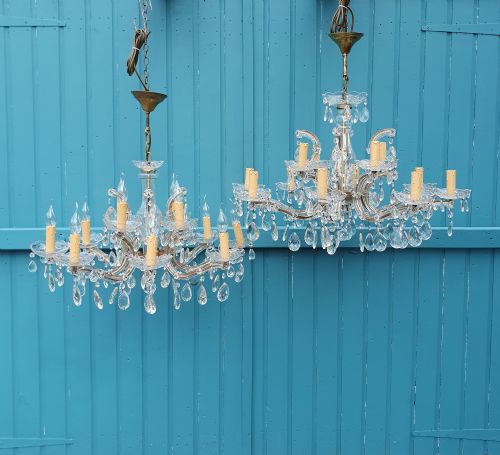
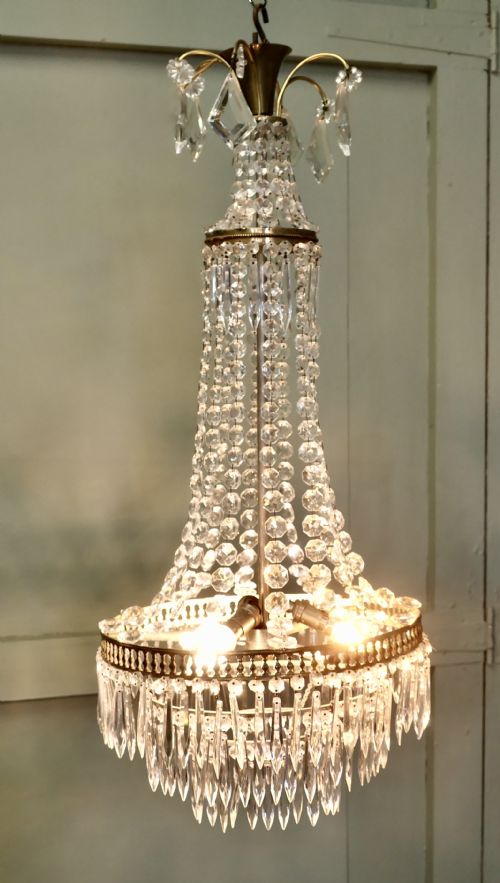
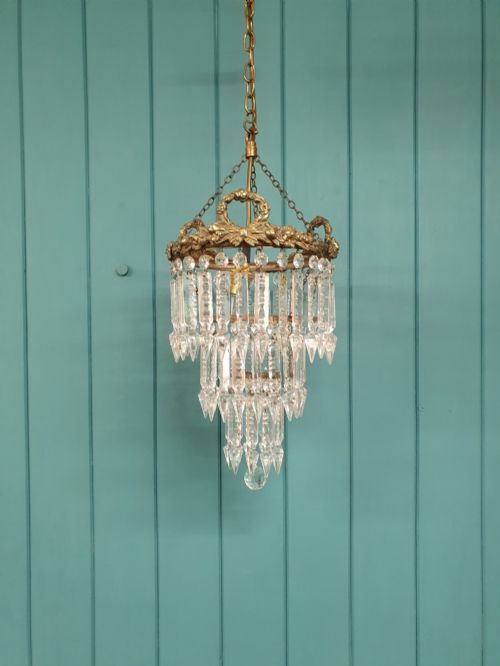
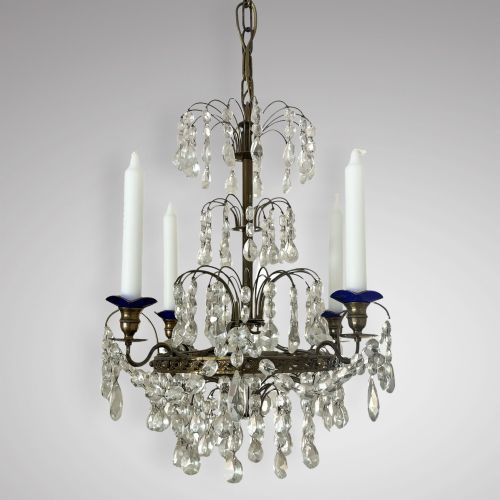
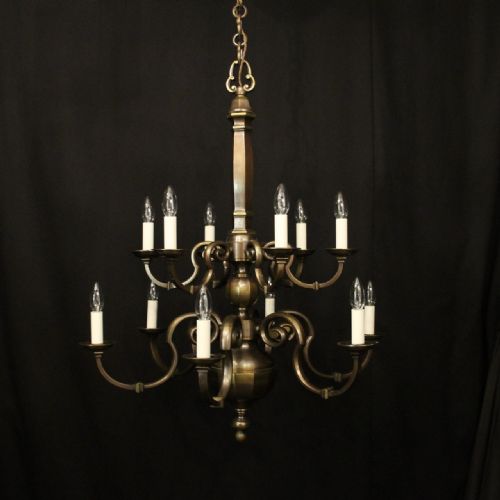
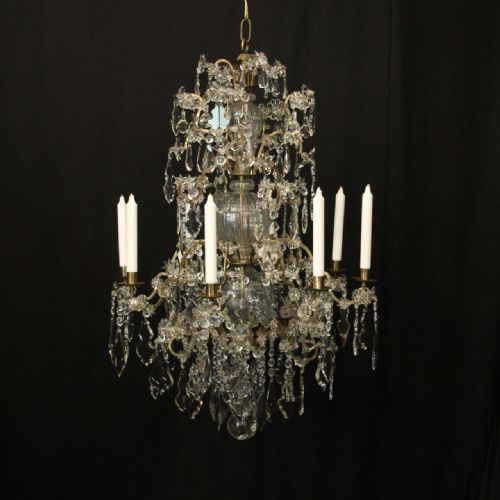
Buyers seeking this phrase encounter formats such as tent and waterfall chandeliers, spike chandeliers, and double-tiered brass frameworks. These objects combine metal structure with suspended glass components to distribute light across multiple levels.
How They Were Made
The foundational structures rely on cast and worked brass, often highlighted with gilt bronze or copper, providing robust armatures to support heavy arrangements. Workshops shaped these metals into arms, rings, and tiers designed to carry numerous candle or electric points.
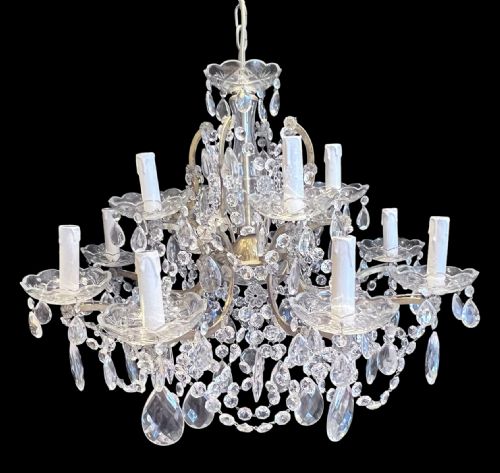
Glass and crystal elements are integrated extensively, utilising cut glass, crystal glass, and moulded drops to catch and refract illumination. Components such as beaded arms, faceted drops, and cascading waterfalls are wired or pinned directly to the metal frames.
Several early twentieth-century wall lights include hand-carved wooden cherubs keeping watch over the candle arms.
What Varies in Quality
The distinction between tiers rests upon the execution of the metalwork and the clarity of the glass. Heavier cast brass frameworks with finely chased detailing and substantial gilt surfaces sit at the upper end of the scale.
Quality reveals itself in the integration of the suspended elements, where precision-cut crystal drops and complex beaded arrangements demonstrate superior craftsmanship compared to simpler moulded glass components.
The Brass Tiered Light Glossary
- Tiered light
- A lighting fixture arranged in multiple vertical levels or decks to hold arms and candle points. This configuration adds vertical scale and increases the distribution of illumination.
- Waterfall chandelier
- A lighting form characterised by cascading strings of glass drops that flow outward from a central upper ring. This arrangement creates a shimmering curtain effect around the brass armature.
- Gilt bronze
- Bronze metal treated with a thin layer of gold or gold-coloured alloy to impart a rich finish. It provides a durable surface that retains its metallic lustre over centuries.
- Tent and waterfall
- A chandelier style featuring an upper triangular tent of crystal beads above a cascading lower skirt of drops. This classic composition was favoured in French decorative lighting during the nineteenth and early twentieth centuries.
Brass Tiered Light: Frequently Asked Questions
How do I hang a heavy tiered chandelier?
Installation requires locating a secure ceiling joist or mounting to a structural steel box capable of supporting the full weight of the metal and glass. Professional electricians should assess the ceiling capacity and handle the suspension hardware.
Because these pieces incorporate numerous arms and dense crystal drops, proper anchoring ensures the fixture remains stable and safe for daily use in a room.
Can these fixtures be converted for modern electricity?
Most antique lighting is adapted safely for modern wiring standards while retaining the original sockets or candle tubes where appropriate. Rewiring preserves the historical brass and glass structure while meeting current safety requirements.
Consulting a qualified restorer ensures the internal channels are protected and the delicate arms are not strained during the conversion process.
How do I clean the crystal drops safely?
Regular maintenance involves dusting the arms and drops gently with a soft feather duster or microfiber cloth while the fixture is switched off. For a deeper clean, individual glass drops can be unhooked and washed in warm soapy water.
Harsh chemical cleaners should be avoided to protect both the glass faceting and the underlying brass or gilt surface from accidental damage.
What rooms suit a double-tiered brass light?
Double-tiered fixtures provide substantial vertical presence, making them well-suited to spaces with high ceilings such as entrance halls, dining rooms, and principal drawing rooms. Their multi-level design casts widespread illumination across larger architectural volumes.
Matching pairs of wall lights or smaller single-tier variants offer a complementary option for connecting adjacent corridors or intimate seating areas.