

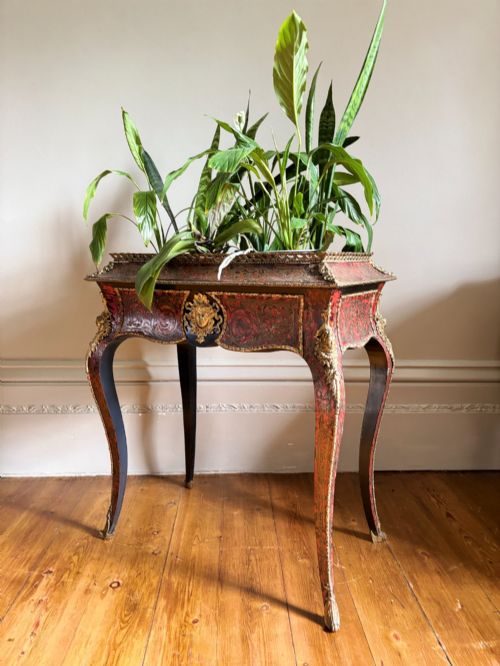
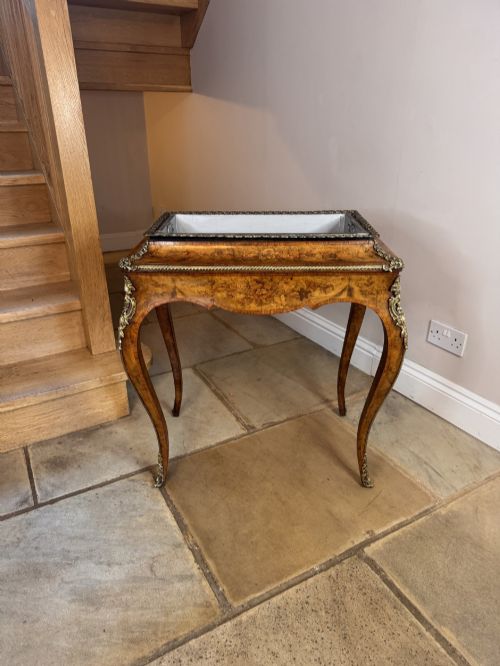
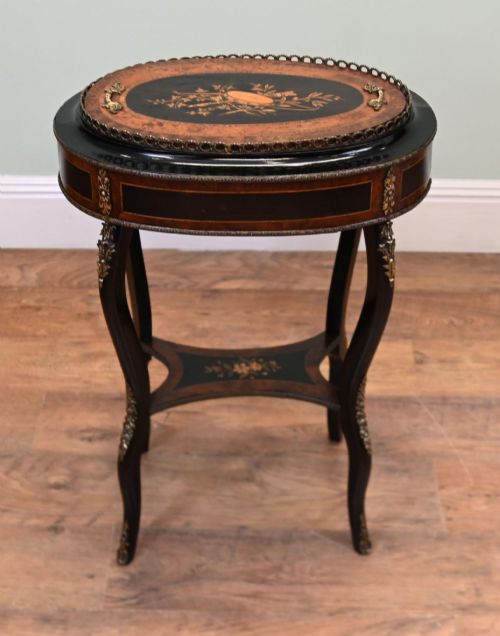
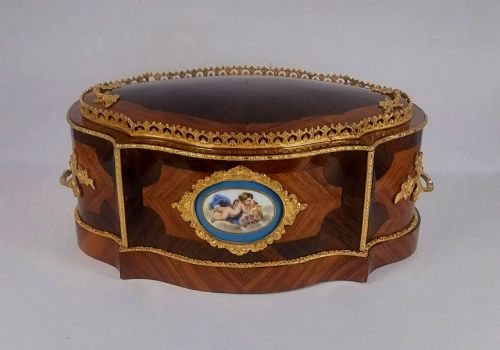
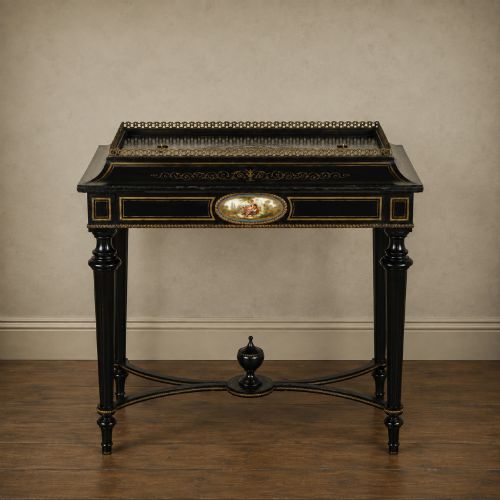


Brass Table Jardiniere
These brass table jardiniere pieces bring nineteenth-century floral display indoors with undeniable elegance.
Brass Table Jardiniere
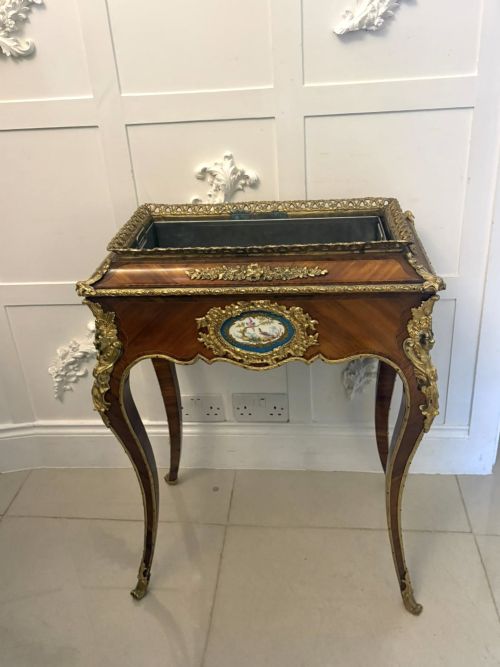
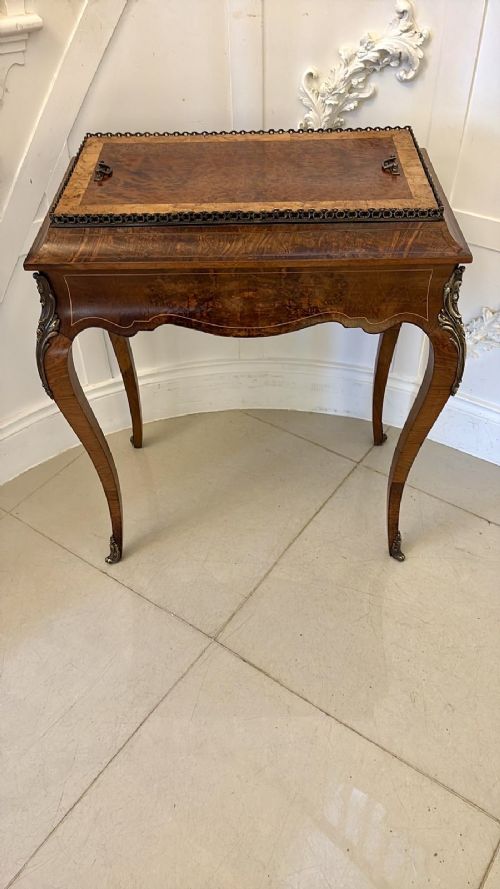
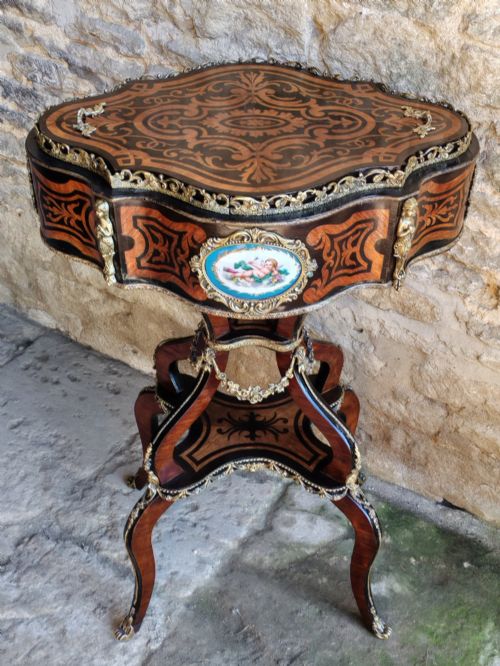
A brass table jardiniere sits upon furniture frames designed specifically to hold indoor plants and floral arrangements in nineteenth-century interiors. These items range from standalone plant stands to elaborate planter tables incorporating lower tiers for display.
The most common examples on this page date from the Victorian and Napoleon III periods, frequently exhibiting French revival influences. Many pieces double as occasional tables or wine coolers, reflecting the multi-purpose nature of domestic furnishings from the era.
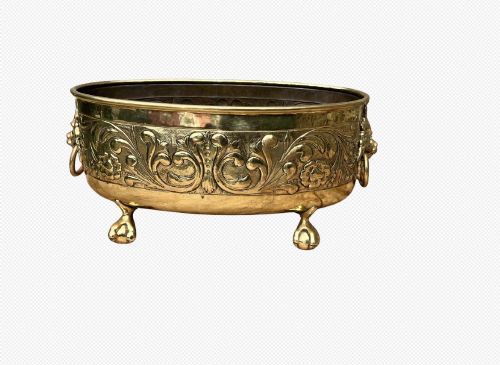
Origins stretch from English workshops to French cabinet makers, alongside Belgian examples. Formats vary widely, encompassing simple brass planters resting on cast iron bases as well as complex multi-tier stands.
How They Were Made
Cabinet makers constructed the main framework from timbers such as walnut, kingwood, mahogany, satinwood, and ebonised wood, often enhanced with marquetry or boulle work. Ormolu and gilt metal mounts frame these wooden bodies, securing the brass liners and structural components.
Metalwork involved heavy casting and sheet manipulation in brass, ormolu, and zinc, frequently paired with inset painted porcelain plaques or marble tops. These mixed media constructions required close collaboration between metalworkers, wood turners, and ceramic artists.
Brass Table Jardiniere Retail Price Guide 2026
Typical asking prices for brass table jardiniere among the pieces listed under this phrase on Sellingantiques today, from the lower quarter to the upper quarter. They describe what is for sale here now, not the wider market.
The selection includes French Napoleon III and Victorian styles, ranging from simple plant stands to complex multi-tier tables.
What Varies in Quality
Excellence in these items rests upon the integration of materials, where fine cabinet work meets crisp metal casting. Pieces that combine intricate kingwood marquetry with hand-painted porcelain plaques and substantial ormolu mounts represent the upper tier of production.
Simpler models rely on straightforward brass and mahogany construction without auxiliary decoration. The depth of chasing on the metal mounts and the precision of the wood inlay distinguish workshop standards.
The Brass Table Jardiniere Glossary
- Jardiniere
- An ornamental pot or stand designed to hold plants or flowers indoors. This term covers both tabletop vessels and floor-standing pieces.
- Ormolu
- Gilded bronze or brass mounts applied to furniture and decorative objects. It provides bright metallic contrast against dark woods.
- Boulle
- A form of marquetry using brass and tortoiseshell inlaid into furniture surfaces. Named after French cabinet maker André-Charles Boulle.
- Marquetry
- Decorative veneer applied in patterns to wood furniture structures. It utilises various tinted woods to create pictorial designs.
Brass Table Jardiniere: Frequently Asked Questions
What is a brass table jardiniere?
A brass table jardiniere is an ornamental plant holder elevated on a stand or table structure. It functions as a decorative vessel for indoor greenery.
These pieces were popular in nineteenth-century drawing rooms and parlours. They brought nature inside while serving as formal furniture items.
How were they used in Victorian homes?
Victorian households utilised these stands to display potted ferns, flowering plants, and cut blooms in principal entertaining rooms. They acted as focal points for interior green spaces.
Some designs incorporated removable metal liners to catch water runoff and protect the surrounding wooden frames. Others doubled as wine coolers during dining events.
Are these stands waterproof?
Most antique pieces feature removable brass, zinc, or metal liners intended to contain moisture. These inserts protected the underlying wooden tables from water damage.
Liners often show historical wear and patination from damp soil and watering. Collectors generally expect these internal components to display age-appropriate use.
How do I distinguish French and English pieces?
French examples from the nineteenth century frequently employ exotic woods like kingwood and walnut with ormolu mounts and porcelain plaques. Styles often follow Napoleon III or Louis XV revival aesthetics.
English pieces tend to rely on more straightforward mahogany or walnut construction with simpler brass turnery. Regional preferences dictated the choice of inlay and decorative mounts.
Can I use them for modern plants?
These stands accommodate modern potted plants quite easily, provided the original metal liner is sound. Plastic nursery pots can be placed inside the antique brass container.
Care should be taken to prevent standing water from resting directly against historic metal or wood surfaces. Protective saucers inside the liner preserve the interior condition.