




Brass Table Casket
A brass table casket is a small, secure repository for valuables, and these pieces combine metalwork and timber to sit handsomely on a desk or dressing surface.
Brass Table Casket
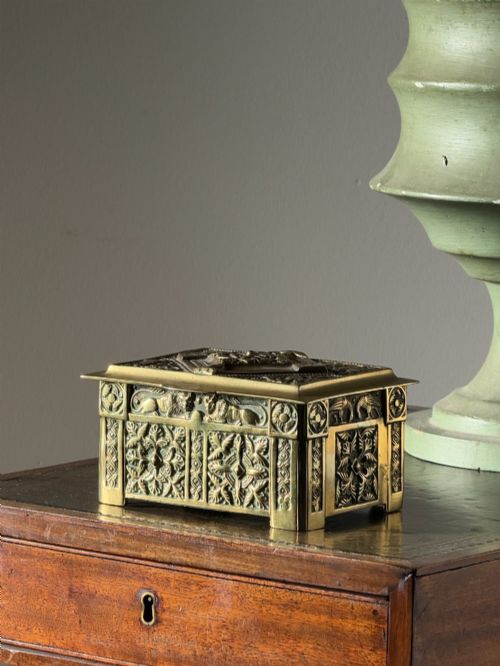
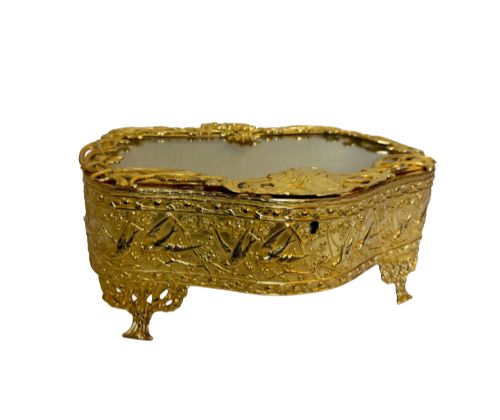
A brass table casket serves as a secure portable container for jewellery, letters, or tobacco, designed to sit permanently on domestic furniture rather than travel in a trunk. When searching for a brass table casket, collectors encounter examples ranging from heavy 17th-century strongboxes to domestic Victorian jewellery chests and delicate Art Nouveau trinket boxes.
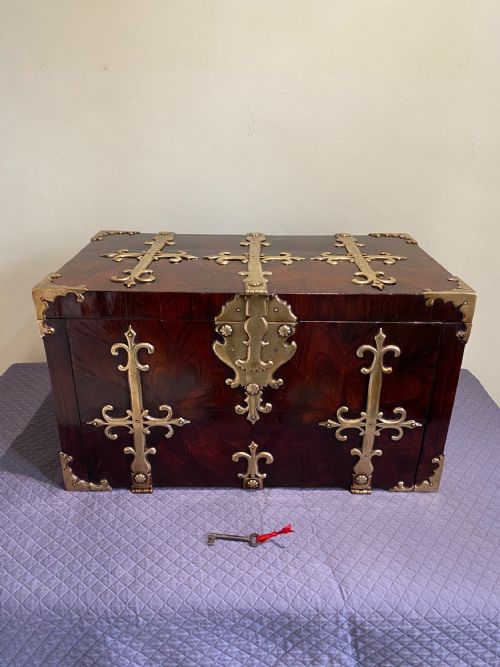
The materials span solid and mounted brass alongside exotic timber carcases like coromandel, walnut, and kingwood, frequently incorporating glass panels, porcelain plaques, or mother-of-pearl inlay. While some pieces rely entirely upon cast and chased metalwork, the majority merge a wooden foundation with substantial brass hinges, strapwork, and lockplates.
Origin and period vary significantly across the selection, with Victorian English and French decorative pieces appearing alongside earlier continental work such as Flemish table cabinets and heavy gauge Dutch tobacco boxes. The forms include glove boxes, vanity cases, and perfume caskets, each utilising metal mounts to reinforce and ornament the structure.
Construction and Materials
Makers constructed these caskets using heavy timber carcases of walnut, rosewood, or coromandel, then reinforced the joints and edges with brass straps, corner brackets, and mounts fastened by small screws or pins. Brass was cast, chased, or engraved to create intricate surface patterns, particularly evident in Gothic Revival and Art Nouveau specimens.
Many examples integrate glass panels with bevelled edges, or feature inset Capodimonte porcelain plaques held within cast metal frames. Interiors commonly incorporate fitted compartments lined with silk or velvet, designed to cradle jewellery, sewing tools, or scent bottles safely.
Brass Table Casket Retail Price Guide 2026
Typical asking prices for brass table casket among the pieces listed under this phrase on Sellingantiques today, from the lower quarter to the upper quarter. They describe what is for sale here now, not the wider market.
Materials recorded across the selection include figured burr walnut, coromandel, porcelain, and bevelled glass.
Assessing Quality and Execution
Quality rests upon the gauge of the brass and the crispness of the chasing, where deeply modelled relief work and sharp surface detail distinguish superior metalwork from flat, mass-produced stampings. The integration between the metal mounts and the underlying wood reveals the skill of the cabinetmaker.
Superior execution shows in the precision of the mitred joints, the smooth action of original locks and keys, and the selection of figured timbers such as burr walnut and kingwood. Internal fittings finished with matched compartments and intact silk linings elevate the standing of a piece.
The Brass Table Casket Glossary
- Capodimonte Porcelain
- Italian porcelain known for moulded relief figures and decorative plaques. These ceramics frequently decorate the lids and panels of 19th-century table caskets.
- Coromandel
- A dense, heavy southeast Asian timber featuring dark brown grain with contrasting streaks. It was prized by Victorian makers for luxury vanity cases and jewellery boxes.
- Strongbox
- A heavily reinforced portable container designed for secure storage of money or documents. Early examples utilise thick iron or brass plates and complex locking mechanisms.
- Chasing
- The technique of indenting metal with a hammer and punch to create raised surface decoration. This method produces the intricate patterns seen on Victorian and Gothic Revival brass work.
- Bevelled Glass
- Glass panes featuring an angled edge ground down to a slope. This treatment catches the light and adds refinement to display boxes and drop-front cabinets.
Brass Table Casket: Frequently Asked Questions
What were brass table caskets used for?
These boxes served to hold personal valuables, including rings, necklaces, love letters, and currency, keeping them secure yet accessible within a domestic interior.
Property owners placed them on writing tables, dressing chests, or sideboards where their decorative exterior added to the room's furnishings.
How do I care for a brass and wood casket?
Maintain the timber by applying appropriate wax polish sparingly to nourish the grain, avoiding excessive moisture that might damage internal fabric linings.
Clean the metal components gently with a dry microfiber cloth, steering clear of harsh abrasive polishes that can wear away thin gilt or engraved layers.
Are original keys common with these boxes?
Original working keys remain uncommon because locks were frequently small and easily lost over successive generations of domestic use.
Many antique pieces function perfectly well with their original locks intact, though some rely on replacement keys or latch mechanisms fitted later.
How do I distinguish Victorian from earlier pieces?
Victorian pieces often display machine-assisted precision in their brass mounts and favor exotic woods like coromandel and burr walnut with plush silk interiors.
Earlier 17th- and 18th-century examples tend to exhibit heavier gauge metal, hand-wrought iron components, and simpler structural timber carcases without modern textile linings.