
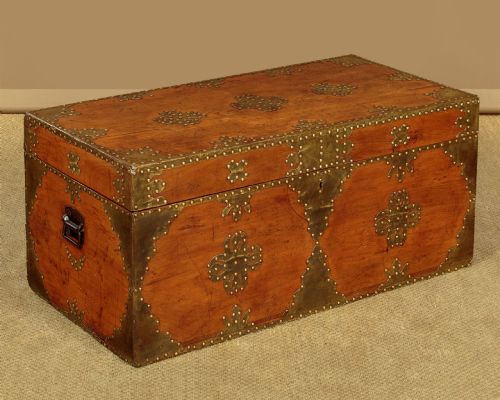
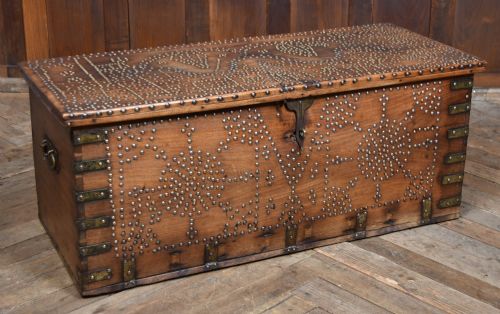
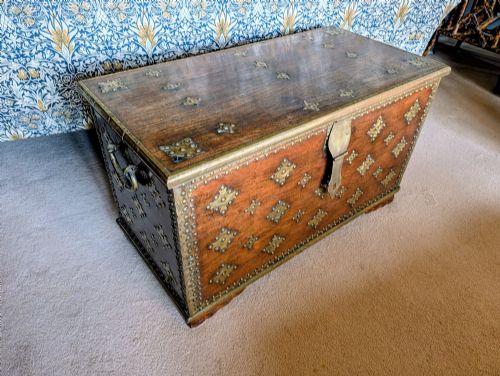
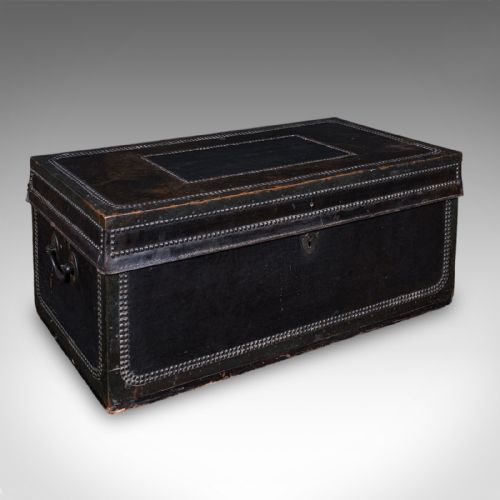
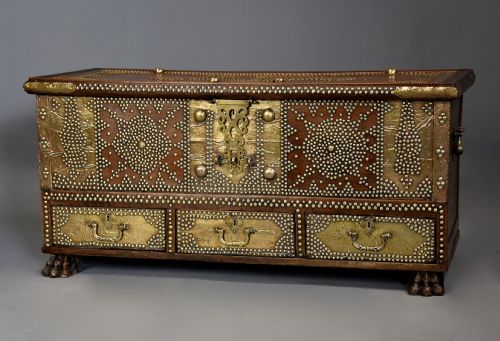
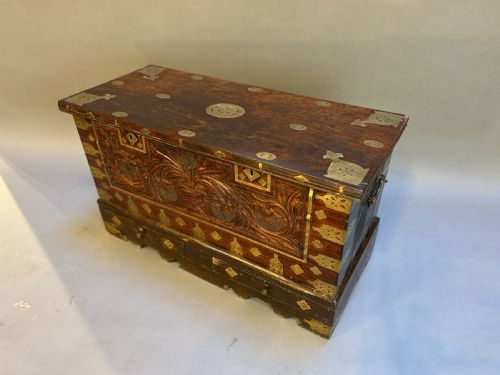

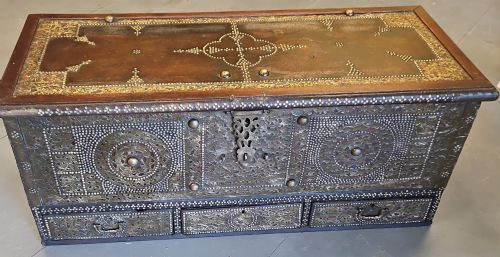


Brass Studded Wooden Chest
A brass studded wooden chest brings rugged warmth and history to a room, offering practical storage with striking metalwork detail.
Brass Studded Wooden Chest
When searching for a brass studded wooden chest, you encounter sturdy pieces designed for travel, domestic storage or trade across global routes during past centuries. These containers range from robust blanket boxes and blanket chests to travelling trunks and smaller coffers.
The versions most likely to appear on this page hail from the nineteenth century, with strong representation of Anglo-Indian Colonial and Zanzibar forms alongside English and Scandinavian examples. Such containers served merchants, travellers and households needing secure storage for valuable textiles and possessions.
Materials vary widely across these pieces, incorporating dense tropical timbers alongside native European woods, augmented by functional metal hardware. The integration of brass studs, plates and bindings creates distinct patterns that define the aesthetic of each trunk.
Materials and construction
The primary structure relies on durable timbers such as teak, padouk, camphorwood, rosewood, hardwood, pine and burr walnut, joined to withstand long journeys and daily use. These woods provide a stable foundation for the decorative and protective metal elements applied over the surfaces.
Craftsmen secured the wooden panels using iron and brass bindings, hinges and countless individual brass studs hammered into geometric or floral arrangements. Leather and hide also appear as coverings or bindings on specific travelling trunks and boxes, secured with metal tacks.
Quality and craftsmanship
Quality rests upon the selection and density of the timber utilised, with rich exotic hardwoods commanding attention for their grain and weight. The intricacy and completeness of the brass studding and metal mounts further separate utilitarian containers from finer decorative examples made for wealthy merchants or officers.
Condition and originality dictate the standing of a piece, particularly the survival of the original hinges, handles, locks and interior compartments. Structural integrity in the joints and the retention of the uncompromised surface finish distinguish superior examples.
Seabrook of St Pauls London
The Brass Studded Wooden Chest Glossary
- Zanzibar chest
- A heavy timber storage chest traditionally featuring elaborate brass stud work, strike plates and concealed internal drawers, associated with trade routes in East Africa and India.
- Camphorwood
- A fragrant tropical timber valued in chest construction for its insect-repellent properties, making it ideal for storing woollens and linens.
- Coffer
- A large wooden box or chest used historically for holding valuables, money or precious garments, often heavily reinforced with metal straps.
- Kist
- A traditional regional term for a heavy wooden storage chest or box used domestically for household goods and blankets.
- Padouk
- A dense, reddish-brown exotic hardwood utilised in fine furniture and chest making for its exceptional strength and rich colouration.
Brass Studded Wooden Chest: Frequently Asked Questions
How were brass studded wooden chests used?
These chests served primarily as secure travelling trunks and storage receptacles for merchants, military officers and households needing to transport valuables or textiles safely across land and sea.
Over time, many transitioned into permanent domestic furniture, acting as blanket boxes, coffee tables or decorative storage centrepieces in living spaces.
Where do Zanzibar chests originate?
Zanzibar chests originate from trade networks connecting the East African coast, the Persian Gulf and the Indian subcontinent, where local and foreign craftsmen built them for merchants.
They combine robust tropical hardwoods with distinctive brass studding and hardware reflecting diverse cultural design influences from those maritime trade routes.
How do I care for an antique wooden chest?
Keep the wood conditioned by avoiding direct sunlight and extreme humidity changes, which can cause timber to dry out or split over the decades.
Clean the brass elements gently without harsh chemical polishes to preserve the patination accumulated on the metalwork since the nineteenth century.
Can I use a chest as a coffee table?
A flat-topped chest makes a sturdy and practical coffee table while providing hidden storage for books, blankets or board games.
Ensure the lid is stable and level before placing items on top, and use coasters to protect the antique wood finish from moisture rings.