




Brass Stringing Table
A brass stringing table is a refined piece of furniture defined by delicate metal inlay, offering elegance and period character to a room.
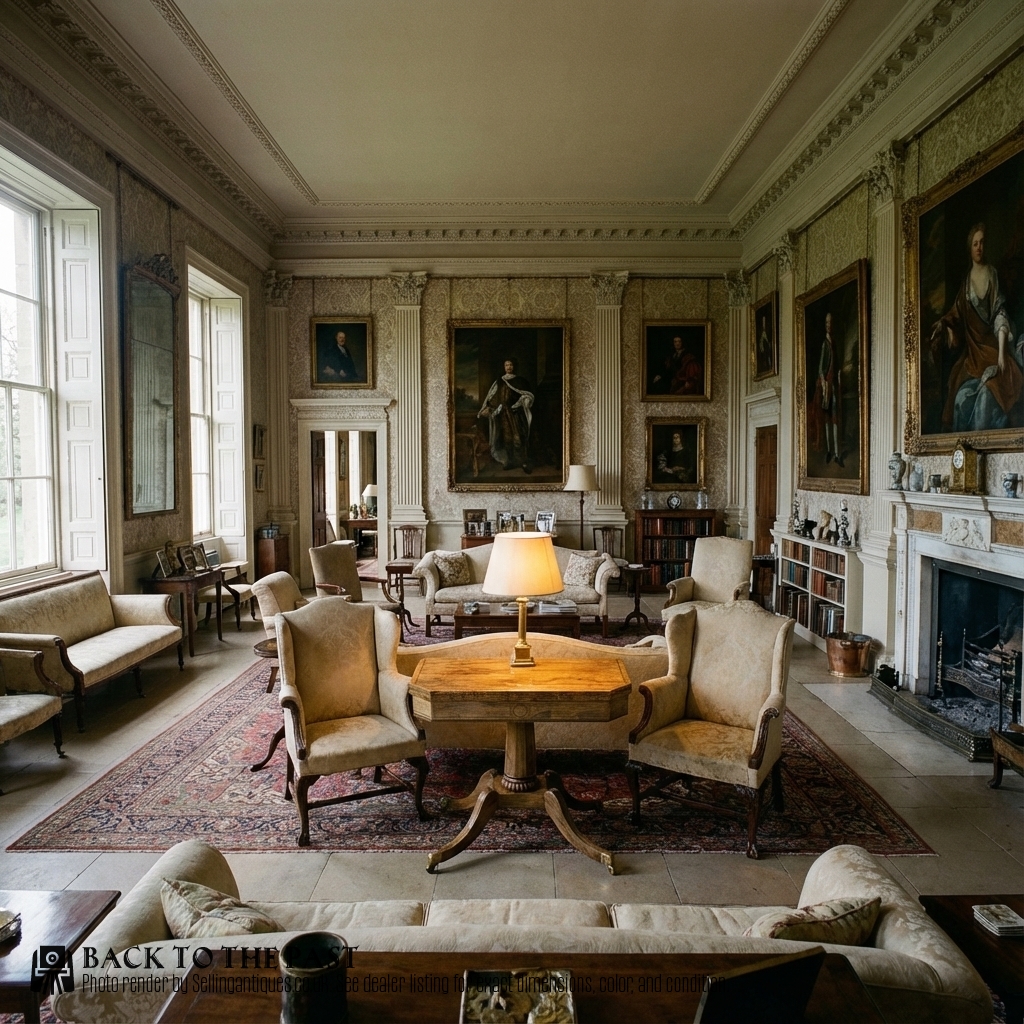
Brass Stringing Table
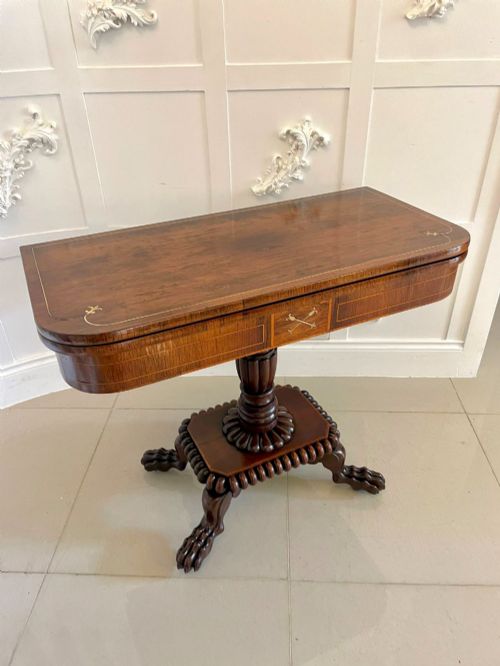
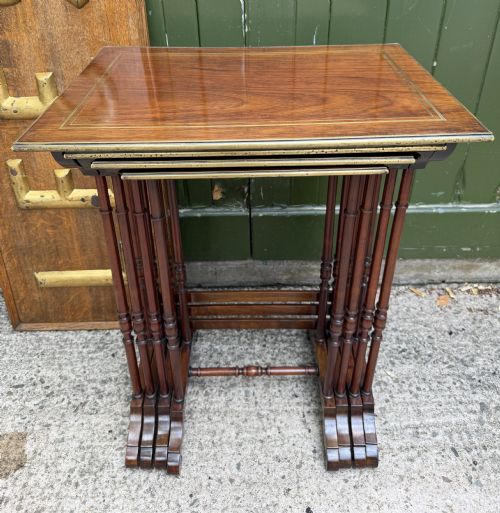
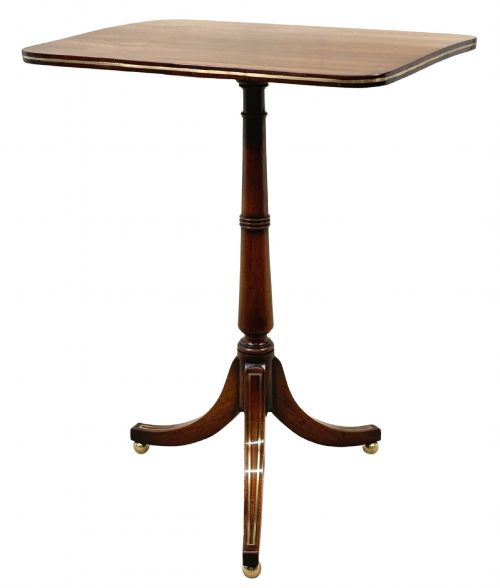
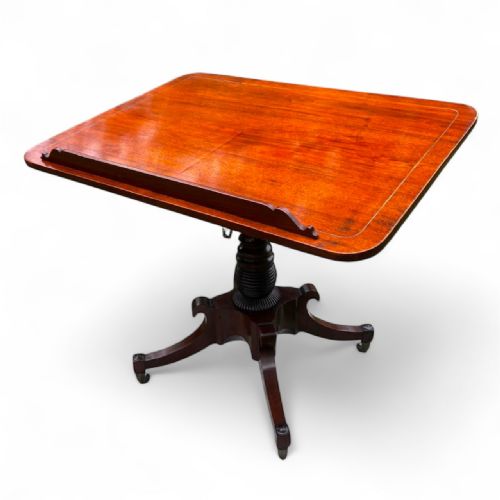
When you examine a brass stringing table on this page, you are primarily looking at Regency and nineteenth-century occasional pieces, card tables, and nests of tables. Rosewood and mahogany dominate the offerings, frequently accented with fine metal lines that trace the edges of the top and legs.
The most common form you will meet is the rosewood card or games table from the Regency period, often featuring a fold-over top. Alongside these, you will discover occasional lamp tables, tripod tables, and occasional nesting tables known as quartetto sets.
The selection also extends to related forms such as teapoys, sewing tables, and breakfast tables, all united by the presence of inlaid brass lines. While the majority of examples stem from the nineteenth century, later revivals also appear.
How they were made
Cabinet makers utilised dense, richly grained hardwoods such as rosewood and mahogany as the primary ground for these pieces. Burr walnut and ebony also appear in selected examples, providing deep colour contrast.
Artisans inlaid thin channels of brass into the wood surface to create sharp linear decoration. This technique required precise hand-cutting to ensure the metal strip sat flush with the surrounding timber.
Brass Stringing Table Retail Price Guide 2026
Typical asking prices for brass stringing table among the pieces listed under this phrase on Sellingantiques today, from the lower quarter to the upper quarter. They describe what is for sale here now, not the wider market.
What varies in quality
The precision of the brass inlay separates standard examples from the finest pieces. Where the metal lines remain completely flush with the timber and flow smoothly around corners without gaps, the standard of craftsmanship is high.
The choice of underlying timber grain significantly influences the overall character of the piece. Richly figured rosewood or well-matched mahogany veneer elevates the visual impact considerably.
Dent of London·George Bullock
The Brass Stringing Table Glossary
- Brass stringing
- A narrow strip of brass inlaid into wood to form a fine decorative line. It defines the borders of tabletops and drawer fronts.
- Quartetto tables
- A set of four graduating nesting tables designed to slide neatly beneath one another. They gained popularity during the Regency and Edwardian periods.
- Teapoy
- A small box or chest mounted on a pedestal, designed for storing tea leaves. Many period examples incorporate delicate brass inlay.
- Card table
- A folding table designed for evening games, featuring a baize-lined interior surface. They often stand on pillar and claw bases.
- Tripod table
- A small freestanding table supported by a central pillar and three legs. They function well as lamp or occasional tables.
Brass Stringing Table: Frequently Asked Questions
How do I care for rosewood?
Keep the wood away from direct sunlight and heat sources to prevent the timber from drying out. Dust regularly with a dry cloth and apply occasional specialist wax.
Avoid using modern liquid polishes containing silicones, as these can damage the polished finish over time.
Are these tables sturdy enough for daily use?
Most occasional and card tables function well for holding lamps, books, or drinks during normal daily activities. Care should be taken with fold-over tops to avoid placing excessive weight on unsupported leaves.
Heavier dining tables in the selection offer greater stability for everyday dining.
How do I date a Regency piece?
Regency furniture typically dates from the early nineteenth century, displaying classical proportions influenced by Greek and Roman design. Look for specific timber choices like rosewood combined with brass inlay and sabre legs.
Construction methods inside drawers and beneath tabletops often help confirm the period of manufacture.
What is a card table used for today?
While originally intended for evening card games, a card table serves well as a console or side table against a wall. The fold-over top allows the piece to expand when extra surface area is required.
Closed, they occupy minimal floor space in a hallway or drawing room.