






Brass Ships Wheel
A brass ships wheel brings the weight and honest metal of maritime history directly into a room.
Brass Ships Wheel
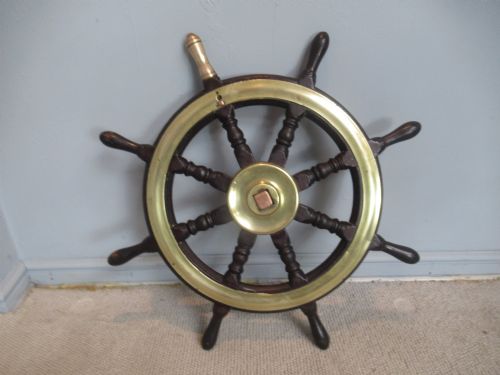
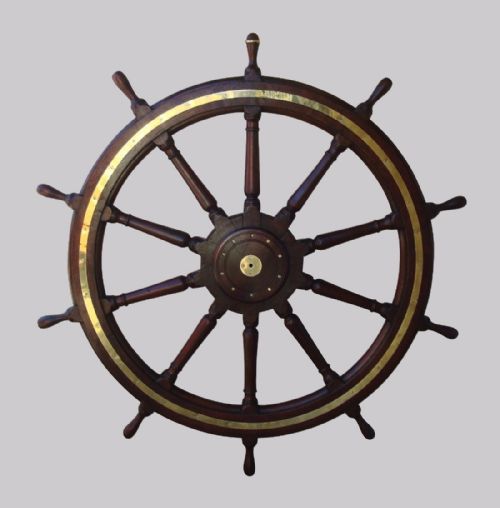
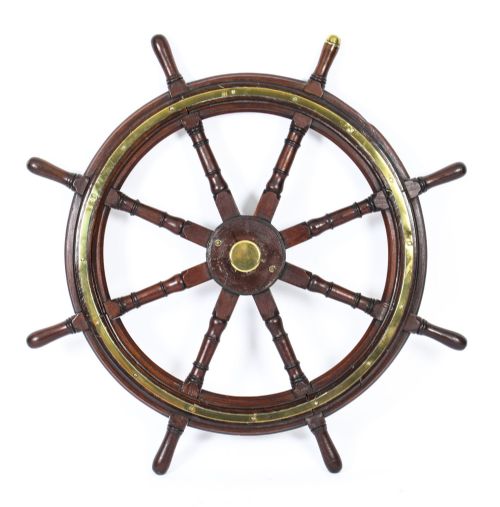
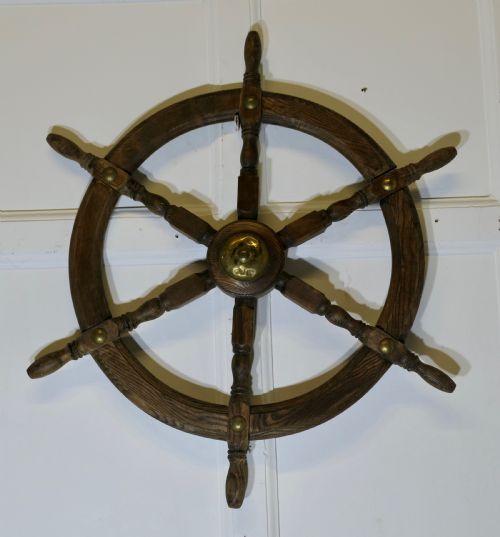
When searching for a brass ships wheel, you are looking at substantial helms designed to steer vessels, alongside smaller decorative pieces and clock encasements. The examples you encounter range from large eight-spoke steering helms down to desk timepieces and mantel clocks incorporating wheel motifs.
The objects span from the mid-nineteenth century through to the early twentieth century, taking in Victorian industrial designs and French mantel pieces. These pieces connect a room to naval heritage, appearing as both practical deck equipment and domestic ornamentation.
Materials and construction
Makers constructed these helms using durable hardwoods such as teak, oak, mahogany, and walnut, paired with fitted brass hubs, rims, and banding. The combination of dense timber and polished metal provided the necessary heft and resistance to marine conditions.
Horological pieces combined brass, gilt brass, and silvered metal with glass panels to showcase mechanical movements. Industrial and decorative variants often utilised cast brass components alongside marble, enamel, and occasionally steel.
Brass Ships Wheel Retail Price Guide 2026
Typical asking prices for brass ships wheel among the pieces listed under this phrase on Sellingantiques today, from the lower quarter to the upper quarter. They describe what is for sale here now, not the wider market.
Listings feature items spanning the nineteenth and early twentieth centuries, utilising brass, teak, oak, and marble across maritime and industrial styles.
Judging quality and character
Quality rests in the precision of the joinery and the substantial weight of the metal components. A well-made helm displays balanced proportions across its spokes and a tight fit between the timber segments and the brass centre.
The distinction between a utilitarian steering wheel and a salon clock lies in the complexity of the movement and the finish of the casing. Untouched surfaces retain the natural patina of age, marking the difference between a working artefact and a purely decorative creation.
Benson Electric Co USA·Gay Vicarino·Pascall Atkey of Cowes·Brown Bros Edinburgh·Guilmet
The Brass Ships Wheel Glossary
- Spoke
- One of the handles radiating from the centre hub of the wheel, used by the helmsman to steer the vessel. These are often capped with brass or turned from solid timber.
- Mantel clock
- A household clock designed to sit on a fireplace mantel, frequently styled with maritime motifs during the nineteenth century. They often house eight-day movements behind glass panels.
- Gilt brass
- Brass coated with a thin layer of gold or gold-coloured wash to improve appearance and prevent tarnishing. This finish appears frequently on French nineteenth-century decorative pieces.
- Teak
- A dense, durable tropical hardwood highly resistant to moisture, commonly used for marine wheels. Its natural oils preserved the timber against sea spray.
- Silvered metal
- A metal dial or plate treated with a silver solution to provide a bright, readable surface for clock faces. It offers a distinct contrast against darker brass and wood.
Brass Ships Wheel: Frequently Asked Questions
How do I date a brass ships wheel?
Dating relies on examining the timber species, the method of brass casting, and any accompanying mechanical movements. Nineteenth-century examples often display hand-turned spokes and specific construction marks tied to known makers.
Industrial and Victorian variants carry distinct stylistic cues, from French four-glass clock housings to heavy operational ship helms.
Were these wheels used at sea?
Many large examples served actual steering duties aboard vessels, evidenced by robust teak construction and brass banding designed to withstand maritime weather. Other pieces were manufactured specifically as domestic desk clocks or mantel decorations from the outset.
Examining the wear on the wooden handles helps distinguish working deck equipment from parlour pieces.
How do I maintain brass and wood?
Preserving the surface requires gentle dusting of the timber and occasional light cleaning of the metal to maintain the aged patina. Avoid harsh chemical polishes that strip away historical character from the brass.
Feeding the hardwood with appropriate oils keeps the grain stable without altering its natural colour.