





Antique Ship Helm
These antique ship helm pieces bring authentic maritime history into a room, offering robust timber construction and traditional brass hardware that anchor a nautical interior scheme.
Antique Ship Helm
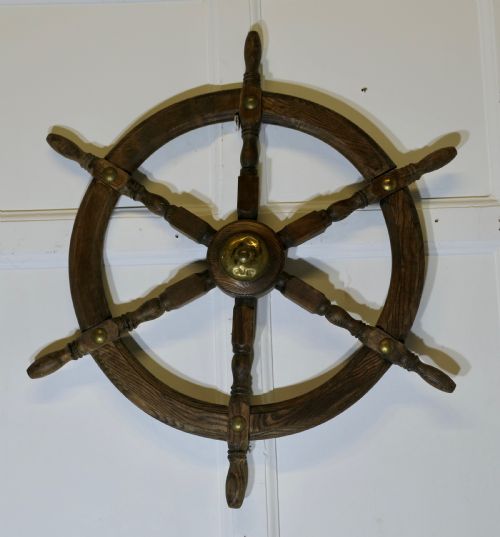
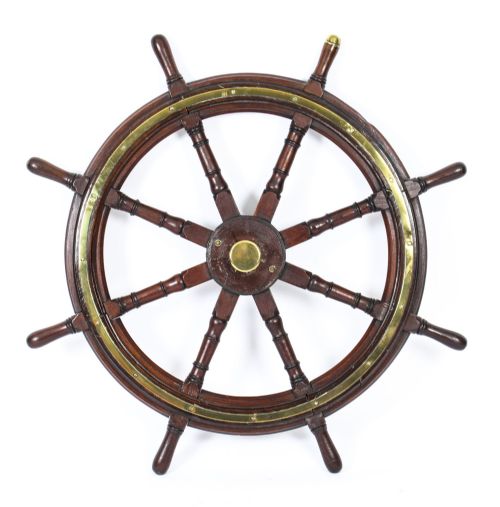
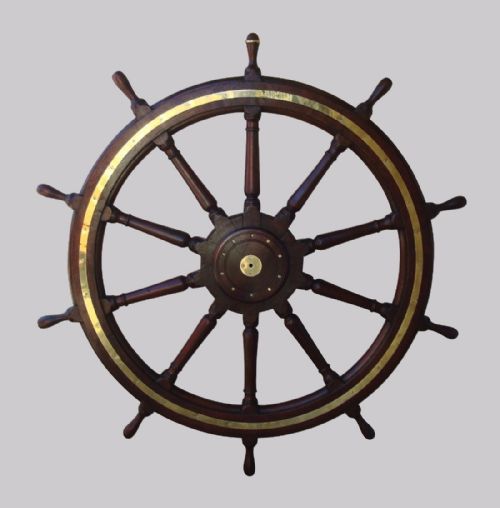
An antique ship helm encompasses functional timber steering wheels alongside related marine instruments and decorative desk pieces shaped around nautical themes. Buyers seeking an antique ship helm will encounter substantial teak or oak steering wheels featuring multiple spokes, alongside smaller domestic timepieces styled after marine equipment.
The selection ranges from large floor-standing wheels measuring four feet across down to smaller Welsh wheels and brass-mounted desk clocks. Pieces predominantly date from the Victorian era and the latter half of the nineteenth century, reflecting Britain and international maritime heritage.
Many items display robust industrial or folk art characteristics, showing the practical wear of marine service. Smaller decorative iterations adapt authentic maritime motifs for domestic mantelpieces and studies.
Materials and construction
Construction relies heavily on durable hardwoods such as teak and oak selected for strength against marine weathering. Carpenters shaped these timbers into multi-spoke wheels with fitted brass centres and rims.
Brass and iron hardware provide structural reinforcement and mechanical detailing across wheels, binnacles, and clock bezels. Painted wood finishes also appear, notably in regional pieces showing deep red pigments.
Distinctions in quality
Quality rests in the integrity of the timber and the precision of the brass fittings. Superior examples retain their original surface patination and structural solidity without excessive replacement timber.
The balance between utilitarian strength and fine joinery distinguishes standard utility wheels from decorative domestic pieces. Larger scale wheels with intact brass work demonstrate the heavy engineering typical of marine workshops.
Benson Electric Co USA·Gay Vicarino·Pascall Atkey of Cowes
The Antique Ship Helm Glossary
- Binnacle
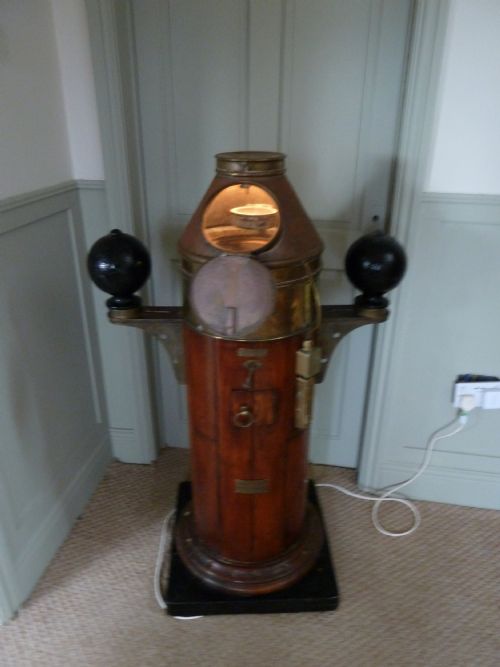
- A built-in housing on a ship's deck traditionally holding a ship's compass to protect it from the elements. These fixtures often incorporate brass and glass components.
- Teak
- A dense, durable tropical hardwood resistant to moisture and decay, frequently utilised for large marine wheels. Its natural oil content preserves the timber in harsh marine environments.
- Spoke
- One of the radial handles projecting from the centre of a ship's wheel used to turn the rudder. Larger wheels typically feature eight or more spokes for leverage.
- Maritime
- Pertaining to the sea, navigation, and shipping, describing objects created for use on vessels or decorated with nautical motifs. This style encompasses both working gear and decorative items.
Antique Ship Helm: Frequently Asked Questions
How large are these ship wheels?
Dimensions vary significantly from compact desk clocks and small regional wheels measuring under two feet to large steering wheels spanning four feet across.
Larger teak and oak examples require substantial wall space or floor mounting, whereas smaller items suit standard domestic interiors.
Were these wheels used at sea?
Many larger wheels and binnacles originated on working vessels during the nineteenth century, bearing the practical marks of maritime service.
Other items, such as desk clocks and mantel clocks, were manufactured specifically for domestic or office display using nautical themes.
What woods were used?
Construction primarily utilises sturdy hardwoods including teak and oak chosen for their durability and resistance to moisture.
Some regional items feature painted softwood surfaces, while metal elements incorporate brass and iron.
How do I date an antique helm?
Dating relies on stylistic markers, construction techniques, and materials characteristic of the Victorian period and the late nineteenth century.
Maker signatures or retailer marks on associated clocks and brass components also help establish a specific decade.