

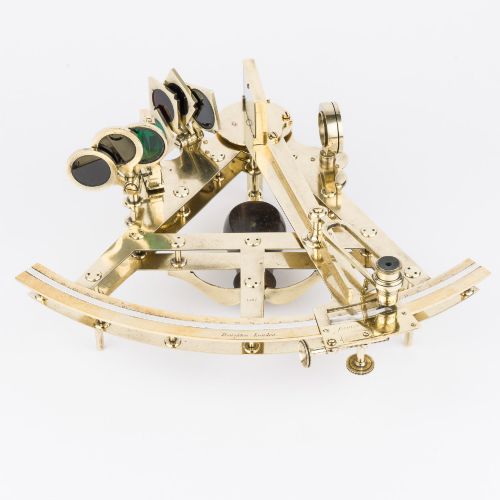
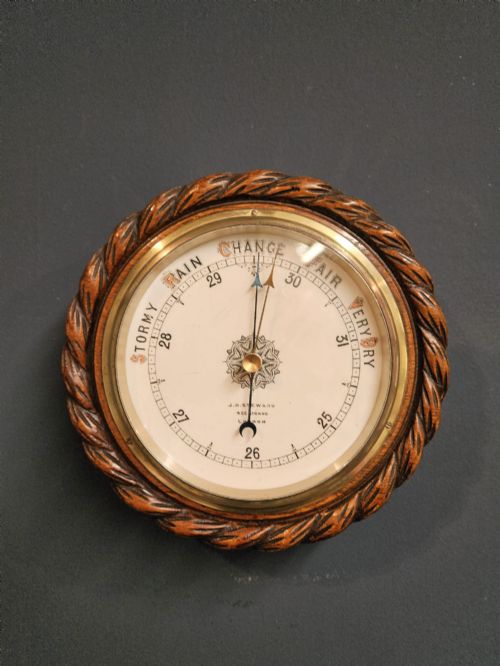
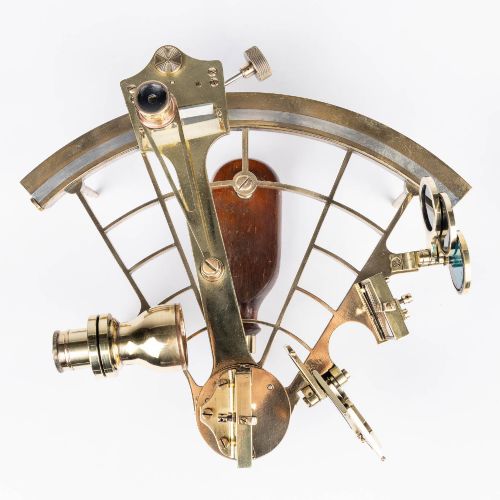
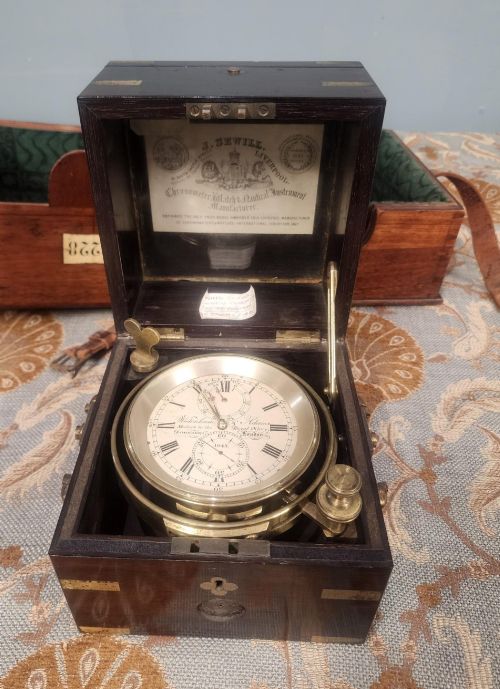
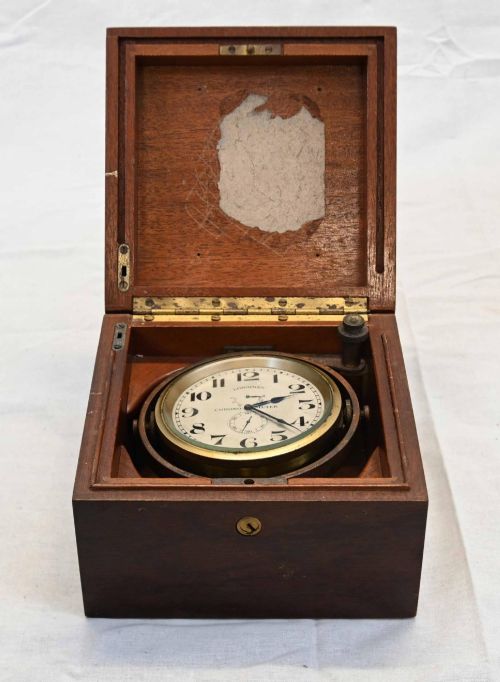


Brass Ship Instrument
A brass ship instrument brings the precision of maritime navigation and weather tracking into a room.
Brass Ship Instrument
A brass ship instrument encompasses barometers, clocks, chronometers, binnacles, compasses, clinometers, and telegraphs designed for marine use. These objects reflect the practical needs of navigation and meteorology at sea across the nineteenth and twentieth centuries.
The versions met most frequently on this page date from the Victorian and Edwardian periods through to the mid-twentieth century. They range from bulkhead barometers and desk compasses to cased marine chronometers and telegraphs.
Makers and retailers such as Thomas Mercer, Litherland Davies of Liverpool, Bate of London, and H Hughes produced these pieces for serious maritime application. They combine utilitarian strength with the refined metalwork expected in ships' cabins and chart rooms.
Materials and Construction
Heavy brass forms the primary housing for these instruments, chosen for its resistance to corrosion in marine environments and its capacity to be cast and turned to tight tolerances. Silvered metal dials provide clear legibility for engraved scales and graduations.
Cabinet woods such as mahogany, oak, and rosewood serve as mounting boards, travel cases, and desk stands, often featuring fitted brass hardware and glazed viewing panels to protect delicate internal movements.
Brass Ship Instrument Retail Price Guide 2026
Typical asking prices for brass ship instrument among the pieces listed under this phrase on Sellingantiques today, from the lower quarter to the upper quarter. They describe what is for sale here now, not the wider market.
Some barometers include storm glass indicators, designed to predict weather changes by the supposed crystallization patterns inside a sealed glass tube.
Assessing Quality
Quality rests in the precision of the mechanical movement and the crispness of the engraved or silvered dials. Makers known for chronometry and scientific instruments invested greater skill in escapements, barometric tubes, and gimbal mountings.
The integrity of the cabinetry and the weight of the brass castings also set finer examples apart. Secondary woods matched to heavy brass bezels and original fitted wooden transit cases indicate a higher grade of production.
Thomas Mercer·Litherland Davies Of Liverpool·Bate of London·H Hughes
The Brass Ship Instrument Glossary
- Bulkhead barometer
- A weather-measuring instrument designed to be mounted directly to the vertical wall of a ship's cabin.
- Marine chronometer
- A highly accurate portable timekeeper used at sea to determine longitude by celestial navigation.
- Binnacle
- A freestanding housing situated near the steering wheel that holds a ship's magnetic compass and correcting magnets.
- Clinometer
- An instrument used for measuring the angle of a ship's roll or pitch upon the water.
- Barocyclonometer
- A specialised meteorological instrument utilised in the tropics to detect the approach of typhoons and cyclones.
Brass Ship Instrument: Frequently Asked Questions
What is a brass ship instrument?
A brass ship instrument is a navigational or meteorological device housed in brass for use aboard a vessel.
These pieces include barometers, chronometers, compasses, and telegraphs made during the nineteenth and twentieth centuries.
How were these instruments used at sea?
Navigators used them to track time, forecast weather changes, and maintain correct headings while away from land.
Heavy gimbals and sturdy mounts kept the instruments level despite the constant roll and pitch of the ship.
How do I date a Victorian marine barometer?
Dating relies on the style of the wood case, the engraving on the silvered dial, and the maker's signature.
Victorian pieces often feature rosewood or oak mounts with mercury-filled glass tubes and vernier scales.
How should I care for brass instruments?
Keep them away from direct heat sources and excessive moisture to protect the timber cases and glass seals.
Allow the brass to retain its natural appearance rather than polishing it to a bright shine.