



Brass Sewing Box
A brass sewing box holds needles and threads while displaying the rich wood and metalwork of the nineteenth century.
Brass Sewing Box
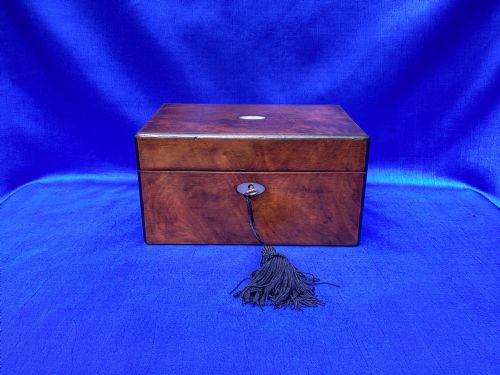
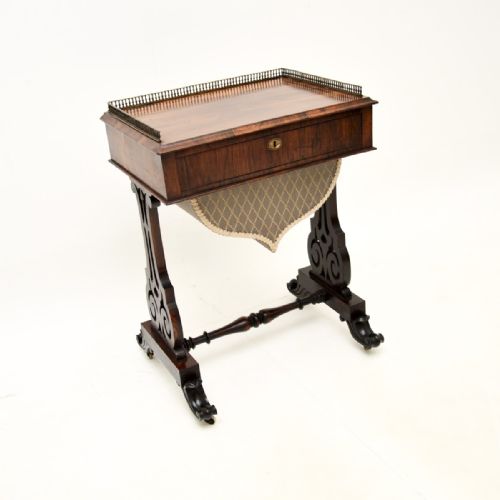
When you search for a brass sewing box, you discover compact desk storage and larger freestanding work tables designed for needlework and small valuables. These items span the Regency and Victorian periods, taking forms from portable sarcophagus cases to campaign chests and occasional tables.
You are most likely to meet rosewood and mahogany tabletop boxes inlaid with brass stringing or motifs, alongside larger teak campaign pieces and walnut workboxes. The smaller portable containers often include fitted interior compartments, while tables incorporate silk bags or wooden wells beneath the main surface.
Originating predominantly from English and French workshops, these containers served polite domestic interiors as well as travels across the British Empire. The integration of brass fittings, whether simple corner brackets or elaborate marquetry, unites the portable boxes and the larger pedestal tables.
How they were made
Cabinetmakers utilised dense timbers like rosewood, mahogany, walnut, and satinwood as the structural carcass, often shaping them into sarcophagus or rectangular profiles. Surfaces received contrasting veneers and detailed boxwood or ivory stringing before finishing with French polish or natural oils.
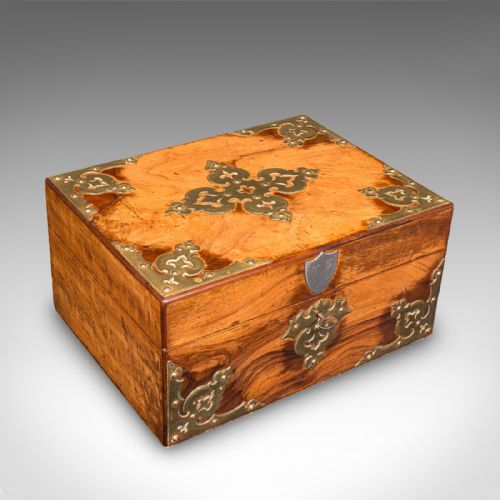
Brass formed an essential component through inlaid strapwork, escutcheons, corner brackets, and cast mounts. Artisans routed precise channels into the hardwood to embed the brass flush with the surface, securing the metal with tiny pins.
Some nineteenth-century boxes hid secret drawers behind false partitions, keeping private letters and extra spools safe from prying eyes.
What varies in quality
The precision of the brass inlay reveals the hand of the maker, with finer pieces exhibiting tight, gap-free insertion into the timber background. Inferior examples show wider filler lines around the metal or stamped brass sheets glued rather than embedded.
Interior fittings dictate the standard of the piece, distinguishing simple empty compartments from elaborate tiered trays lined in silk, velvet, or leather with matched bone and ivory accessories. Original hinges, locks, and working keys elevate the integrity of a box.
Thomas Briggs
The Brass Sewing Box Glossary
- Workbox
- A portable container fitted with compartments for sewing implements, threads, and small needles. These boxes often feature hinged lids and lift-out trays.
- Sarcophagus
- A box shape characterised by a steep plinth base, a convex moulded body, and a domed lid resembling an antique stone coffin. This profile appeared frequently during the Regency period.
- Campaign
- Furniture and boxes constructed for travel, typically reinforced with brass corners, inset carrying handles, and robust locking mechanisms. Teak and mahogany served as the primary timbers for these durable items.
- Stringing
- Thin lines of contrasting wood or metal inlaid into the surface of a panel to create geometric borders. It frames the central veneers of tabletop boxes.
- Etui
- A small ornamental case designed to hold needles, scissors, and tweezers. These delicate holders sit inside larger sewing boxes or appear as standalone items.
Brass Sewing Box: Frequently Asked Questions
What fits inside a brass sewing box?
These containers hold spools of thread, needles, thimbles, and small scissors within tailored compartments and lift-out trays. Many boxes include velvet-lined sections or specialised holders for bone and ivory accessories.
Larger freestanding sewing tables provide deeper wooden wells or suspended fabric bags underneath the main work surface for ongoing needlework projects.
How do I date a rosewood sewing box?
Regency examples often feature sarcophagus silhouettes, bold brass inlay, and ring-turned feet dating from roughly 1800 to 1830. Victorian pieces from later decades display darker rosewood or walnut timbers with heavier mouldings and Gothic Revival or campaign influences.
Interior construction also aids dating, as handmade dovetailed trays give way to machine-sawn elements by the later nineteenth century.
Are these boxes suitable for modern jewellery storage?
The original compartmentalised trays and velvet or leather linings make these boxes well suited for rings, earrings, and necklaces. Portable models offer secure storage with working locks.
Freestanding tables provide larger top surfaces alongside internal storage for everyday accessories and trinkets.
What is a campaign sewing box?
Campaign boxes utilise durable timbers like teak and mahogany fitted with brass corner braces, strapwork, and flush inset handles for travel. These pieces were built to withstand distant transit during the nineteenth century.
They combine writing slopes, jewellery storage, and sewing compartments within a single reinforced wooden carcass.