


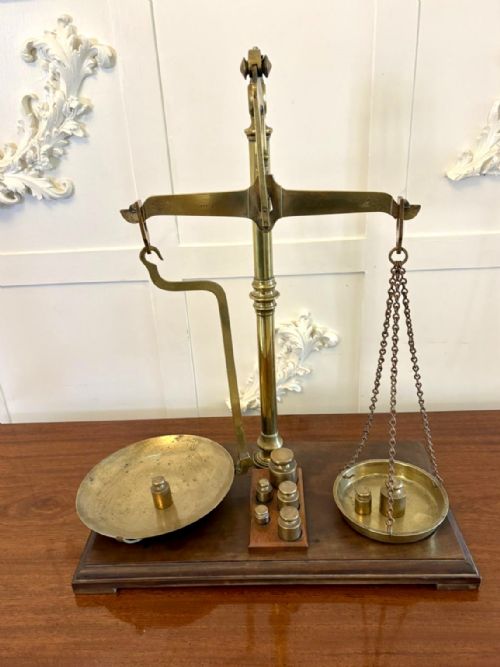


Brass Scientific Scale
A brass scientific scale is a precision measuring instrument designed for laboratory, commercial, or trade accuracy.
Brass Scientific Scale
A brass scientific scale encompasses precision balance scales, beam scales, yarn testers, and portable chondrometers originating from the nineteenth and early twentieth centuries. These instruments reflect the exacting standards required for apothecary, textile testing, and official verification.
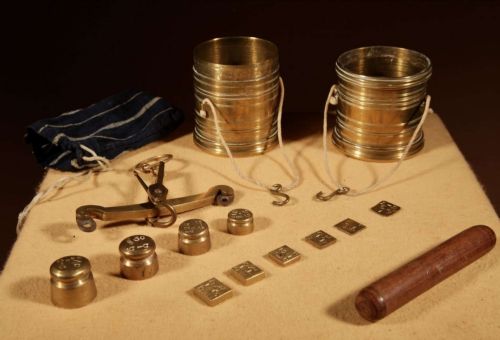
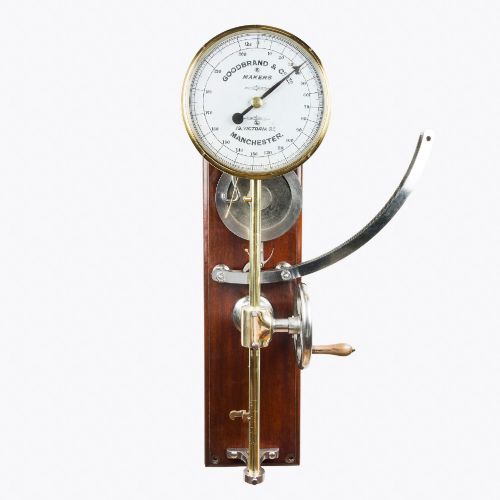
The versions most commonly met on this page include Victorian apothecary balance scales housed in mahogany cases, alongside robust verification balances and industrial testing apparatus from makers such as De Grave Short and Co.
How they were made
Makers utilised polished brass for the sensitive beams, pans, and indicator needles, combining the metal with seasoned mahogany for protective cases and stable bases.
Delicate glass components, steel pivots, and velvet linings were integrated to protect fragile indicators and weights during transport and precise measurement.
Brass Scientific Scale Retail Price Guide 2026
Typical asking prices for brass scientific scale among the pieces listed under this phrase on Sellingantiques today, from the lower quarter to the upper quarter. They describe what is for sale here now, not the wider market.
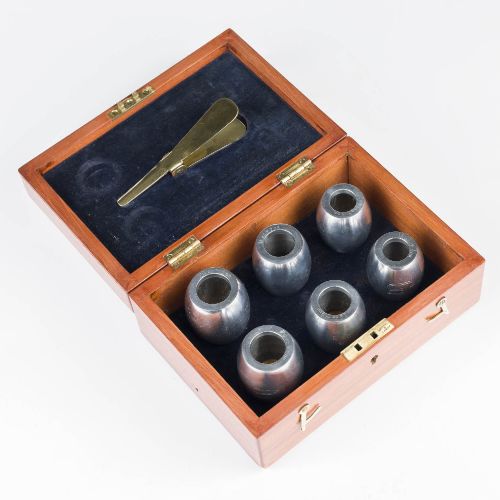
Certain nineteenth-century inspectors carried portable chondrometers into markets to settle grain disputes on the spot.
What varies in quality
Quality rests in the precision of the beam pivot, the integrity of the original fitted case, and the presence of matching maker stamps or verification marks.
The finest examples retain their complete sets of weights and display crisp maker inscriptions, whereas lesser items show heavy wear, mismatched components, or missing enclosures.
De Grave Short and Co·Robert Brettell Bate·Day and Millward·Negretti and Zambra·Stephen Houghton and Son
The Brass Scientific Scale Glossary
- Beam scale
- A weighing device consisting of a horizontal lever with arms of equal length, pivoted at the centre. It relies on gravity to determine mass by comparing an object against known weights.
- Chondrometer
- A portable instrument used to measure the specific weight or density of grain. These devices were vital for agricultural trade and quality assessment.
- Linen tester
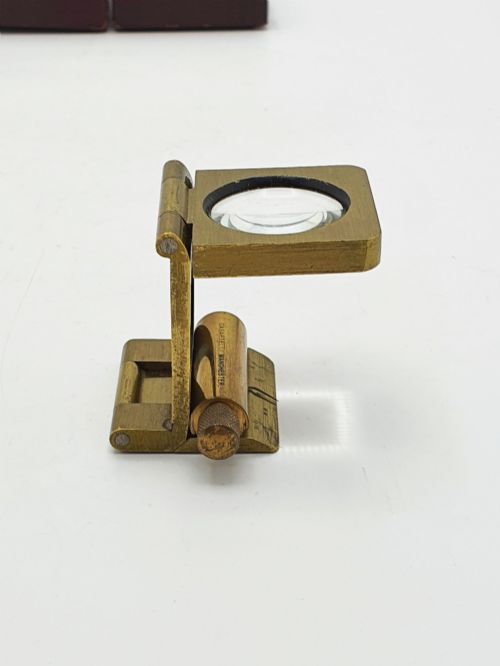
- A small magnifying glass mounted on a folding frame, used by textile merchants to count threads in a given area of fabric.
- Sympiesometer
- A type of barometer that uses oil and gas to measure atmospheric pressure with high sensitivity. It combines mechanical scale readings with temperature compensation.
Brass Scientific Scale: Frequently Asked Questions
What is a brass scientific scale used for?
These instruments were utilised for precise laboratory work, apothecary dispensing, and commercial verification of weights and measures. They ensured exact quantities for trade, science, and industry.
Over time, many transitioned from working instruments into decorative objects prized for their mechanical complexity and polished metalwork.
How do I date a brass scientific scale?
Dating relies on maker signatures, engraved addresses, and stylistic cues in the mahogany cabinetry. Nineteenth-century examples often feature ornate script and fitted wooden boxes.
Later pieces from the Edwardian era and twentieth century display more utilitarian designs and official verification stamps from local authorities.
How should I clean a brass scientific scale?
Dust the instrument gently with a soft brush and avoid harsh chemical polishes that strip historical patina from the brass surfaces. Mahogany bases respond well to light applications of beeswax.
Preserving the original finish and markings maintains the historical integrity of the piece.
Are original weights usually included?
Many surviving balances retain their original fitted velvet-lined compartments containing matched brass weight sets. Complete sets enhance the completeness of the instrument.
Some pieces survived as standalone testing devices or barometers without separate weight pans.