




Vintage Industrial Scale
A vintage industrial scale brings heavy-duty utility and robust mechanical design into a modern room, offering authentic workshop heritage.
Vintage Industrial Scale
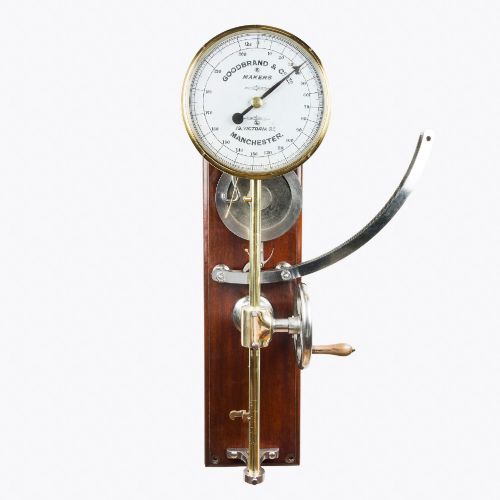
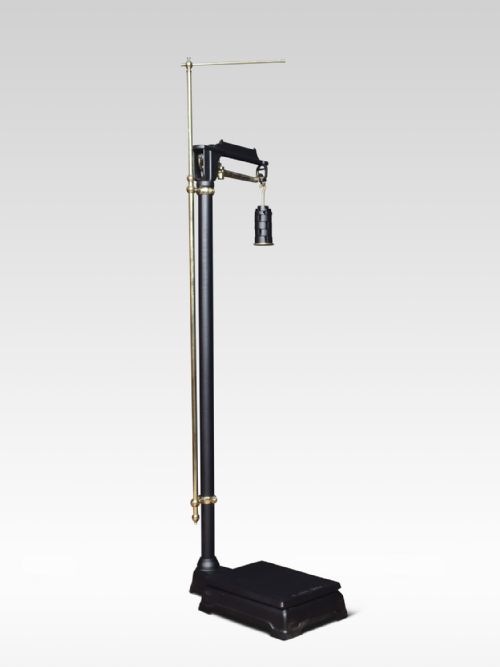
A vintage industrial scale represents the heavy-duty weighing devices and testing machinery produced during the nineteenth and early twentieth centuries. These objects range from massive cast iron balance scales to specialised yarn and silk strength testers used in industrial manufacturing.
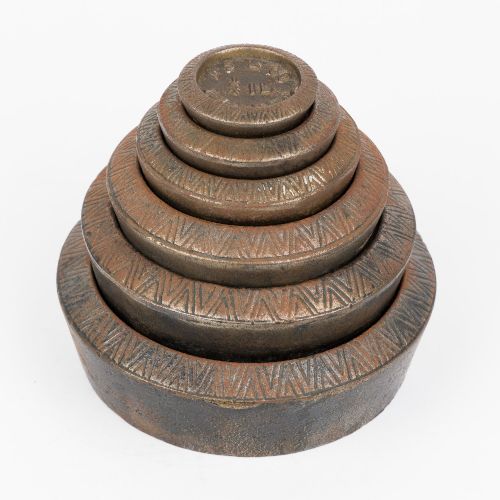
The versions most likely encountered on this page date from the Victorian period through to the 1930s, incorporating materials like brass, copper, and wrought iron. Alongside functional weighing scales, buyers also find related scientific instruments, model engines, and stacking weights.
Makers such as Goodbrands of Manchester and Fairbanks Scale Co appear in the evidence, showing the crossover between British and American engineering of the era. Each piece reflects the functional requirements of nineteenth and early twentieth-century trade, laboratories, and factories.
How they were made
Makers utilised durable metals such as cast iron and steel to construct the heavy frames and bases required for accurate weighing and machine stability. Wrought iron and brass components provided the moving parts, pivot points, and balancing mechanisms essential for precision work.
Copper and mahogany occasionally appeared in balance scales, adding decorative yet robust elements to scientific and commercial instruments. Metal casting and hand-finishing formed the core techniques of production, ensuring each piece could withstand decades of heavy workshop use.
Vintage Industrial Scale Retail Price Guide 2026
Typical asking prices for vintage industrial scale among the pieces listed under this phrase on Sellingantiques today, from the lower quarter to the upper quarter. They describe what is for sale here now, not the wider market.
Listings feature items spanning the Victorian era through to 1930, utilising cast iron, brass, copper, and mahogany.
What varies in quality
The distinction between ordinary utility items and superior pieces rests on the complexity of the engineering and the intactness of original components. Intricately cast iron frames and signed brass plates from established makers elevate a piece above standard workshop equipment.
Materials also dictate the tier of an object, with combinations of copper, brass, and mahogany showing greater attention to finish than purely utilitarian iron models. The presence of legible maker inscriptions and specialised testing functions separates standard workshop scales from notable engineering instruments.
Goodbrands & Co·Goodbrands of Manchester·Fairbanks Scale Co
The Vintage Industrial Scale Glossary
- Cast iron
- A hard, relatively brittle alloy of iron and carbon that can be readily cast in a mould. It formed the heavy structural base for nineteenth-century scales and machinery.
- Balance scale
- A device for weighing items by comparing an object of unknown mass with one or more standard masses. These typically employ a central pivot with suspended pans.
- Stacking weights
- A set of calibrated metal blocks designed to fit inside one another for storage. Victorian examples were frequently used in trade and commerce.
- Yarn tester
- A specialised mechanical instrument used in textile manufacturing to measure the strength and elasticity of yarn or silk. Goodbrands of Manchester produced notable examples of these testing devices.
- Wrought iron
- A tough, malleable form of iron containing little carbon, easily forged and worked. It provided strong structural support for industrial apparatus.
Vintage Industrial Scale: Frequently Asked Questions
What are vintage industrial scales made from?
These items are constructed primarily from durable industrial metals such as cast iron, steel, and wrought iron for strength and stability. Brass and copper frequently appear on balance beams, fixings, and measuring pans.
Some pieces incorporate wood elements like mahogany, particularly in the bases or associated cabinetry of nineteenth-century scientific instruments.
How were industrial scales used?
Industrial scales and testers served practical functions in factories, laboratories, and trade environments to weigh goods or test material strength. Devices like yarn testers measured the tensile limits of silk and other textiles during production.
Heavier balance scales managed bulk goods, while stacking weights provided the precise standards needed for commercial transactions.
How do I date a vintage scale?
Dating relies on stylistic clues, materials, and any stamped maker marks or patent dates found on the metalwork. Pieces span the Victorian era through to the 1930s, shifting from ornate cast iron designs towards more streamlined twentieth-century engineering.
Maker inscriptions, such as those from Fairbanks or Goodbrands, help narrow the manufacturing period to specific decades.
How do I live with industrial scales?
These robust metal objects suit interiors that celebrate mechanical heritage, fitting well on kitchen worktops, sideboards, or open shelving. Their heavy cast iron and brass construction requires a sturdy surface for display.
Maintenance involves keeping the metal clean and dry to preserve the original patina without removing the history of workshop use.