




Brass Scientific Gauge
These brass scientific gauge pieces record pressure, wind and atmospheric changes with the precision demanded by Victorian and Edwardian science.
Brass Scientific Gauge
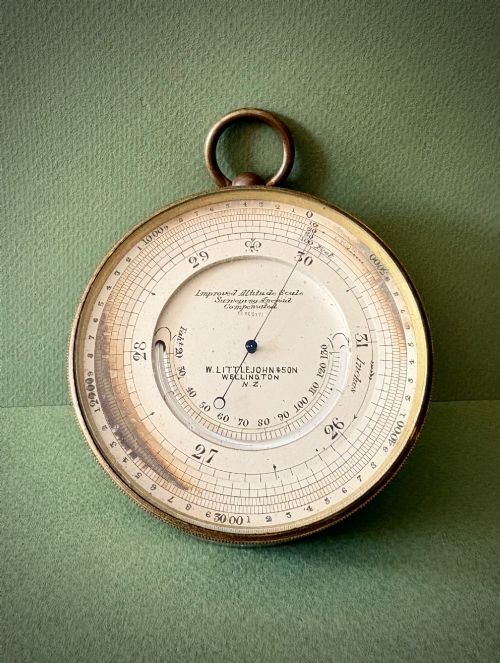
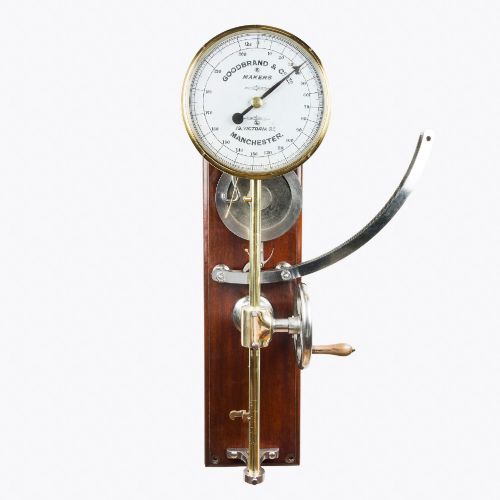
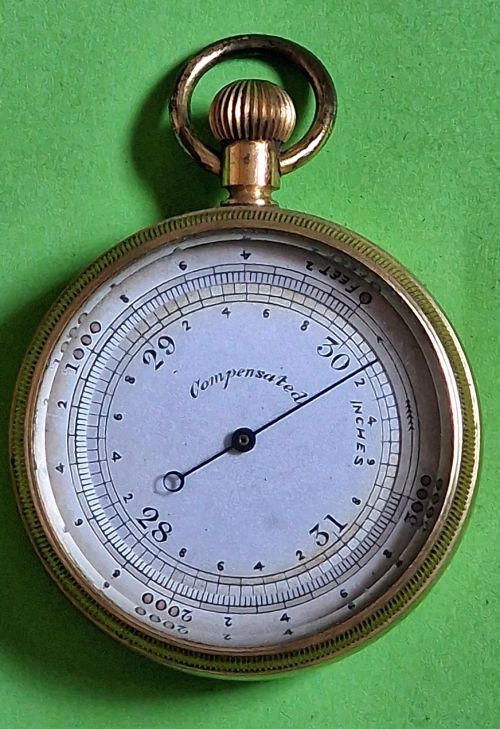
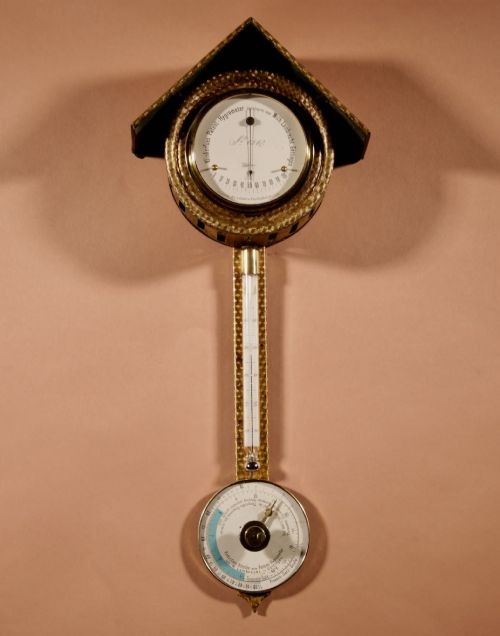
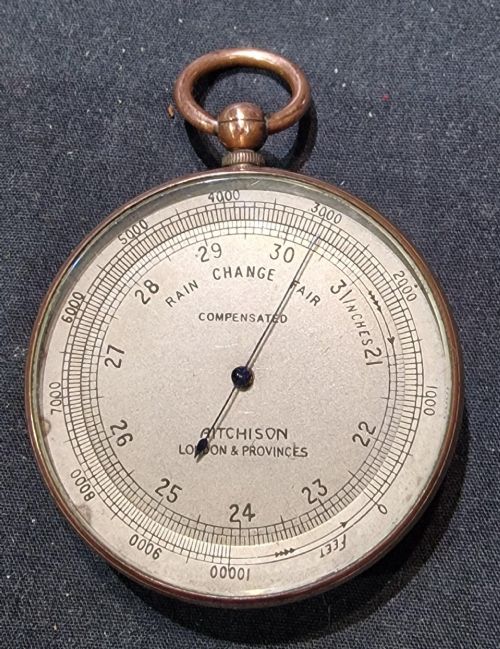
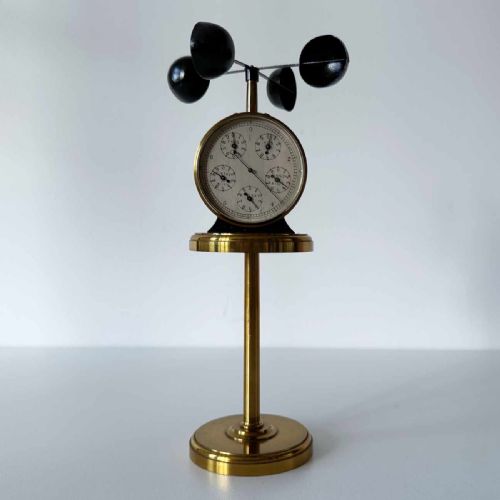
A brass scientific gauge is an instrument designed to measure atmospheric pressure, wind speed, moisture or temperature, originating mostly from the nineteenth and early twentieth centuries. When searching for this phrase, collectors encounter pocket barometers, weather stations, hygrometers, anemometers and barographs housed in mahogany, walnut, ebonised wood or leather cases.
The versions most frequently met on this page date from the Victorian and Edwardian periods, bearing the signatures of prominent London and regional makers such as Short & Mason, Negretti & Zambra, and Dollond. These instruments range from portable pocket indicators to large pedestal anemometers and stick barometers intended for domestic, marine or meteorological observation.
Makers constructed these devices to serve specific industrial, agricultural or navigational needs, resulting in specialised forms like yarn testers, thread testers, clinometers and water pressure gauges. Each piece demonstrates the period reliance on mechanical calculation and visual scale reading before the advent of electronic measurement.
How they were made
Makers relied heavily upon polished brass for dials, bezels and internal movements, pairing the metal with glass viewing lenses and robust timber cases made from mahogany, walnut, beechwood or ebonised wood. Leather and velvet linings frequently protect portable pocket instruments and cased thermometers, securing delicate glass tubes and sensitive needles against transit damage.
Craftsmen utilised precise engraving techniques for dial faces, graduating scales by hand to ensure accurate readings for barometric pressure, humidity or wind velocity. Internal components combined steel springs, hair elements and intricate gear linkages, housed securely within cast or turned metal housings.
The inventory includes specialised equipment ranging from marine barometers and pocket altimeters to industrial yarn testers and meteorological barographs.
What varies in quality
Quality in a brass scientific gauge rests upon the reputation of the maker and the legibility and crispness of the engraved dial work. Instruments bearing signatures from established London scientific opticians display finer tolerances in their gear trains and more substantial housing construction than unsigned commercial items.
The presence of the original fitted case, particularly those lined in velvet or leather with working brass hooks and hinges, elevates an instrument. The integrity of the glass panels, the retention of the original lacquered brass finish, and the survival of secondary components like chart drawers or mercury tubes determine the standing of each piece.
Short & Mason London·Negretti & Zambra·Dollond London·Wilh Lambrecht Gottingen Germany·Alfred Apps
The Brass Scientific Gauge Glossary
- Aneroid barometer
- A device that measures atmospheric pressure without liquids, utilising a flexible metal box that expands or contracts.
- Anemometer
- An instrument used to measure wind speed and direction, often featuring rotating cups or vanes connected to dial indicators.
- Hygrometer
- An apparatus designed to measure the humidity or moisture content in the air, utilising human hair or chemical elements.
- Barograph
- A recording meteorological instrument that produces a continuous graphical trace of barometric pressure onto a rotating paper drum.
- Clinometer
- A tool used for measuring angles of slope, elevation or depression with respect to gravity.
- Fortin stick barometer
- A mercury barometer featuring an adjustable cistern and an ivory point to set the mercury level precisely before reading.
Brass Scientific Gauge: Frequently Asked Questions
How do I read an aneroid barometer?
Read the main pointer against the engraved dial scale to note the current atmospheric pressure reading in inches or millibars. Use the movable secondary hand via the front bezel to mark the existing pressure so future observations reveal whether the weather is improving or worsening.
Compare your reading against the weather descriptions etched around the dial rim, such as rain, change or fair. Keep the instrument away from direct heat sources and draughts to ensure the internal metallic capsule responds accurately to ambient atmospheric changes.
What is the difference between a barometer and a barograph?
A standard barometer provides a single visual indication of current atmospheric pressure using a pointer moving across a circular dial. It reflects immediate conditions at the exact moment you consult the instrument face.
A barograph records pressure continuously over a weekly or daily period by drawing a ink trace onto a rotating paper chart secured to a drum. This mechanical history allows observers to track weather trends and pressure drops over time at a glance.
How should I clean a brass scientific gauge?
Dust the exterior timber case and glass viewing lenses gently using a soft, dry lint-free cloth. Avoid chemical cleaning solutions or abrasive polishes on the brass components, as aggressive rubbing removes the original historic lacquer and patination.
Leave internal mechanical movements to specialist conservators rather than attempting home oiling or dismantling. Maintaining stable indoor humidity prevents timber warping in the mahogany or walnut housing and protects the delicate brass finishes.
Are these old instruments still accurate?
Many surviving nineteenth and early twentieth century barometers and thermometers still respond to environmental changes with a high degree of mechanical fidelity. Minor discrepancies can occur due to age, but barometers often require only a simple calibration screw adjustment against a known local reading.
Complex meteorological recording devices function best as historic display items rather than daily forecasting tools. Their primary value lies in their exceptional engineering, material quality and mechanical heritage rather than modern meteorological utility.