



Brass Scale Weights Set
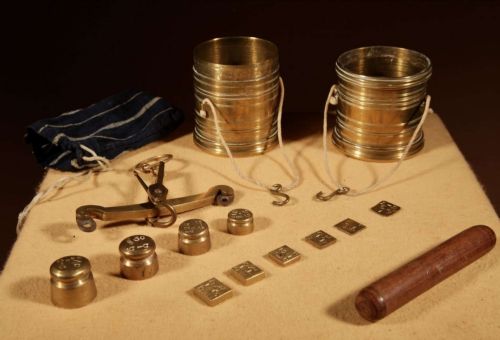
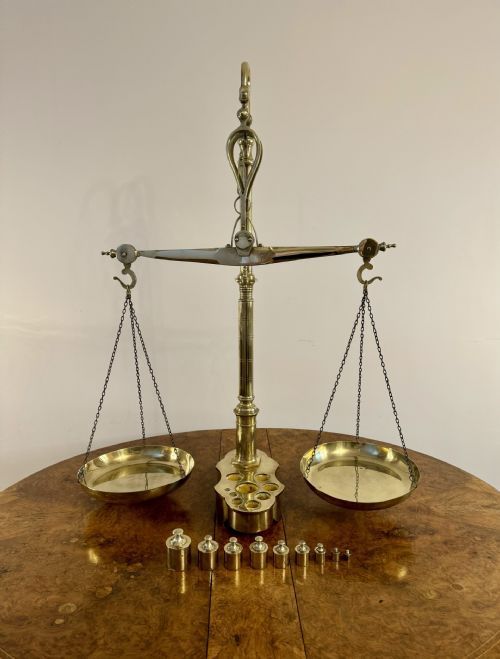
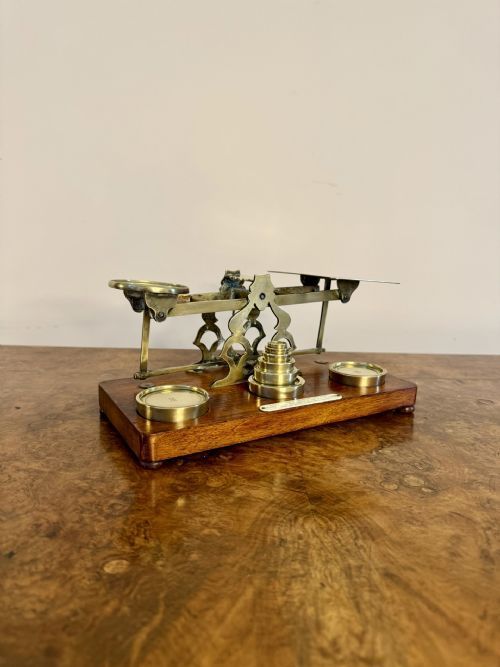
These brass scale weights set pieces are functional measuring apparatuses and fitted calibration tools that bring historic utility and structured precision to a modern desk or shelf.
Brass Scale Weights Set
A brass scale weights set comprises matched arrays of calibrated metal masses designed for specific weighing tasks, frequently paired with beam balances, postal scales, or kitchen equipment. These items span the Victorian and Edwardian eras, reaching into the mid-twentieth century with specialist industrial and administrative instruments.
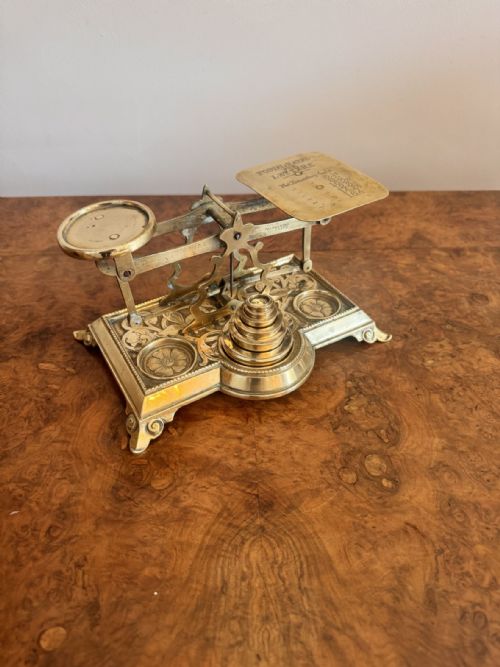
The most common formats on this page are postal and letter scales mounted on hardwood bases of mahogany, oak, or walnut, alongside cased apothecary sets and official standard weights. Makers produced these for domestic correspondence, commercial grocery trade, and municipal or county authorities requiring exact imperial standards.
Originating largely from British workshops and makers in London and the provinces, these sets reflect the rigorous measurement demands of nineteenth and twentieth-century commerce. Collectors encounter everything from domestic letter balances to heavy-duty grocers scales and county standard sets.
Materials and construction
The dominant material is cast and turned brass, chosen for its durability and resistance to corrosion, paired with solid timber bases in mahogany, oak, walnut, and assorted hardwoods. Many balance sets incorporate iron components for structural framing, while delicate apothecary and precision sets often feature fitted wooden block stands.
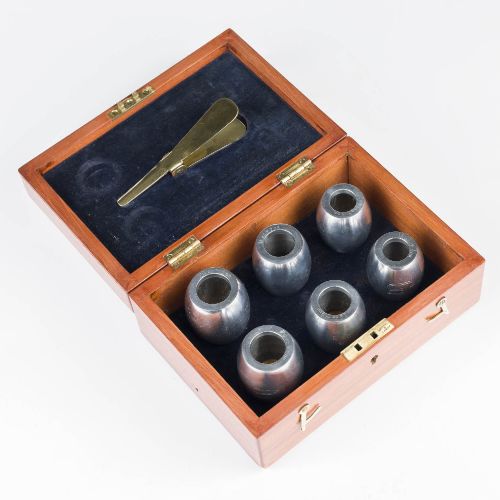
Makers shaped the weights through precision turning and stamping, frequently engraving them with official municipal or postal standards, maker details, and unit denominations such as Troy ounce or avoirdupois. Fitted presentation boxes and block stands frequently include velvet or textile linings to secure the individual weights.
Weights inscribed for the Borough of Blackpool bring a touch of seaside administrative history straight to the collector's desk.
Assessing quality and completeness
Quality rests primarily on the completeness of the set and the presence of original matching components, such as fitted wooden block stands, velvet linings, and corresponding balance beams. Sets retaining their original stamped municipal or maker inscriptions command greater interest than assembled or partial groups of weights.
The refinement of the brass turning and the joinery of the hardwood bases further distinguish standard commercial items from bespoke or official government instruments. Fine examples feature crisp maker signatures, clear calibration stamps, and well-preserved timber patination.
De Grave Short And Co·W And T Avery·S Mordan And Co·Young And Son·Thornill
The Brass Scale Weights Set Glossary
- Avoirdupois
- The system of weight used for general goods based on the pound and ounce. This system governed everyday trade and standard commercial weighing in Britain.
- Troy ounce
- A system of troy weights traditionally used for precious metals and apothecary items. It differs from avoirdupois standards in its unit divisions.
- Beam scales
- A weighing instrument consisting of a horizontal lever suspended from a central fulcrum. Two pans hang from equal arms to determine mass.
- Bell weights
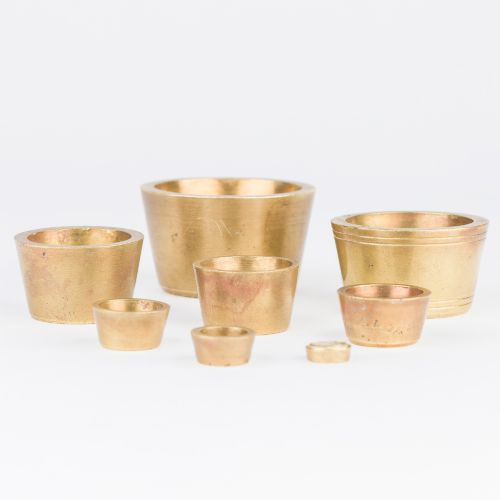
- Heavy, bell-shaped brass masses designed for use with kitchen, dairy, or grocery beam scales. Their distinctive profile allows for easy lifting and stable placement.
Brass Scale Weights Set: Frequently Asked Questions
What are brass scale weights used for?
These sets served precise measuring functions in post offices, grocery shops, banks, and domestic kitchens. They ensured accurate commercial transactions and correspondence charges.
Today, they function as decorative objects and historical displays that celebrate nineteenth and twentieth-century engineering and trade.
How do I know if the weight set is complete?
A complete set retains every original slot in its fitted mahogany, oak, or walnut block stand without replacement pieces. Look for matching patination and consistent stamps across all units.
Municipal and postal sets often feature graded sequences that reveal missing denominations when compared against standard imperial progressions.
How should I clean antique brass?
Antique brass benefits from gentle dusting with a soft dry cloth to preserve its aged surface patination. Aggressive chemical cleaning removes historical character and diminishes the finish.
Wooden bases require occasional treatment with suitable wax to maintain the moisture and grain of mahogany, oak, or walnut.
What is the difference between postal and kitchen scales?
Postal scales are typically lighter instruments mounted on polished hardwood bases designed for weighing letters and parcels with letter clips. Kitchen scales are heavier apparatuses incorporating iron and brass beams meant for foodstuffs.
Kitchen sets frequently use large bell weights, whereas postal sets rely on flat stacked disks or small cylindrical weights.
How can I date a scale set?
Dating relies on maker stamps, regional municipal inscriptions, and the prevailing style of the wooden base. Victorian and Edwardian examples often feature engraved regulatory ciphers and maker signatures.
Patent marks and specific structural materials like solid hardwood versus iron framing help narrow the production era.