
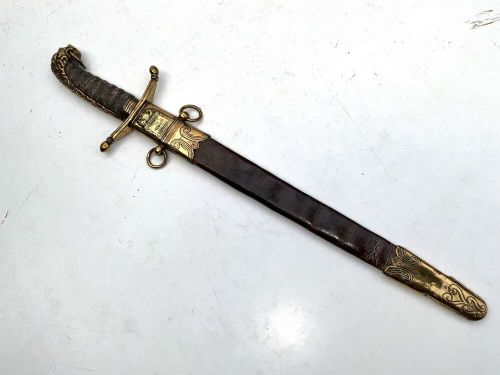
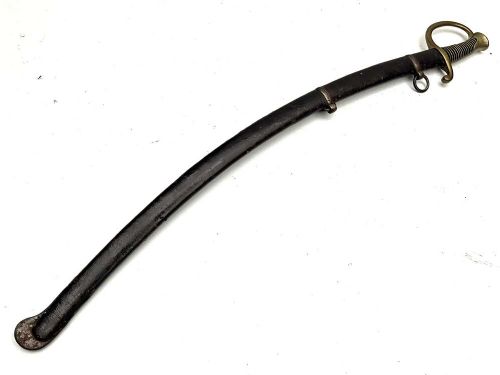
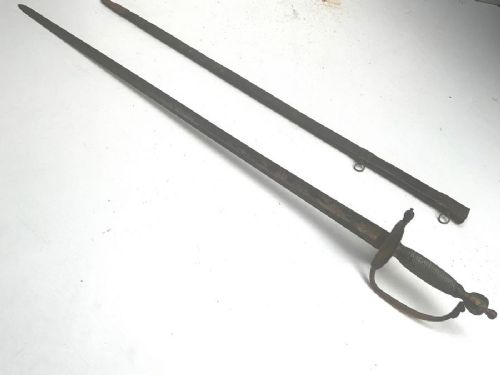
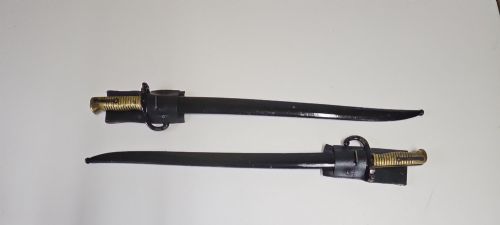
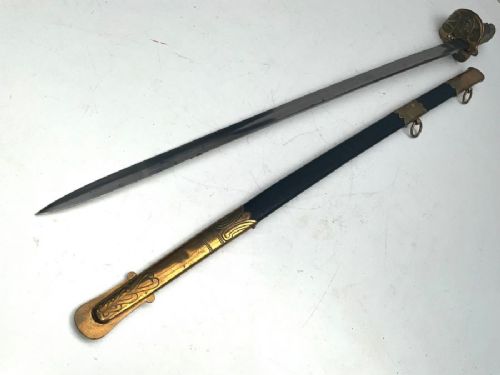
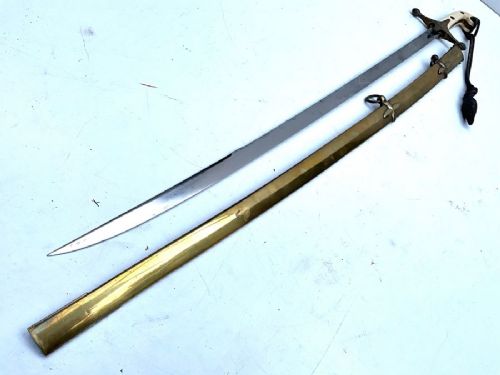
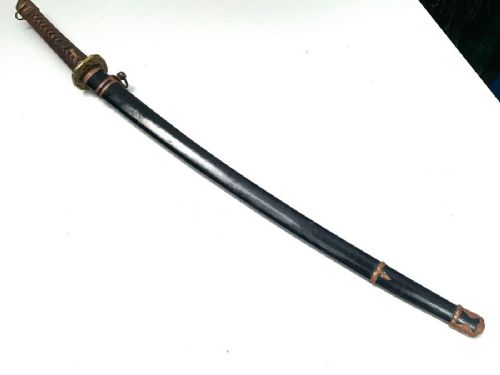
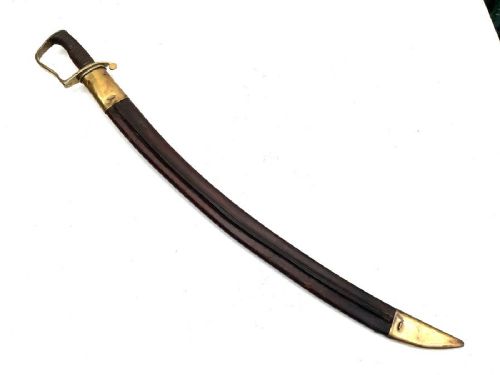


Brass Scabbard Sword
These brass scabbard sword examples combine steel and gilt brass, offering a tangible link to Victorian military history and 19th-century conflict.
Brass Scabbard Sword
A brass scabbard sword represents edged weapons housed in metal or metal-accented protective sheaths, spanning periods from the 18th century through to the mid-20th century. When exploring this selection, buyers frequently encounter pieces originating from British, French, German, and Japanese military contexts.
The inventory on this page showcases various forms including naval dirks, cavalry sabres, spadroons, mameluke swords, and ceremonial pieces. Styles range from Georgian and Victorian military designs to American Civil War era and Showa period items.
Makers and patterns represented here include British officers, French cavalry patterns, and German naval presentations. Each object displays the specific functional or ceremonial attributes of its respective period.
Materials and construction methods
Blades forged from steel are paired with guards and scabbards fashioned from brass, gilt brass, and leather. Additional hilt elements incorporate wire, bone, wood, and cord to ensure a secure grip during use.
Construction techniques combine traditional metalworking for the steel blades with precise casting and fitting for the brass scabbards and mountings. Decorative elements such as blue and gilt finishes are applied to select blades of the earlier periods.
Even officers required a bit of flash, balancing deadly steel with shiny gilt brass scabbards.
Factors of distinction
The integrity of the steel blade and the preservation of the brass scabbard determine the standing of an individual piece. Finer examples retain crisp detailing on the hilt and mountings alongside uncompromised metal surfaces.
Historical association and specific pattern identification elevate certain items above standard military issue. The presence of original grip materials, such as wire or bone, further distinguishes superior survivals.
E Thurkle of Soho
The Brass Scabbard Sword Glossary
- Mameluke
- A curved sword style adopted by Western military officers, inspired by Middle Eastern sabres carried by Mameluke warriors. These often feature distinctive crossguards and ivory or bone grips.
- Dirk
- A long-bladed dagger traditionally carried by naval officers as a sidearm. Victorian examples frequently display intricate brass mountings and etched steel blades.
- Gilt brass
- Brass treated with a thin layer of gold or gold-coloured wash to enhance appearance and prevent tarnish. This finish is commonly observed on ceremonial and presentation sword mountings.
- Pattern
- An officially approved military design specification issued to manufacturers for a specific regiment or service branch. Identifying the pattern helps date and contextualise the weapon.
Brass Scabbard Sword: Frequently Asked Questions
What periods do these swords come from?
The pieces span from the late 18th century through the Victorian era and into the mid-20th century. Examples include Georgian, American Civil War era, and World War II items.
Each period exhibits distinct manufacturing traits and stylistic preferences suited to the military requirements of the time.
How were brass scabbard swords used?
These weapons served active combat roles in cavalry, naval, and infantry units, while others functioned as dress or ceremonial pieces for officers. Naval dirks and sabres were essential equipment for sea-going and land-based campaigns alike.
Ceremonial variations, such as Masonic swords, were utilised in lodge rituals rather than battlefield engagements.
How do I identify a Victorian sword?
Victorian pieces often bear specific regimental cyphers, regulation pattern dates, or design motifs characteristic of the mid to late 19th century. The styling of the hilt and the engraving on the steel blade usually reflect this timeframe.
Consulting standard military reference books helps match the sword's specific pattern to its era of issue.
What materials are used in the grips?
Grips are constructed using materials such as wood, bone, and wire wrappings to ensure a firm hold. The choice of material often depends on whether the sword was intended for active field use or ceremonial dress.
Metals like brass and gilt brass frequently form the backspines, ferrules, and pommels that secure these grip components.