
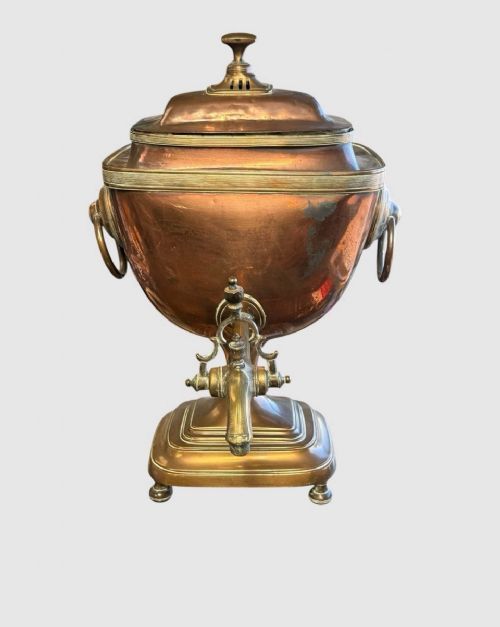


Brass Samovar Urn
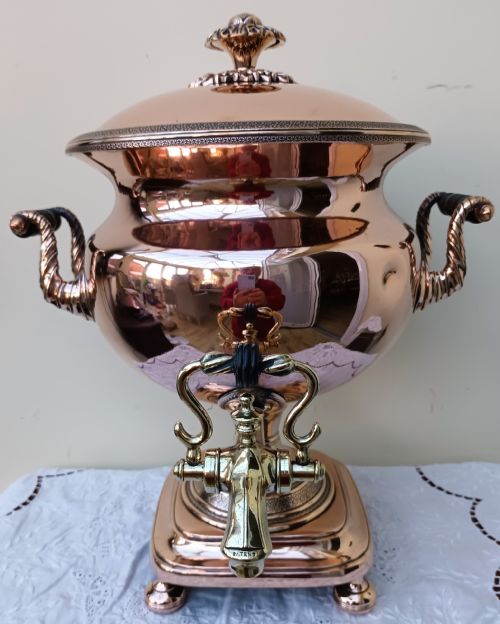
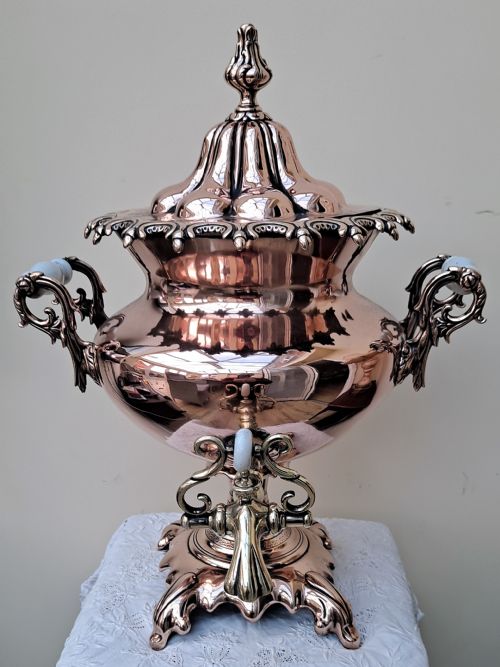
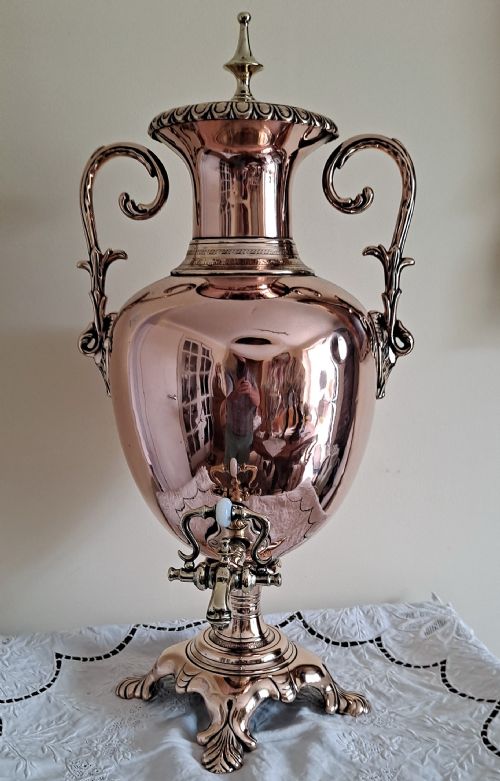
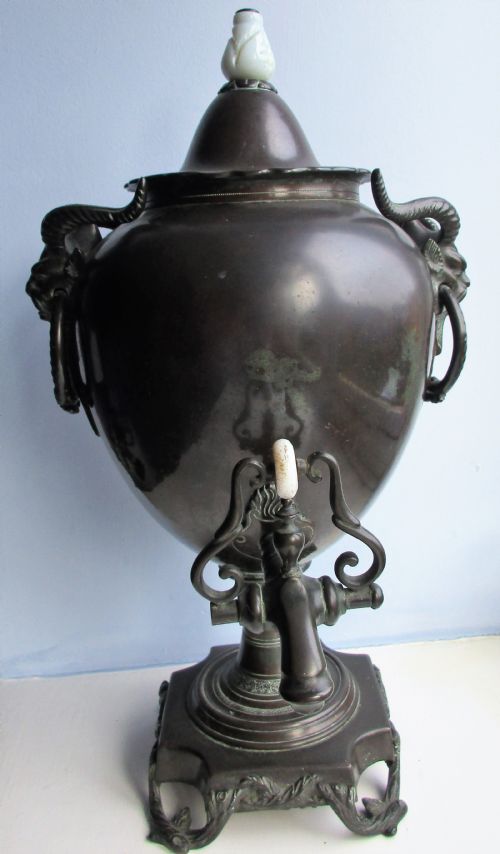
These brass samovar urn pieces bring sculptural warmth and period charm to a room, offering functional water and tea heating vessels from past centuries.
Brass Samovar Urn
A brass samovar urn serves as a traditional vessel for heating water, encompassing tea urns, coffee urns, water urns, and spirit kettles. These pieces originate across the Georgian, Regency, and Victorian eras, alongside Dutch Regency and Arts and Crafts examples.
The most common items met on this page are Victorian and Georgian copper and brass samovars. Pieces often feature combination metals, pairing copper bodies with brass mounts, bone handles, and ebonised wood details.
Forms range from large hanging water urns to dresser style spirit kettles and traditional tea urns. Origin marks frequently point to English workshops, alongside Dutch Toleware and Pontypool Ware productions.
What varies in quality
The calibre of a samovar rests in the integrity of its original fittings and the weight of its metalwork. Superior examples retain their complete internal components, original taps, and matching covers without heavy restoration.
Refinement in surface finish and decorative casting separates standard production from exceptional pieces. Finely chased brass mounts, balanced proportions, and integrated maker details elevate the standing of an urn.
The inventory includes George III, Regency, Victorian, and Arts and Crafts styles, alongside specialised forms like Pontypool Ware and Dutch Toleware.
Benetfink and Co
The Brass Samovar Urn Glossary
- Samovar
- A heated metal urn traditionally used to boil water for tea in domestic settings. These vessels often utilise internal charcoal cylinders or spirit heaters.
- Toleware
- Painted or lacquered metalware, typically tinplate or iron, developed to imitate Asian lacquer techniques. Dutch examples frequently display dark ground colours with painted floral motifs.
- Pontypool Ware
- British japanned metalware produced in Wales, known for glossy dark finishes applied to tinplate. Pieces carry a distinctive hard varnish surface.
- Bell Metal
- An alloy of copper and tin traditionally utilised for cast spouts, taps, and mounts due to its resonant properties and durability. This material ages to a deep golden bronze.
- Spirit Kettle
- A small water kettle mounted on a metal stand above a spirit burner. These portable heating vessels form part of tea service equipment.
Brass Samovar Urn: Frequently Asked Questions
What is a brass samovar urn?
A brass samovar urn is a traditional metal vessel designed for heating and dispensing water, primarily utilised for tea preparation. These objects combine functional heating apparatuses with decorative metalwork.
Most examples incorporate a central internal tube or a base burner to maintain water temperature. Their designs reflect the aesthetic preferences of the Georgian, Regency, and Victorian periods.
How were these urns used historically?
Historically, households utilised these urns to keep a continuous supply of boiling water ready for tea service in drawing rooms and dining parlors. Servants heated the water using internal heaters or spirit burners.
They stood on sideboards or dedicated tables, serving as both functional kitchen equipment and grand decorative centerpieces during social gatherings.
How do I clean a brass and copper samovar?
Maintenance requires gentle dusting and occasional cleaning with appropriate non-abrasive metal cleaners designed for copper and brass surfaces. Harsh chemical agents strip historic patinas and damage soft metal.
Preserving the natural aged finish is standard practice for antique metalware, ensuring the surface retains its historical character rather than appearing overly bright.
Can I still use an antique samovar for boiling water?
Historic samovars are generally treated as decorative objects and display pieces rather than functional kitchen appliances. Internal tin linings degrade over centuries, and original heating elements may not meet modern safety standards.
Collectors appreciate them for their craftsmanship, material combinations, and sculptural presence within period interiors rather than daily utility.
How do I identify a Georgian samovar from a Victorian one?
Georgian samovars typically display neoclassical urn forms, delicate handles, and crisply cast classical brass mounts reflecting late eighteenth-century design. Their proportions mirror contemporary architecture and furniture.
Victorian iterations often feature heavier proportions, mixed metal applications of copper and brass, and more elaborate surface decoration or stamped manufacturing techniques.