


Vintage Metal Tea Dispenser
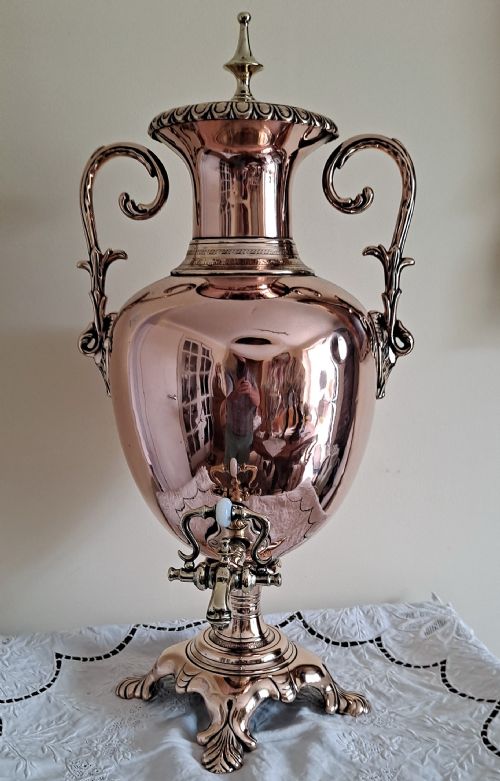
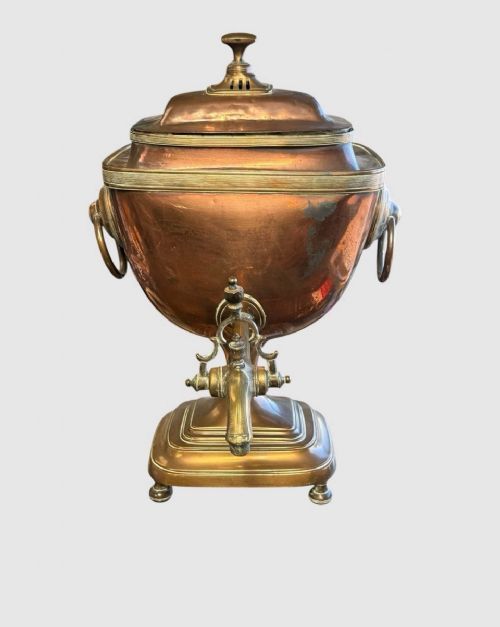
These vintage metal tea dispensers are functional domestic vessels designed to heat and serve water, bringing period presence to any room.
Vintage Metal Tea Dispenser
When you search for a vintage metal tea dispenser, you encounter historical vessel forms such as samovars, tea urns, and coffee urns. These pieces originate across the Georgian, Regency, Victorian, and Edwardian periods.
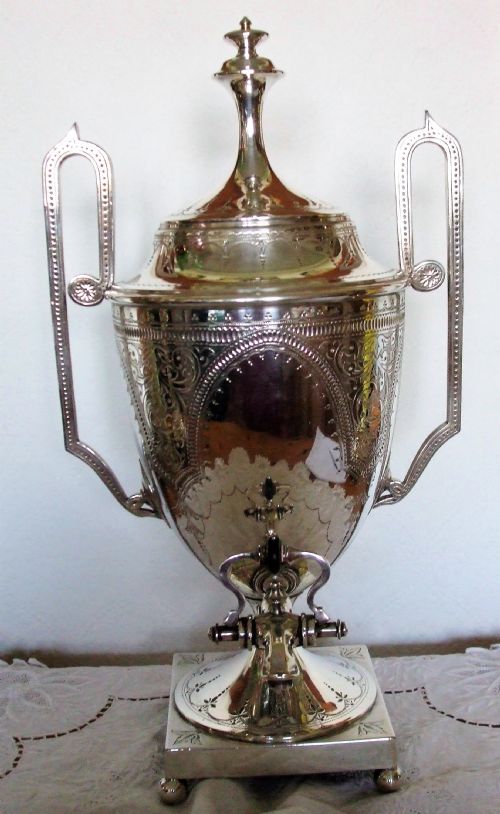
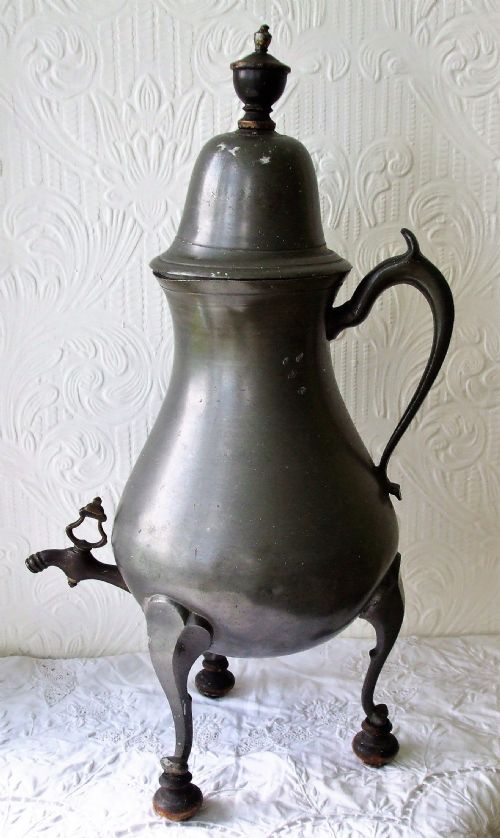
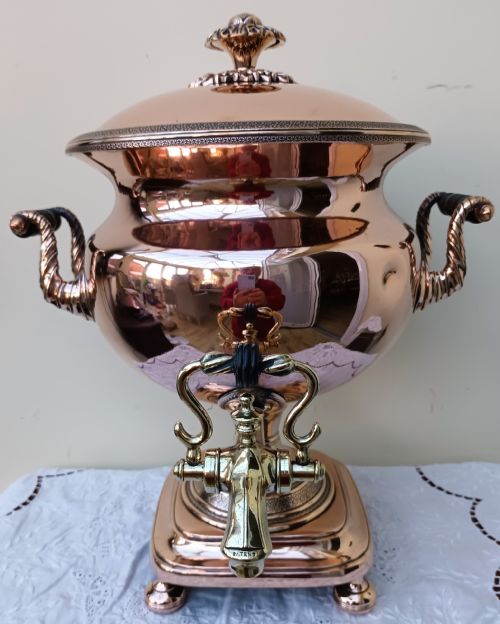
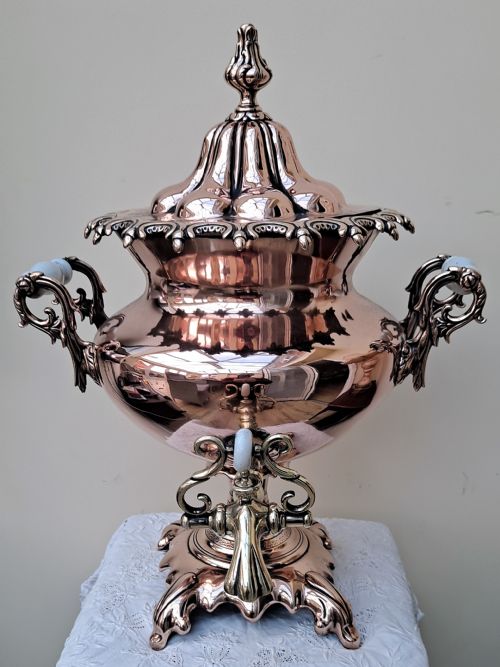
The selections on this page are predominantly copper and silver-plated samovars from the nineteenth century alongside earlier Georgian examples in pewter and copper. They function as central serving pieces equipped with operational taps for dispensing hot water.
How they were made
Maker workshops constructed these dispensers primarily from heavy-gauge copper, brass, and pewter, often applying a silver plate finish to achieve a reflective surface. Artisans integrated contrasting materials like bone for handle insulation and incorporated bronze elements for decorative mounts.
Construction techniques combined sheet metal shaping with cast components such as spouts, handles, and feet. Makers frequently paired copper bodies with brass trim and taps, balancing thermal utility with architectural styling influenced by Georgian Neoclassical and Victorian aesthetics.
Bone handle inserts protected fingers from scorching metal while pouring tea.
What varies in quality
Quality in these dispensers rests on the weight of the metal and the crispness of the cast mounts. Superior examples demonstrate substantial copper thickness and well-proportioned brass or bronze detailing that remains securely fixed to the body.
The refinement of the silhouette distinguishes finer production. Pieces exhibiting balanced neoclassical proportions, intact bone handle insulators, and original operational taps represent the upper tier of the range.
Walker And Hall
The Vintage Metal Tea Dispenser Glossary
- Samovar
- A heated metal vessel traditionally used to boil and heat water for tea. These containers typically feature an internal central tube for heating elements or hot coals.
- Tea urn
- A large standing metal container fitted with a tap, designed to dispense hot water during formal tea service. They mirror the function of samovars within Western dining rooms.
- Pewter
- A malleable metal alloy consisting primarily of tin, historically utilised for domestic vessels and tableware. It yields a muted grey finish distinct from bright copper or silver plate.
- Sheffield silver plate
- A composite material formed by fusing a thin layer of silver to a copper base, prevalent in British manufacturing before modern electroplating techniques.
- Georgian Neoclassical
- A dominant design style of the eighteenth and early nineteenth centuries characterised by symmetrical forms, classical architectural motifs, and restrained ornamentation.
Vintage Metal Tea Dispenser: Frequently Asked Questions
What is a samovar?
A samovar is a metal urn designed to heat and boil water for tea service. They typically incorporate an internal heating chamber or cylinder.
Historically placed on the dining or tea table, these vessels allowed hosts to maintain a continuous supply of hot water throughout a gathering.
How were these urns used?
These dispensers served as the centrepiece of hot water provision during large domestic meals and formal social gatherings. Guests or hosts operated the front tap to fill teapots as needed.
They functioned primarily as standalone heating and dispensing units rather than brewing vessels, keeping water hot via internal cylinders.
How do I date a copper urn?
Dating relies on stylistic markers such as the presence of Georgian Neoclassical proportions or Victorian ornamentation. Form, handle design, and construction methods offer key chronological clues.
Materials also assist with attribution, as silver plate methods and pewter usage shifted across the eighteenth and nineteenth centuries.
Are the taps still operational?
Many vintage dispensers retain their original brass or metal taps, though functionality varies across individual pieces. Some retain internal components while others serve primarily as decorative objects.
Buyers intending to use the tap for active water dispensing should examine the construction and internal seals closely.
How do I clean copper and brass?
Maintenance involves preserving the historical surface rather than achieving a bright modern polish. Gentle dusting and appropriate metal care maintain the natural patina developed over centuries.
Harsh abrasive cleaners can strip historic finishes, so conservative maintenance is generally preferred for antique metalware.