
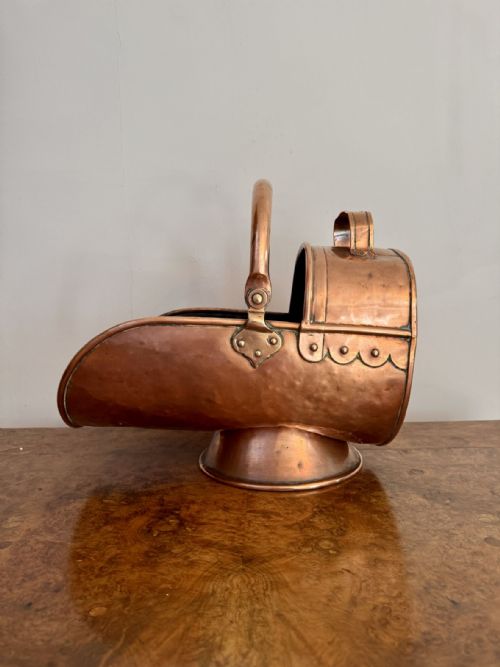
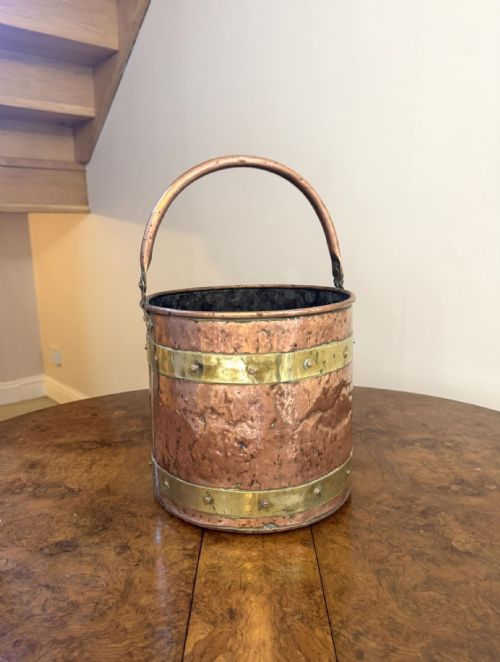
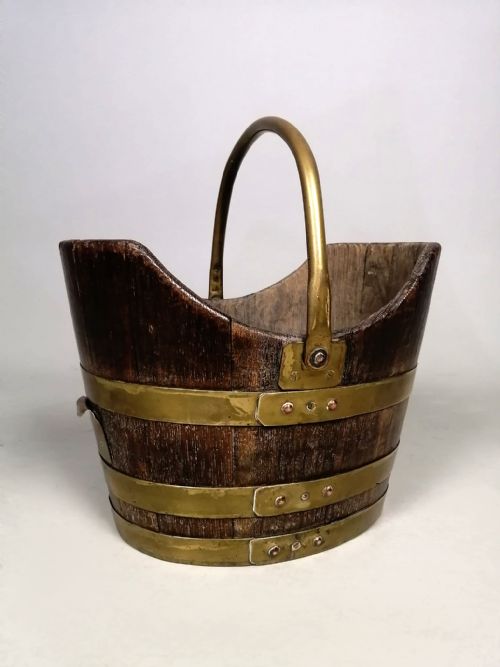


Brass Rivet Copper Scuttle
These brass rivet copper scuttle designs bring warmth to a hearth with their hammered metal and honest construction.
Brass Rivet Copper Scuttle
A brass rivet copper scuttle serves primarily as a fireside receptacle for coal or logs, combining utility with decorative metalwork. Buyers searching for a brass rivet copper scuttle encounter vessels designed to sit beside an open fireplace, handling heavy fuel while displaying polished surfaces.
The pieces appearing on this page span from the eighteenth century through to the twentieth century, with Victorian examples appearing most frequently. Alongside traditional coal scuttles and buckets, related hearth accessories such as log bins and jardinieres share similar construction methods and metal components.
Materials and construction
These vessels rely on combinations of copper sheets joined securely by visible brass rivets, often reinforced with iron handles and wood components like oak. Metalworkers shaped the copper bodies by hand or machine, attaching brass bands to strengthen the rims and bases.
The contrast between warm copper panels and bright brass rivets or banding defines the aesthetic of these pieces. Iron elements provide structural integrity to handles and fixings, ensuring the buckets could bear the heavy weight of coal and logs.
Listings feature items spanning the eighteenth, nineteenth, and twentieth centuries, incorporating copper, brass, iron, and oak materials.
Judging quality in hearth metalwork
Quality rests in the crispness of the riveting and the structural gauge of the copper sheet used in the body. Thicker metal resists denting, while evenly spaced brass rivets demonstrate deliberate craftsmanship rather than hurried assembly.
The integrity of secondary materials, such as oak inserts or sturdy iron swing handles, separates standard utility items from finer decorative examples. Original patination on the copper surface adds depth, reflecting the age and handling of the piece.
The Brass Rivet Copper Scuttle Glossary
- Coal scuttle
- A container designed to hold coal for a domestic fire, typically featuring a wide mouth and a carrying handle. These vessels evolved into various ornamental shapes during the Victorian period.
- Jardiniere
- An ornamental pot or receptacle intended for holding plants or flowers. In metalwork, these share identical manufacturing techniques and materials with coal buckets.
- Helmet scuttle
- A coal container shaped with a flared rim resembling a classical helmet, usually featuring a fixed rear handle and a hinged pivoting handle.
- Log bin
- A deep cylindrical or oval container used for storing firewood beside a hearth. They frequently incorporate wooden staves or metal banding.
- Patina
- The surface sheen and colour acquired by copper and brass over decades of exposure to air and handling. Collectors value a rich patination for its historical authenticity.
Brass Rivet Copper Scuttle: Frequently Asked Questions
What is a copper scuttle used for?
These vessels were originally manufactured to transport and store coal for household fireplaces and stoves. Today, many people utilise them beside modern hearths to hold logs or kindling.
Beyond fireside duties, larger examples frequently serve as planters or decorative umbrella stands in hallways.
How do I clean a copper bucket?
Most collectors prefer to leave an aged patina untouched, as it shows the history and character of the metal. If you wish to brighten the surface, a mild metal cleaner removes tarnish without harming the copper.
Avoid abrasive pads that scratch the metal or loosen the brass rivets holding the seams together.
How do I date a copper scuttle?
Dating relies on observing the manufacturing style, the shape of the handles, and the form of the rivets. Georgian and early nineteenth-century pieces often display hand-beaten copper panels and heavier brass banding.
Victorian and later items frequently incorporate machine-rolled sheet metal alongside standardised brass fittings and iron swing handles.