
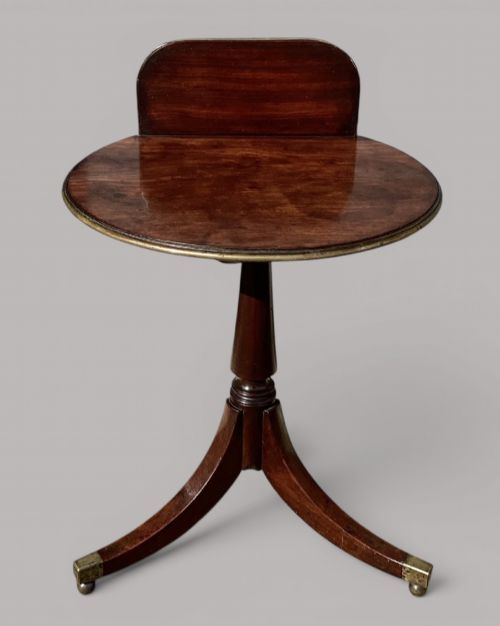


Brass Rim Lamp Table
These brass rim lamp table pieces are practical surface additions that bring period character to a room.
Brass Rim Lamp Table
When you search for a brass rim lamp table, you encounter occasional tables, side tables, and oil lamps spanning the Georgian, Victorian, and early twentieth-century periods. These items primarily take the form of small occasional or two-tier tables, often enhanced with distinctive metal galleries.
You are most likely to meet mahogany or walnut occasional tables featuring classical revival styles or French influences such as Louis XV and Louis XVI revival. The selection also includes reeded column and ormolu oil lamp forms from the nineteenth century.
The assortment reflects diverse craftsmanship across centuries, uniting timber structures with metallic detailing. Each piece serves a functional role as a surface or lighting fixture while displaying the stylistic traits of its respective era.
How they were made
Cabinet makers utilised dense hardwoods such as mahogany and walnut, frequently incorporating parquetry veneer, fruitwood, and white marble inserts into the tabletops. These materials provided a sturdy base for the decorative metalwork.
Brass and ormolu components were cast and applied to the rims as galleries or fashioned into columns and lamp bodies. Joinery techniques varied from tripod bases to multi-tiered occasional tables with drawers.
The site listings feature items spanning the Georgian, Victorian, and 1930 periods, incorporating mahogany, walnut, marble, and brass.
What varies in quality
The refinement of the timber grain and the precision of the parquetry veneer set the baseline for a superior object. Better examples display careful selection of mahogany or walnut with harmonious figuring across the surface.
The execution of the brass gallery and metal mounts dictates the upper tier of the range. Crisp casting, secure fastening, and integrated marble or glass elements distinguish more ambitious workshop output from simpler utilitarian pieces.
W. Turner Lord & Co
The Brass Rim Lamp Table Glossary
- Gallery
- A raised ornamental metal or wooden border fitted around the edge of a table top to prevent items from sliding off. This feature is typically fashioned from perforated or pierced brass.
- Tripod base
- A support structure consisting of three legs radiating from a central column. It is commonly found on Georgian occasional tables for stability on uneven floors.
- Parquetry veneer
- Geometric patterns formed by small pieces of wood veneer applied to a carcase. It creates decorative mosaic surfaces on tabletops.
- Ormolu
- Gilt bronze ornamentation applied to furniture and lighting fixtures. The technique involves coating bronze with a mercury-gold amalgam to achieve a rich metallic lustre.
- Gueridon
- A small circular table supported by a central column or legs. The form originates from seventeenth-century French design and often incorporates a marble top.
Brass Rim Lamp Table: Frequently Asked Questions
What is a brass rim lamp table used for?
These pieces function primarily as bedside or sitting room surfaces designed to hold small objects, reading material, or lighting fixtures.
The raised rim ensures that items placed on top remain secure while moving around the room.
How do I date a mahogany occasional table?
Dating relies on examining the timber species, construction joints, and stylistic markers such as reeded columns or tripod legs.
Georgian examples often display simpler, robust proportions, whereas Victorian and later pieces incorporate revival motifs and multi-tier designs.
Are marble top tables difficult to maintain?
White marble inserts require basic care to avoid staining from acidic liquids, though the stone itself is durable for daily use.
Routine wiping with a damp cloth keeps the surface clean without harming the surrounding timber or brass rim.
What is the difference between French and English styles?
French designs in this category often draw on Louis XV and Louis XVI revival aesthetics, featuring curved lines, parquetry, and ormolu mounts.
English pieces tend to focus on mahogany construction with tripod bases or straightforward two-tier configurations.