
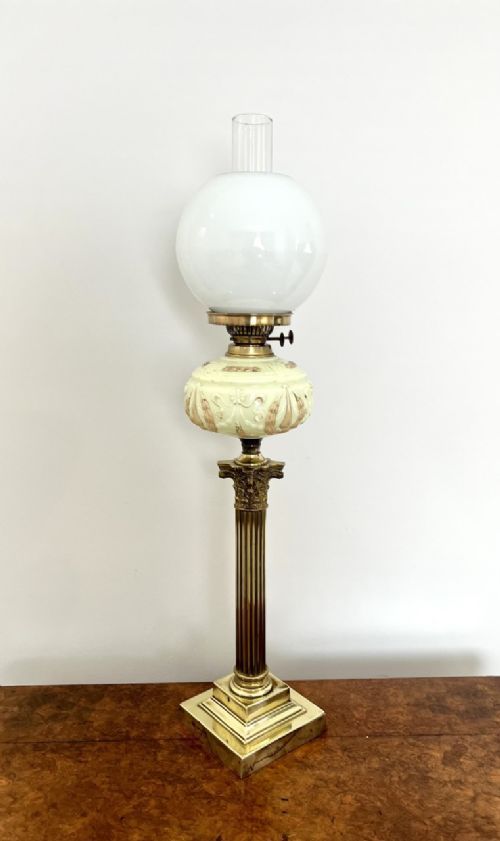
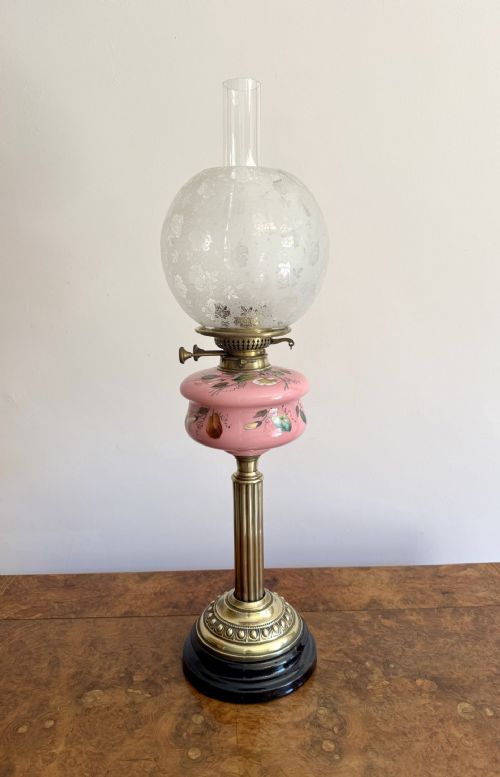


Brass Reservoir Oil Lamp
A brass reservoir oil lamp brings the warm, weighted presence of nineteenth-century lighting into a room.
Brass Reservoir Oil Lamp
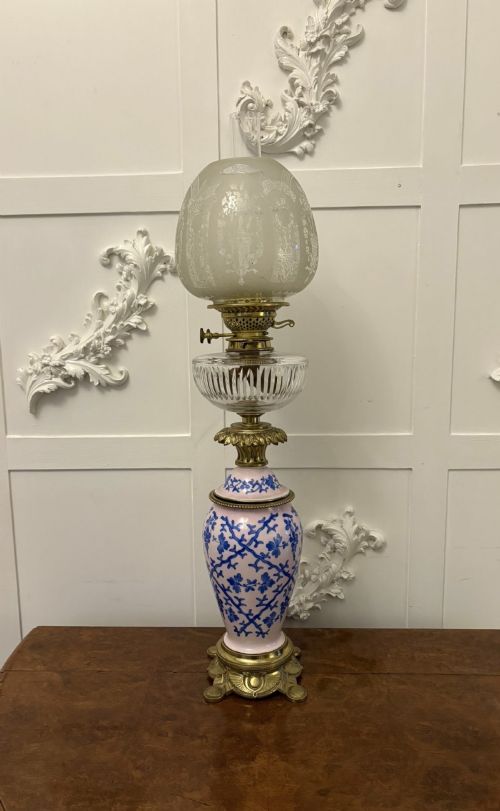
When you search for a brass reservoir oil lamp, you encounter lighting designed to burn paraffin or oil before domestic electricity transformed the home. Most examples on this page date from the Victorian era, spanning the mid-to-late nineteenth century down to nineteen hundred. They take the form of table lamps and oil lamps that combine metal bases with glass fonts.
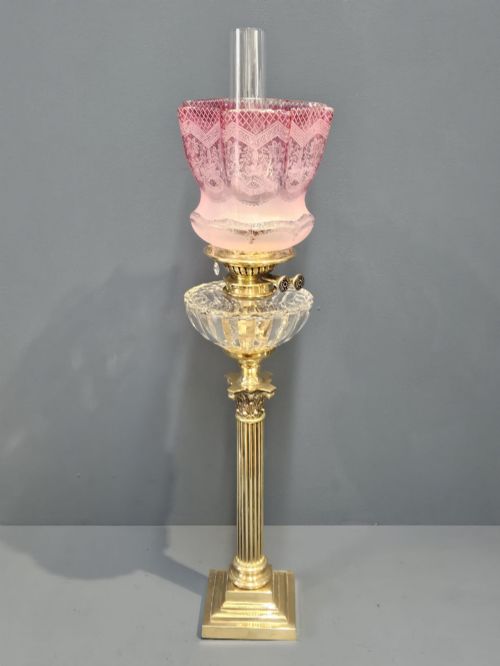
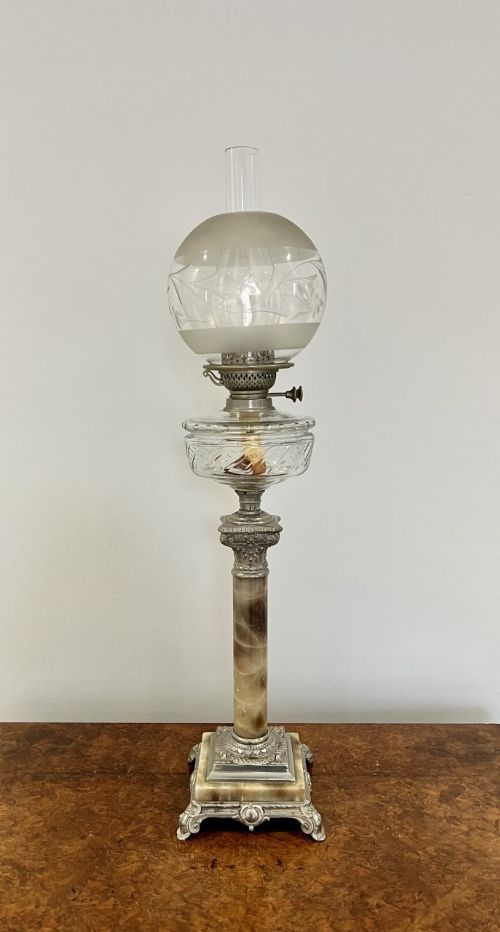
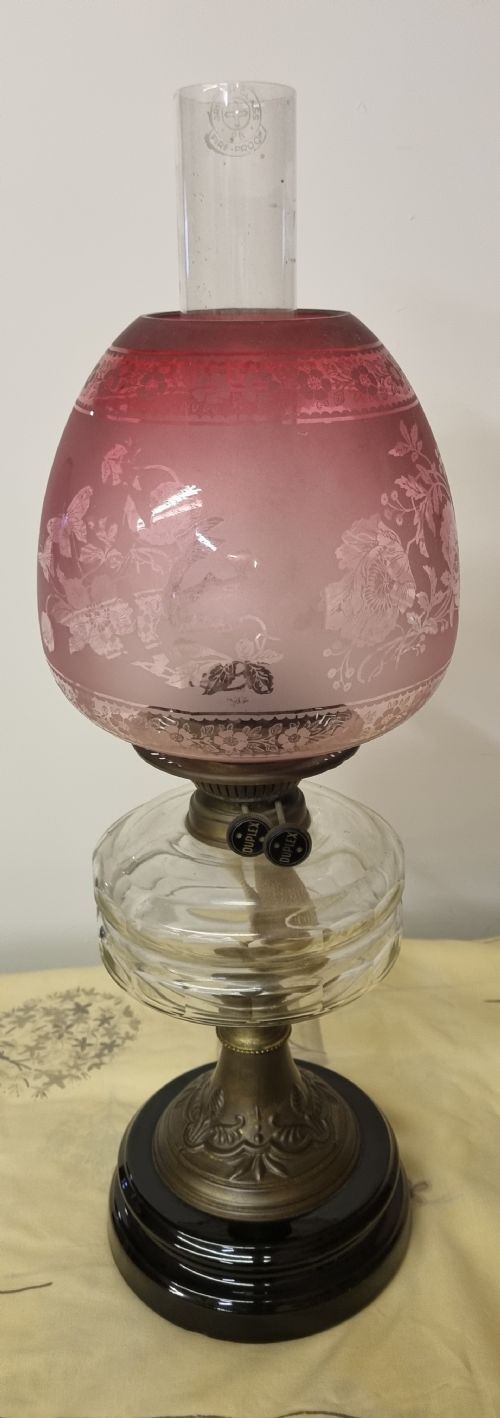
The materials vary across the selection, featuring cast and polished brass combined with ceramic, bronze, onyx, and various forms of glass. You will see clear glass, moulded glass, frosted glass, and coloured fonts in shades of cranberry, blue, green, and pink. Some pieces retain their original fabric shades, whilst others are paired with contrasting glass chimneys and shades.
The structural forms range from simple domestic cottage lighting to substantial Corinthian columns and decorative Neoclassical or Art Nouveau designs. Makers such as Hinks, Messenger, and Young produced standard-setting examples alongside unmarked British and continental workshops. Many retain their original burners, though some have seen later conversion to electricity for modern convenience.
How they were made
The construction of these lamps relies heavily on the foundry work of the nineteenth century, utilising cast and spun brass for the structural columns, stepped bases, and mounting collars. Brass is frequently paired with cut or moulded glass reservoirs, allowing the fuel level to be seen while catching the lamplight. Bronze, copper, and silver plating also appear on select high-status pieces from the period.
Some of these heavy brass columns once lit grand Victorian parlours before spending decades quietly gathering dust in rural country cottages.
What varies in quality
The distinction between ordinary domestic lighting and the finest examples lies in the crispness of the brass casting and the weight of the materials used. Superior lamps display sharply defined acanthus leaves on Corinthian capitals, heavy gauge metal that resists denting, and substantial glass reservoirs with deep, clean cutting.
Signed burner mechanisms by recognised makers add significantly to the integrity of a piece. The integration of different materials, such as a flawless ceramic column fitted securely to a heavy brass foot, demonstrates superior workshop execution compared to simpler, mass-produced domestic alternatives.
Hinks of Birmingham·Messenger·Young·Harrods·Tilley
The Brass Reservoir Oil Lamp Glossary
- Corinthian Column
- A classical architectural column style featuring ornate acanthus leaves on the capital, frequently utilised for grand Victorian table lamps. It elevates the visual height of the piece.
- Duplex Burner
- A double-wick mechanism that produced a brighter flame than single-wick predecessors, requiring precise engineering in the brass gallery. These were patented by prominent nineteenth-century manufacturers.
- Peg Lamp
- A small oil lamp designed with a tapered metal or glass base that drops directly into the socket of a candlestick or holder. This allowed existing candlesticks to be converted for oil lighting.
- Lucerna
- An antique cast brass and bronze oil lamp form originating in Italy, often featuring multiple spouts and suspension picks. They represent an older Mediterranean tradition distinct from Victorian table lamps.
Brass Reservoir Oil Lamp: Frequently Asked Questions
Are these lamps safe to use with oil now?
Many of these lamps retain their original burners and reservoirs, meaning they can still burn oil if checked by a professional for soundness. However, many owners choose to leave them unlit or use them purely as decorative objects.
For daily practical use in modern rooms, a large proportion of these lamps have been professionally converted to electricity. This allows you to enjoy the antique brass base and coloured glass shade with standard modern wiring.
How do I identify a Victorian oil lamp?
Victorian examples typically display heavy brass casting, reeded columns, or ceramic bodies characteristic of the mid-to-late nineteenth century. Look for period burner mechanisms and patents stamped into the brass thumb turns.
Stilderived pieces often incorporate aesthetic movements such as Art Nouveau or Neoclassical Revival styles. The weight of the metal and the thickness of the glass reservoir also point directly to nineteenth-century production methods.
Can I replace a missing glass shade?
Finding a replacement shade requires matching the fitter size - the lower rim that slides into the brass gallery - so that it sits securely. Cranberry, frosted, and etched glass shades period to the nineteenth century are widely available through specialist dealers.
When pairing a shade with a coloured glass font, consider matching the hues, such as pairing a blue font with a similar Victorian tinted shade. Ensure the gallery prongs support the weight and width of the replacement glass safely.
What is the difference between a table lamp and a peg lamp?
A standard table lamp is a complete, freestanding unit featuring a weighted brass or ceramic base, a fixed reservoir, and a burner. It stands securely on its own foot.
A peg lamp has a tapered lower spigot designed to drop into an independent candlestick or dedicated wall bracket. This clever nineteenth-century design allowed households to repurpose existing candleholders for paraffin lighting.