
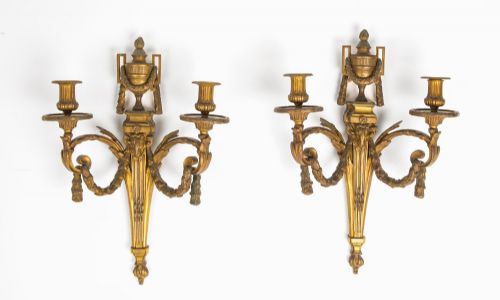


Brass Ram Head
These brass ram head pieces are cast metal ornaments and mounts that bring neoclassical dignity to domestic interiors.
Brass Ram Head
When searching for a brass ram head, a buyer finds decorative hardware, furniture mounts, and lighting fixtures drawn from neoclassical motifs. These pieces appear across table lamps, wall lights, occasional chairs, decorative urns, side tables, and mirrors.
The versions most commonly met on this page span the nineteenth century, the Edwardian period, and nineteen-thirty. They incorporate styles such as Neoclassical, Louis XVI, Regency, and Hollywood Regency.
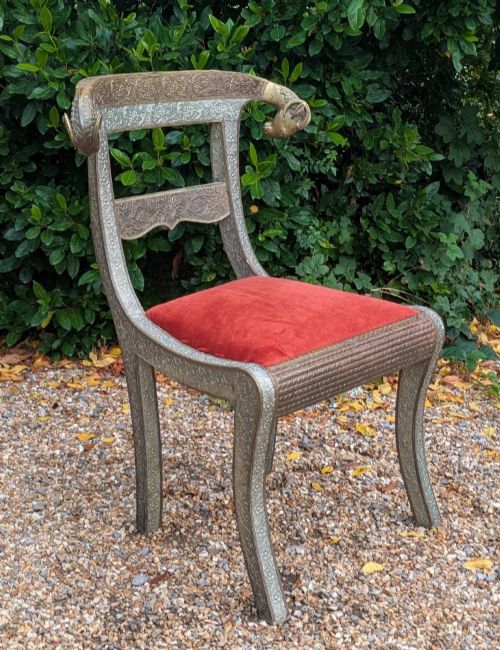
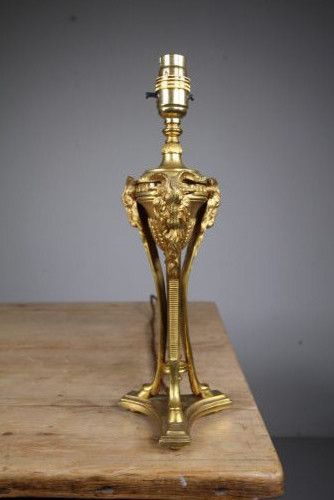
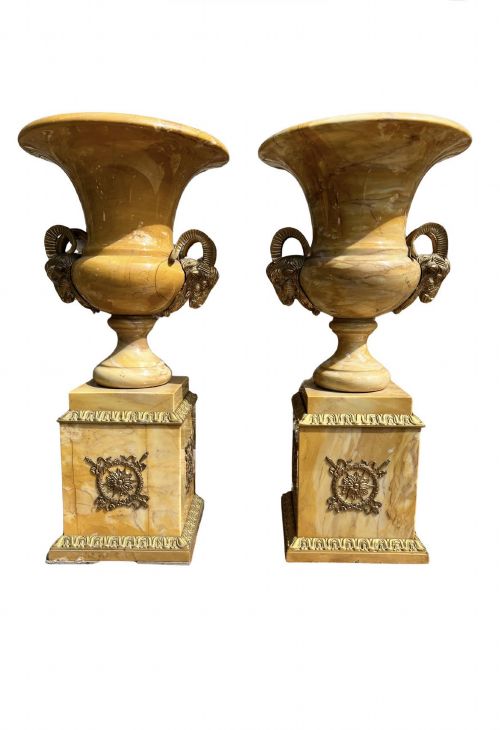
Makers integrated these horned masks into diverse functional objects, from English ormolu table lamps to Anglo-Indian wedding chairs and Italian Sienna marble vases.
How they were made
Metalwork forms the backbone of these pieces, utilising brass, ormolu, gilt bronze, bronze, and silver metal sheet. Casting techniques allowed artisans to render the curling horns and textured fleece of the ram with sharp detail.
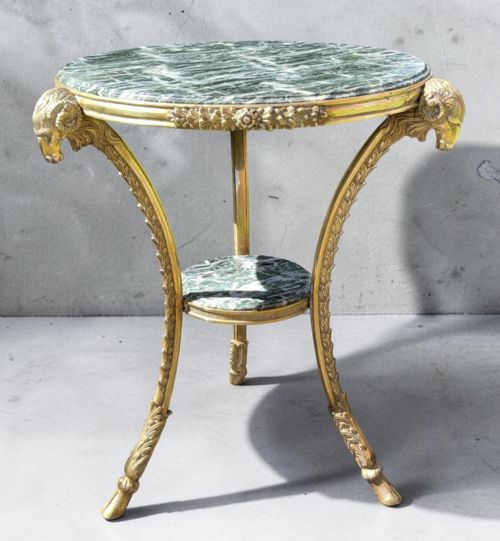
Makers combined these cast metal elements with contrasting materials such as timber, velvet, and Sienna marble. The integration of metal mounts onto wooden furniture or marble bases required precise fastening and finishing.
Listings feature items from the nineteenth century, nineteen-thirty, and the Edwardian period, executed in brass, ormolu, bronze, and timber.
What varies in quality
The selection of secondary materials also alters the tier of the object. Pieces that pair cast bronze or ormolu with polished marble or substantial timber outclass those using lighter sheet metal.
The Brass Ram Head Glossary
- Ormolu
- Gilded bronze used as a decorative mount on furniture and lighting. This technique involves applying a mercury and gold amalgam to bronze before heating.
- Neoclassical
- A style reviving the art and architecture of ancient Greece and Rome. This aesthetic heavily informs the use of ram heads and classical drapery.
- Gueridon
- A small round table supported by one or more columns or figures. These tables frequently feature cast metal mounts.
- Oinochoe
- A wine jug with a trefoil lip originating in ancient Greece. Reproductions and antique adaptations often incorporate classical animal motifs.
Brass Ram Head: Frequently Asked Questions
How do I style a brass ram head piece at home?
These pieces suit both traditional and eclectic interiors, functioning well as focal points on side tables or lighting fixtures. Their classical motifs complement dark timber and neutral walls.
Pairing a wall light or mirror with complementary metal accents enhances the room without overwhelming the space. Let the object stand against plain backgrounds to highlight the cast detail.
What periods do these items come from?
The listings span the nineteenth century, the Edwardian era, and nineteen-thirty. Styles range from strict Regency interpretations to Hollywood Regency exuberance.
Earlier nineteenth-century examples often display sharper chasing in the bronze, while later pieces adopt bolder decorative formats.
How do I clean brass and ormolu safely?
Dust these items gently with a soft dry cloth to prevent accumulation in the recesses of the casting. Avoid abrasive polishes that strip gilding or original patination from bronze and ormolu.
Professional conservation advice is recommended if the metal requires deeper cleaning or restoration.
Were these ram head mounts always part of lighting?
While many examples on this page are table lamps and wall sconces, the motif appears on furniture and decorative vases too. Anglo-Indian chairs and wine coolers utilise the imagery for structural and decorative emphasis.
Mounts were frequently adapted across different object types according to the neoclassical taste of the period.