



Brass Rail Fender
A brass rail fender keeps hearth embers contained while adding polished metal definition to a fireplace.
Brass Rail Fender
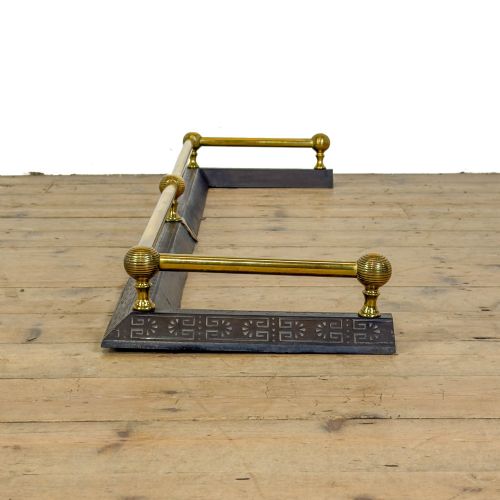
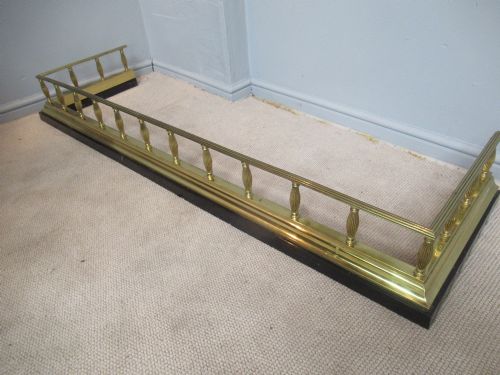
When you search for a brass rail fender, you encounter hearth barriers designed to protect floor coverings and define the fireplace boundary. These metal frames sit directly on the floor in front of the hearth, often incorporating raised horizontal rails for safety or for resting feet.
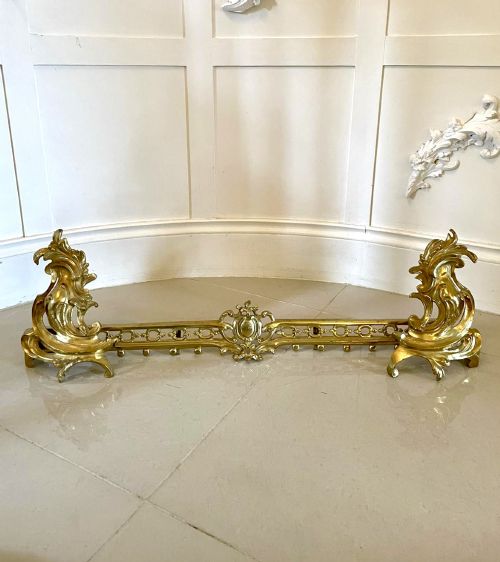
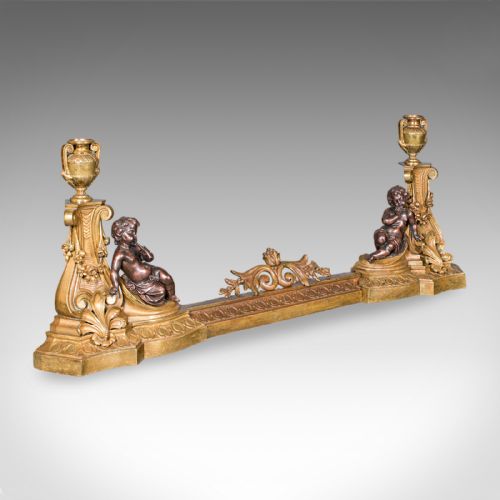
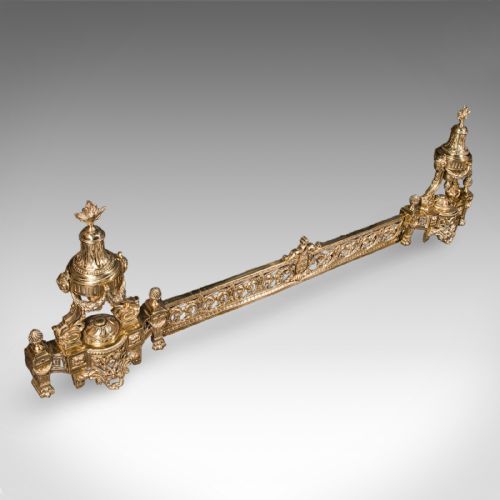
The pieces represented here originate primarily from the nineteenth century and the Edwardian era, spanning Victorian, Regency, and neoclassical stylistic traditions. You meet simpler adjustable kerbs alongside ornate French-influenced designs featuring cast ornamentation.
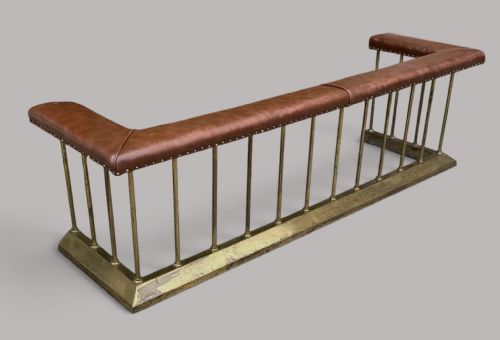
Common forms include traditional low kerbs, club versions with upholstered seats, and nursery guards fitted with protective wire mesh or raised rails. These items function as practical fireplace accessories that anchor the hearth arrangement.
Assessing construction and design
Quality rests on the gauge of the metal used and the substance of the frame, moving from lightweight adjustable kerbs to heavy gauge Victorian castings. Substantial frames resist distortion from hearth heat and daily use.
Design complexity and finishing execution separate standard items from superior examples, such as those featuring intricate pierced metalwork, lions, or fine French scrolling. The presence of integrated elements like mature tan leather pads or coordinated tool rests elevates a piece.
Documented styles span French Rococo, Louis XVI Neoclassical, Regency, and Art Nouveau alongside standard Victorian and Edwardian designs.
The Brass Rail Fender Glossary
- Club fender
- A hearth barrier featuring low upholstered seats flanking the fireplace opening, often finished in leather.
- Nursery fender
- A tall protective guard fitted with wire mesh or rails to keep children safely away from open flames.
- Kerb fender
- A low metal barrier that sits directly on the hearth edge to contain ash and rolling embers.
- Fire guard
- A tall screen or barrier placed before the hearth to stop sparks from reaching the room.
- Adjustable fender
- A metal frame designed with a sliding mechanism to fit varying fireplace widths.
Brass Rail Fender: Frequently Asked Questions
How do I measure for a brass rail fender?
Measure the width of your hearth opening and the available floor space outward from the fireplace brickwork. Account for any protruding hearthstones to ensure the frame sits squarely.
Check whether the piece is fixed or adjustable, as sliding mechanisms allow for minor variations in hearth dimensions.
Can I use a club fender for seating?
Club versions with leather-upholstered top rails were traditionally designed for sitting beside the hearth. The internal frame construction supports weight while keeping users close to the fire.
Examine the condition of the leather and the underlying padding to determine its suitability for daily use.
What is the difference between a nursery guard and a standard fender?
Nursery guards feature elevated frames and wire mesh panels designed to enclose the hearth area completely. Standard kerbs sit low to the ground and primarily contain logs and embers.
Many nursery variants incorporate a top handrail or integrated clothes rail.
How do I clean a Victorian brass fender?
Dust the metal surfaces regularly with a soft dry cloth to prevent grime accumulation. Avoid harsh abrasive cleaners that can strip original historic patination.
Use appropriate metal polish sparingly on unlacquered brass components, taking care to keep polish away from adjacent iron or leather sections.