


Brass Prism Chandelier
A brass prism chandelier brings genuine sparkle to a room, catching the daylight by day and throwing pinpricks of candlelight or electric warmth by night.
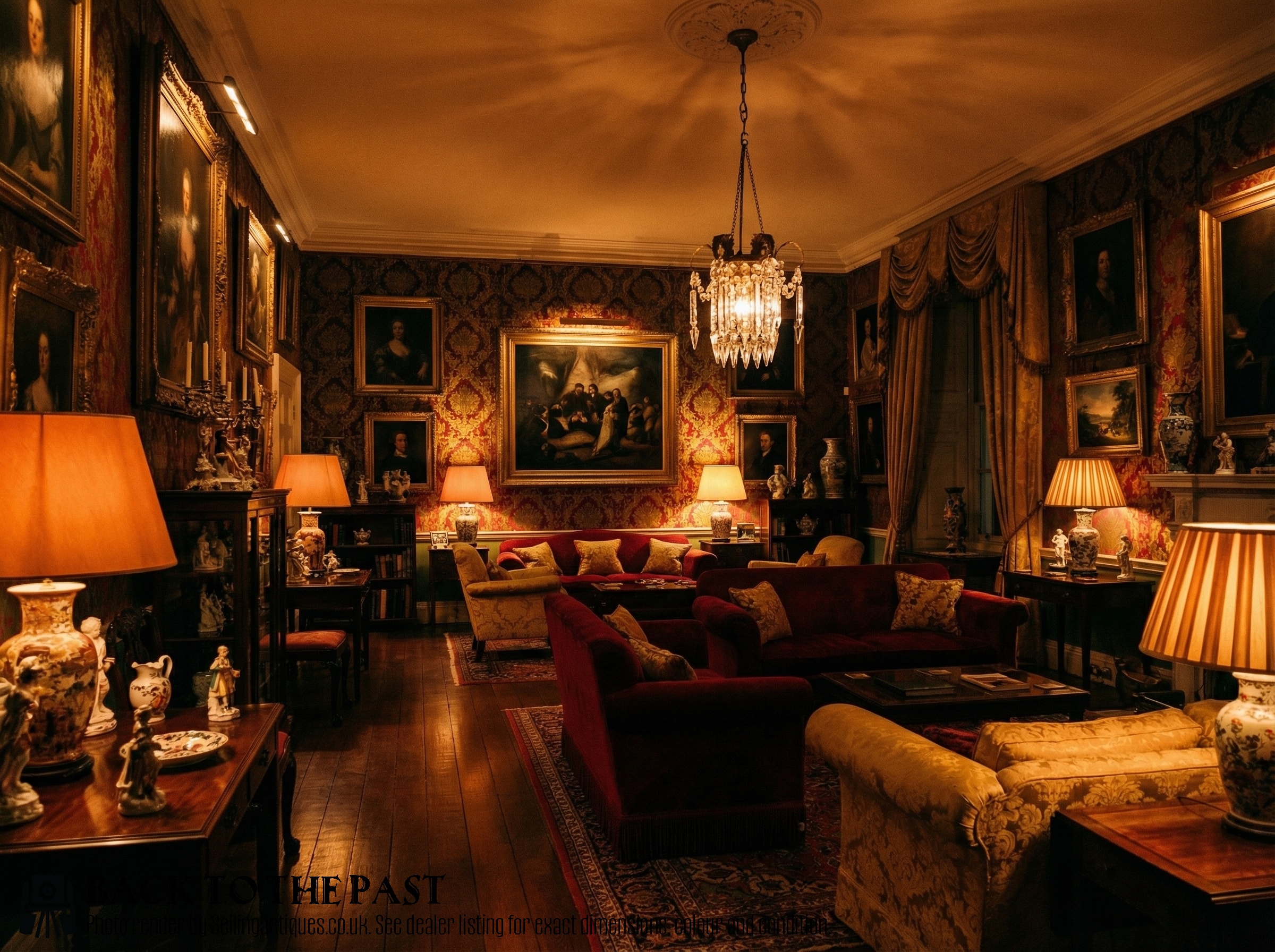
Brass Prism Chandelier
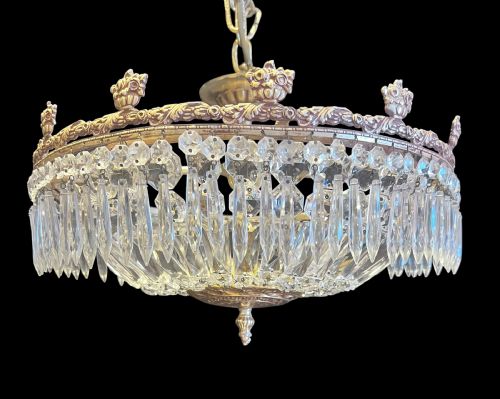
A brass prism chandelier is a ceiling light that combines a metal frame with hanging glass drops to refract light around a space. When you search for a brass prism chandelier, you are looking at light fittings designed to illuminate rooms with layered, glittering refraction.
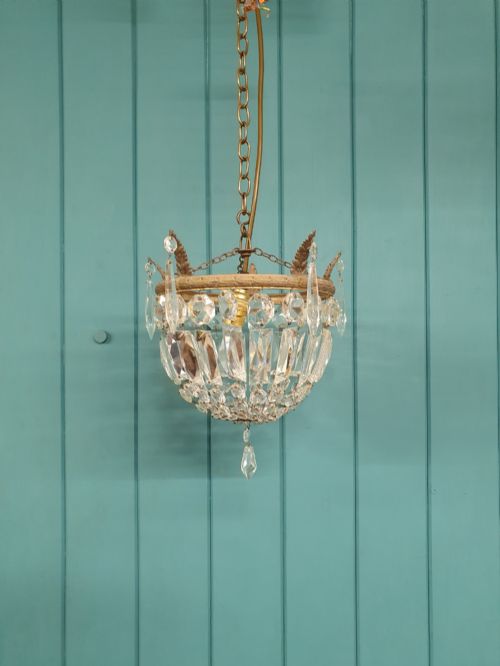
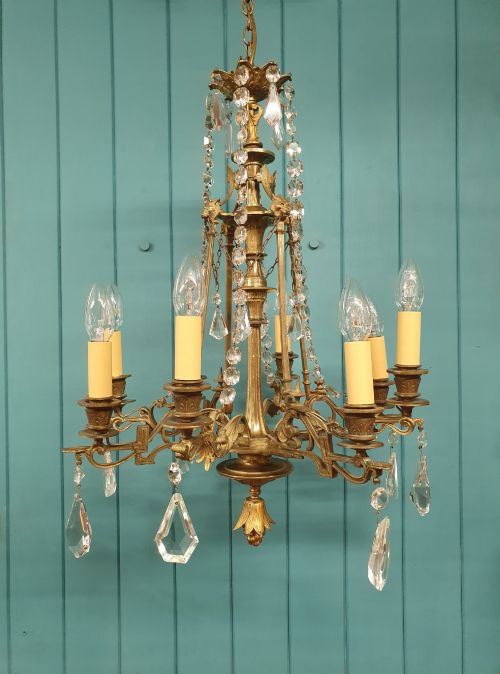
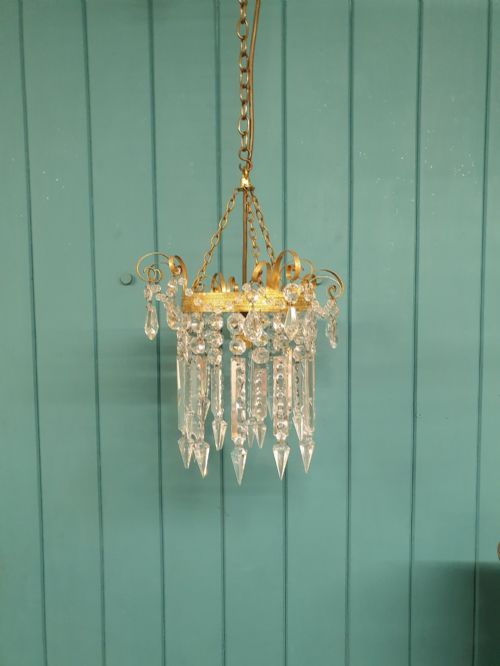
The versions you are most likely to meet on this page date from the nineteenth century through the Edwardian era and into the early twentieth century. They range from small bag and spike forms to grand multi-light French fixtures.
Makers and designers used various styles including French Empire, Rococo, Beaux-Arts, and classical Edwardian designs. These fixtures frequently served as the centrepiece for reception rooms, halls, and dining spaces.
How they were made
The primary structural framework utilises brass, gilded bronze, or gilt metal, cast and assembled to hold the weight of numerous glass elements. These frames take the form of cages, tents, baskets, or multi-arm rings.
Glass components are formed from crystal, lead crystal, or cut glass, shaped into specific hanging forms such as coffin prisms, spikes, lustres, beads, and swags. Skilled artisans wired or pinned these drops individually to the metal armature.
Lion masks peer out from the brass frames of certain Edwardian chandeliers, keeping a silent, watchful eye over the room.
What varies in quality
Quality in these chandeliers rests on the heft of the metal casting and the precision of the glass cutting. Heavier brass and bronze frames hold their alignment better and support denser arrangements of cut crystal.
The clarity and lead content of the glass drops dictate how brilliantly the light refracts. Finer pieces feature hand-cut facets that throw sharp prisms of light, while simpler versions use pressed glass with softer edges.
The Brass Prism Chandelier Glossary
- Prism
- A cut glass pendant designed to refract light into spectral colours. These hang from the frame in various geometric shapes.
- Lustre
- A glass pendant or drop suspended from a chandelier to enhance illumination. They catch and multiply the light from the bulbs or candles.
- Plafonniere
- A shallow ceiling-mounted light fitting rather than a hanging drop chandelier. These sit closer to the ceiling surface.
- Tent and waterfall
- A specific configuration where beads form a tent shape at the top cascading down into a wider waterfall of drops. This style originated in grand French interiors.
Brass Prism Chandelier: Frequently Asked Questions
How do I hang a brass prism chandelier safely?
These fixtures require secure fixing to a ceiling joist or a reinforced ceiling rose due to the combined weight of the metal and glass elements.
An electrician should handle the wiring, ensuring the chain and ceiling hook can bear the total load safely.
What rooms suit a prism chandelier?
Smaller spike and bag chandeliers suit hallways, bedrooms, or compact reception rooms where ceiling height is modest.
Larger multi-arm tent and waterfall models require higher ceilings to properly showcase their scale and light dispersion in dining rooms or living spaces.
How should I clean the glass drops?
Cleaning involves removing the glass drops individually or wiping them in place using a mild glass cleaner and a soft cloth.
Leaving the frame assembled while cleaning prevents the delicate wire fixings from bending or breaking.
How do I date an antique chandelier?
Dating relies on the casting style of the brass frame, the method of wiring if original, and the specific cut of the glass prisms.
Edwardian and early twentieth-century examples often feature machine-cut precision, while nineteenth-century pieces display heavier hand-finished bronze casting.