


Brass Plant Trough
These brass plant trough options range from Victorian repoussé vessels to Edwardian metal troughs, bringing period charm to botanical displays.
Brass Plant Trough
A brass plant trough serves as a decorative container for greenery, drawing from centuries of interior horticulture. When searching for a brass plant trough, collectors encounter various forms including boat-shaped vessels, rectangular planters, and footed jardinieres.
The pieces originating from this selection span the nineteenth century, the Edwardian era, and the 1930s. Styles range from plain brass and copper constructions to French Louis XV and Arts and Crafts examples.
Makers and workshops utilise metals like brass, copper, and zinc, frequently pairing them with mahogany, satinwood, or glass liners. Many vessels double as wine coolers or grand table centerpieces depending on their depth.
Materials and Construction
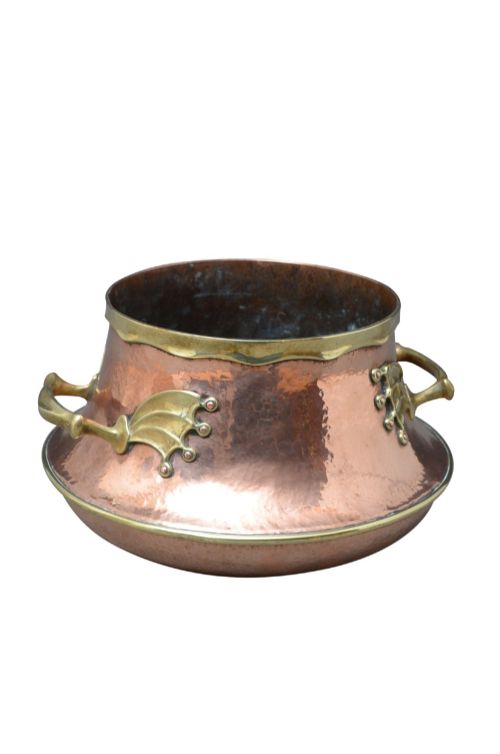
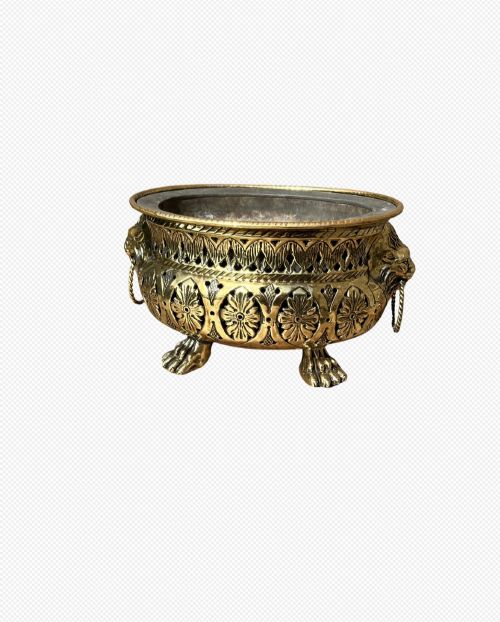
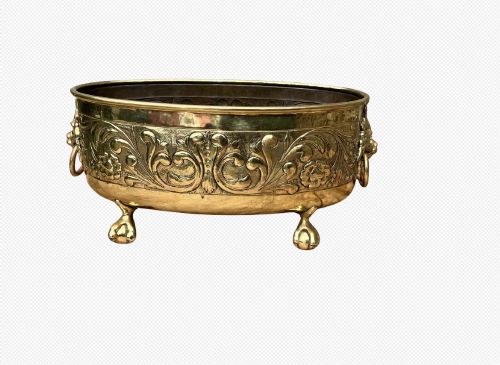
Makers constructed these troughs using beaten sheet brass and copper, often employing repoussé techniques to hammer raised patterns into the metal surface from behind. Pierced fretwork and applied animal heads appear on specific nineteenth-century models.
Wooden elements such as mahogany and satinwood provide structural bodies for brass-bound or ormolu-mounted versions. Zinc liners frequently protect the timber and metal from moisture during plant display.
Listings feature brass, copper, zinc, and ormolu alongside mahogany and satinwood across the nineteenth and early twentieth centuries.
Assessing Quality and Execution
The weight and thickness of the metal dictate the structural integrity of a vessel, distinguishing heavy-gauge brass from thin stamped sheets. Crisp detailing in repoussé work and refined animal head mounts separate superior artistic execution from simpler production.
The integration of secondary materials like ormolu mounts, inlaid ebonised wood, or fitted zinc inserts reflects the original cost and ambition of the piece. Well-preserved patination on the metal surface indicates how a trough has aged over decades of use.
Lister and Co
The Brass Plant Trough Glossary
- Repoussé
- Metalworking technique where the artisan hammers a design from the reverse side to form a raised relief on the front. This method decorates many nineteenth-century planters.
- Jardiniere
- An ornamental pot or stand for holding plants or flowers, often made of ceramic or metal. These vessels form the majority of the trough and planter categories.
- Ormolu
- Gilded bronze or brass applied as decorative mounts on furniture and metalwork. It frequently accents French and revival style pieces.
- Coopered
- Wood construction made from curved staves bound together with metal hoops, typical of certain nineteenth-century planters. This technique derives from barrel-making traditions.
- Patina
- The surface sheen and colour acquired by metal or wood through age and handling. Collectors value an undisturbed surface.
Brass Plant Trough: Frequently Asked Questions
What is a brass plant trough?
A brass plant trough is an elongated decorative container designed to house potted plants or floral arrangements indoors.
These vessels utilise metal bodies, sometimes paired with wooden stands or zinc liners, reflecting nineteenth-century and Edwardian interior styles.
How were these troughs used originally?
Victorian and Edwardian households placed these troughs on windowsills, tables, or dedicated stands to bring greenery into principal rooms.
Some dual-purpose examples also functioned as wine coolers or decorative basins during formal dining occasions.
How do I protect the metal from water?
Most antique troughs rely on removable zinc or metal liners to contain moisture and soil away from the outer brass body.
Placing potted plants inside with saucer inserts prevents standing water from corroding the interior base over time.
How can I tell a Victorian trough from an Edwardian one?
Victorian examples often feature heavier repoussé work, boat shapes, or pierced brass patterns reflecting mid-nineteenth-century revival aesthetics.
Edwardian pieces frequently display lighter proportions, simpler lines, or lighter wood pairings such as satinwood.