
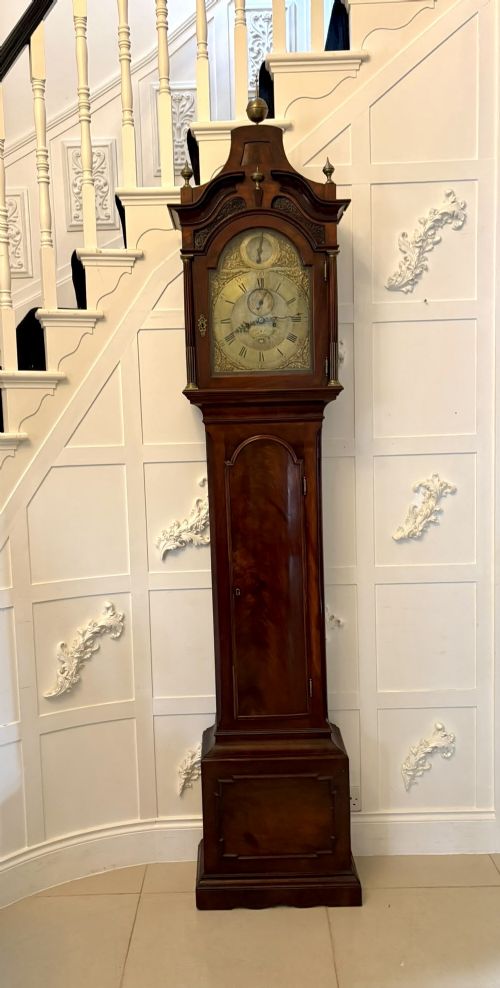
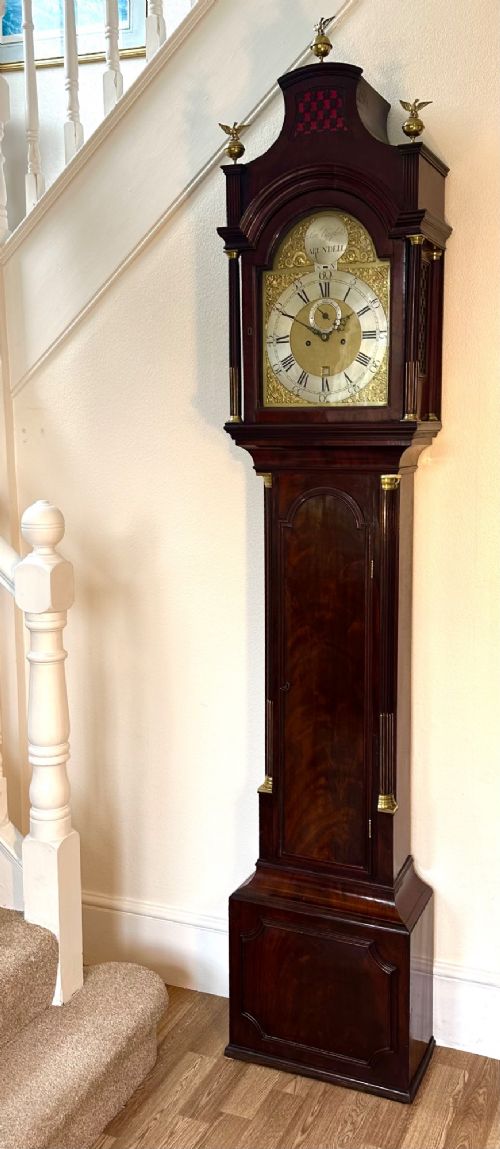
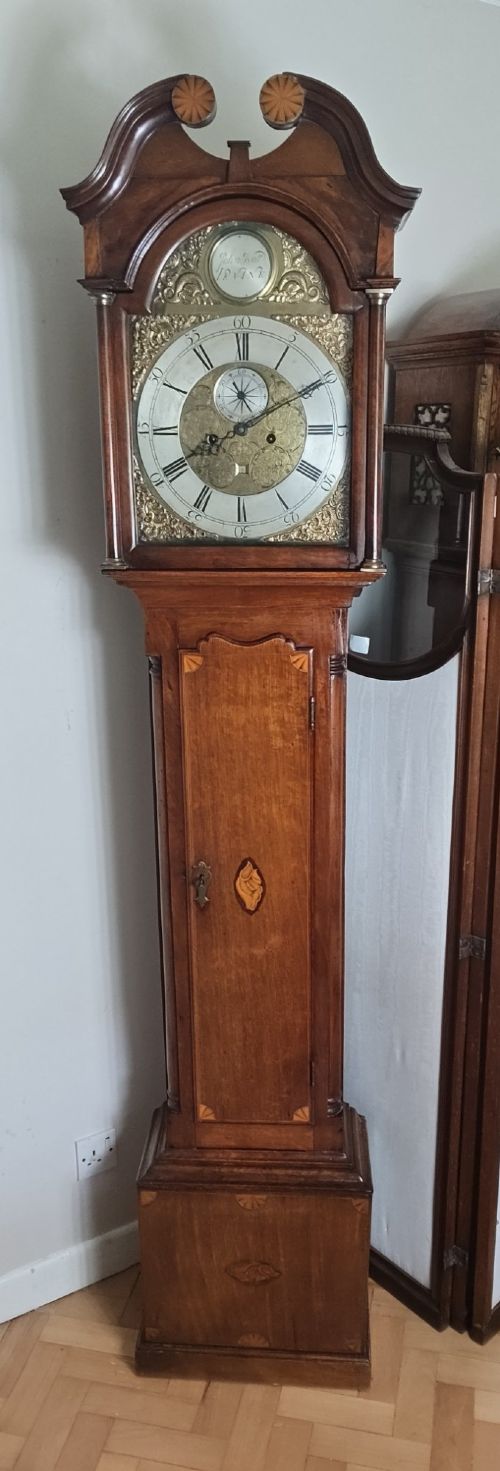
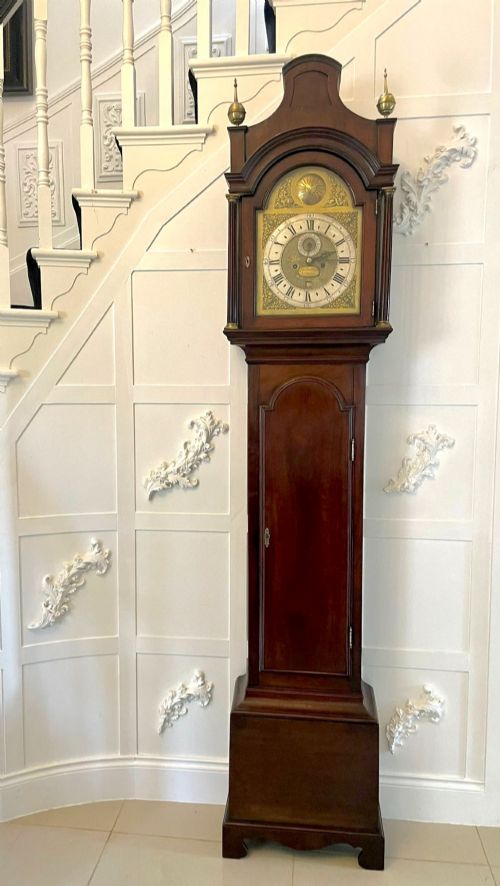
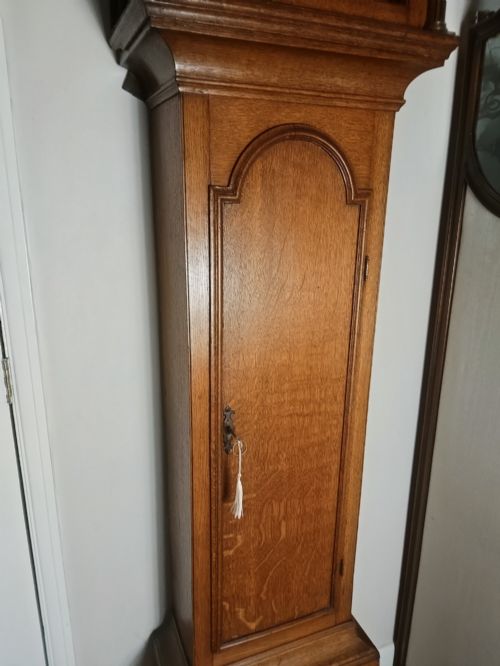
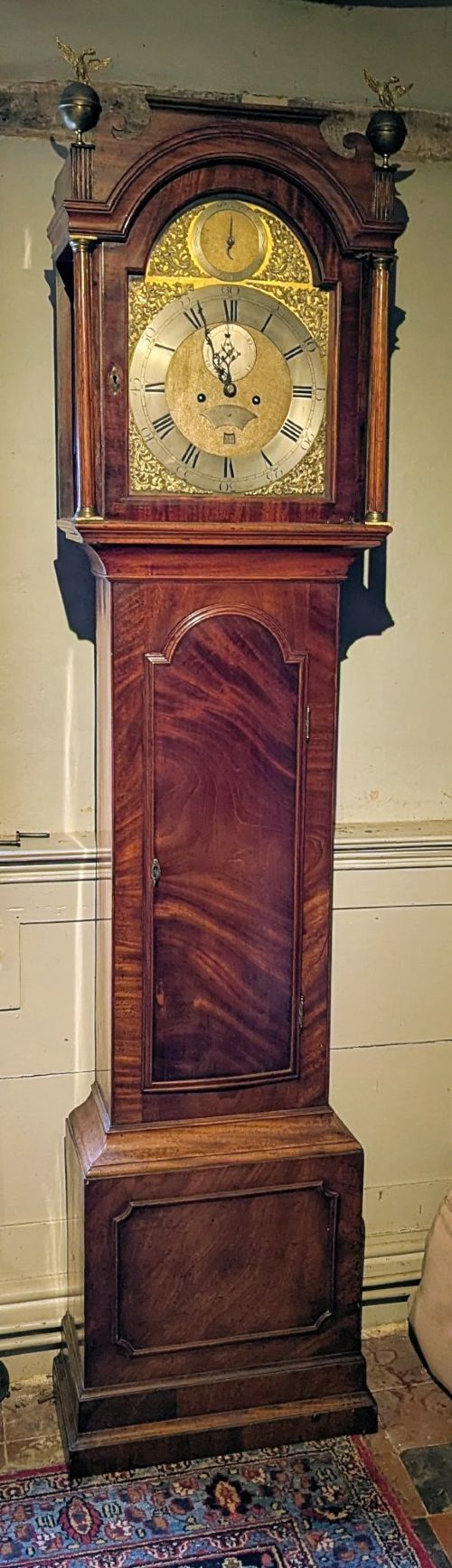
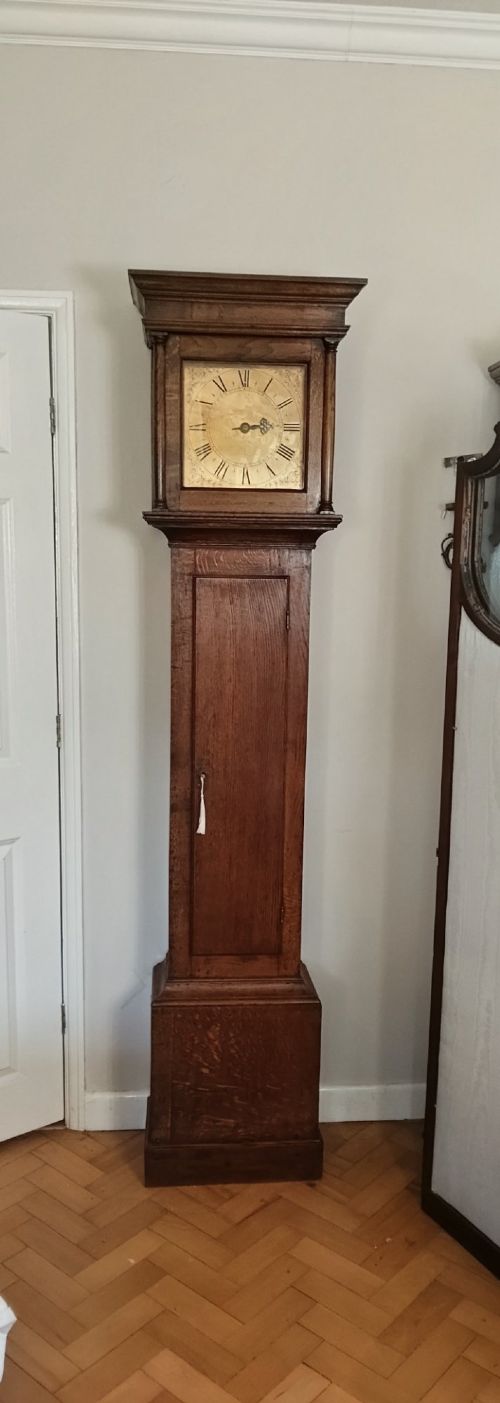
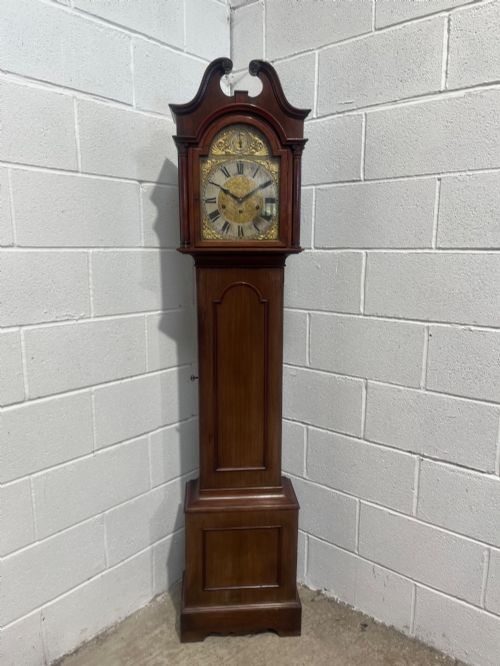
Brass Pendulum Longcase Clock
A brass pendulum longcase clock anchors a room with steady motion and traditional cabinetry, offering a direct link to centuries of skilled horology.
Brass Pendulum Longcase Clock
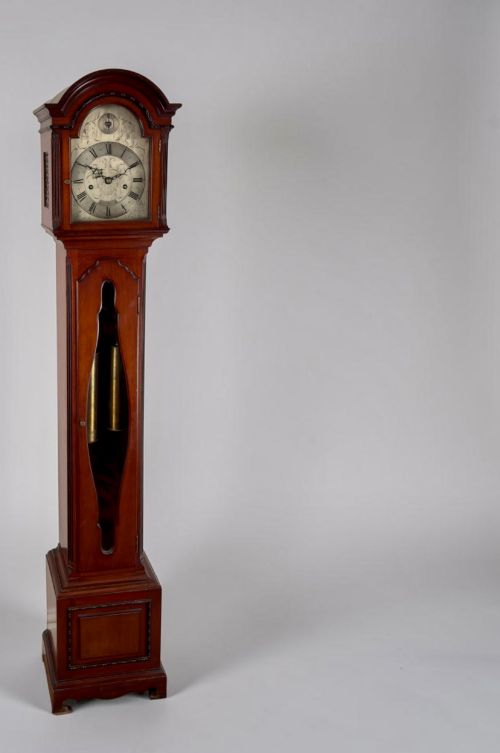
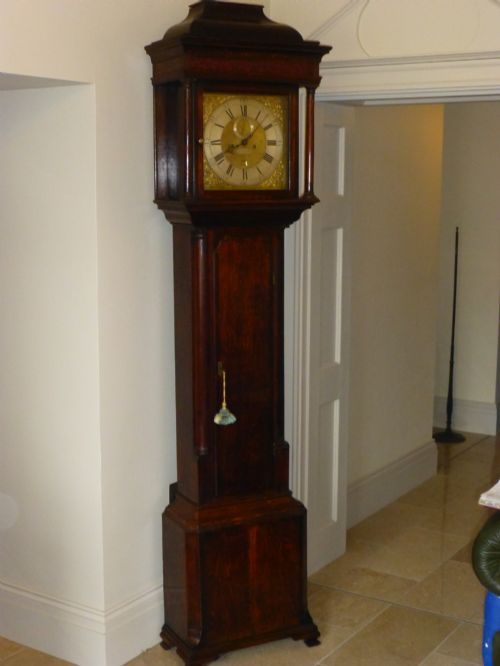
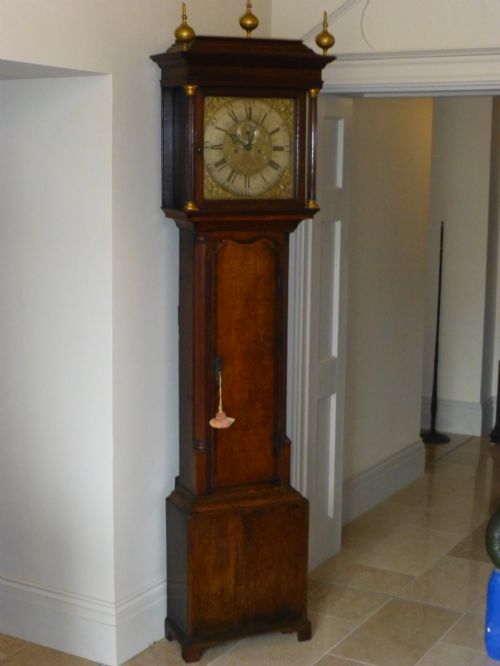
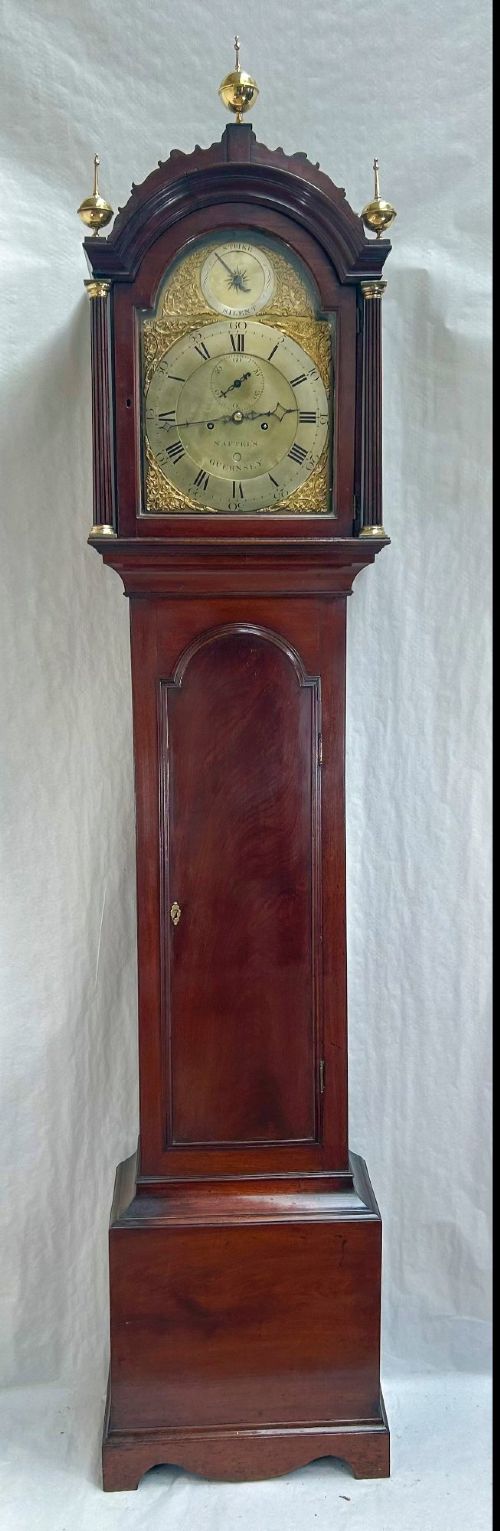
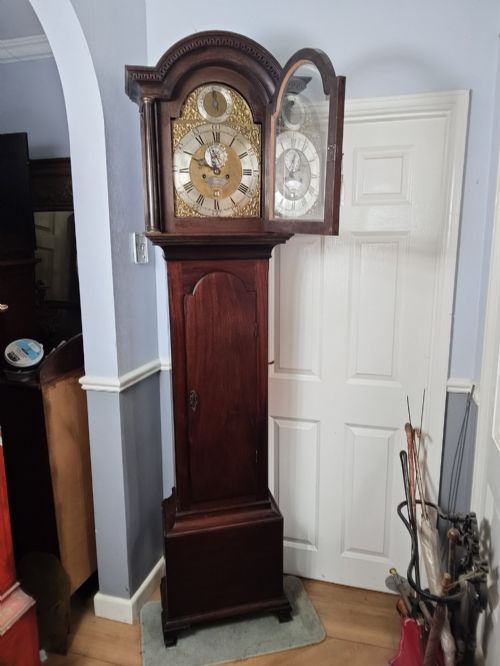
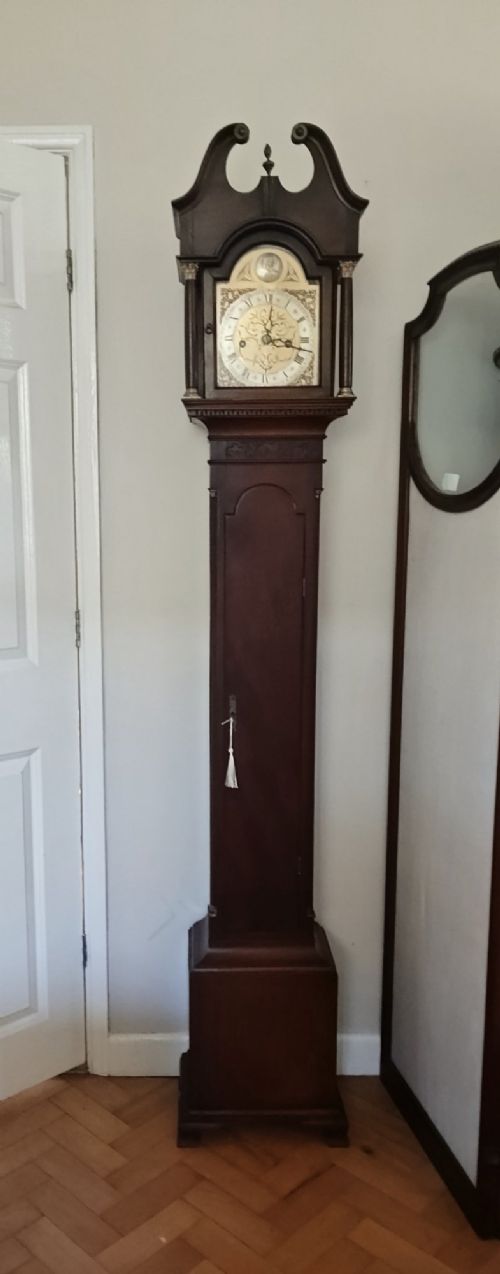
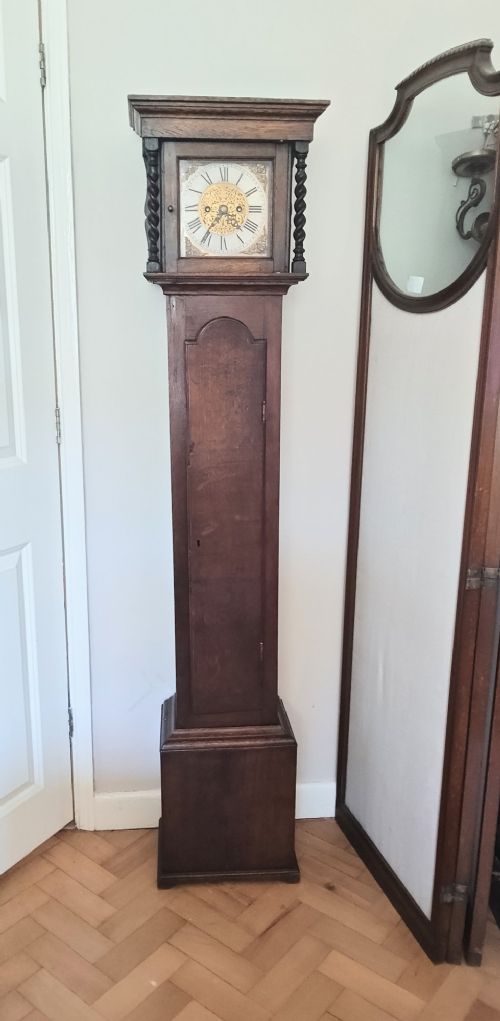
A brass pendulum longcase clock brings together tall wooden cabinetry and precise weight-driven or spring-driven movements. When searching this phrase, buyers encounter prominent floor-standing timepieces spanning the eighteenth and nineteenth centuries, alongside smaller twentieth-century variations.
The selection here ranges from early Georgian oak and walnut examples to later mahogany, burr walnut, and maple pieces. Regional makers from London, Chester, and Scotland feature heavily alongside compact grandmother and granddaughter formats.
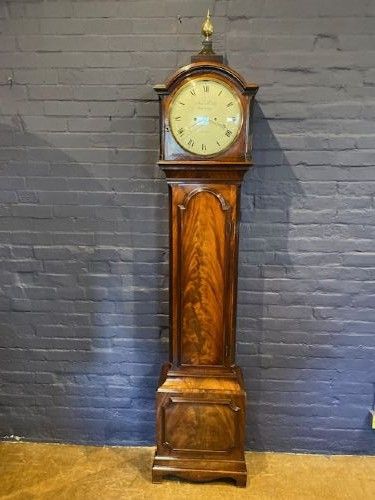
Tall mahogany or oak cases dominate the available styles, often housing engraved brass dials with moonphase indicators or strike-silent mechanisms. Buyers frequently find both grand eight-day London pieces and more intimate provincial designs.
Materials and Construction
Cabinetmakers utilised dense native and imported timbers, pairing solid oak, walnut, and flame mahogany with delicate glass door panels and brass dial plates. Cases often display figured veneers, burr walnut highlights, and inlaid paterae.
Horologists constructed the interior movements using durable brass and steel components, mounting engraved brass faces to display the time. Complex examples incorporate musical chimes, multiple weights, and precision regulators.
Some clocks feature silent running so owners can sleep without the rhythmic midnight chiming.
Distinctions in Execution
The refinement of the cabinetry defines the upper tier, where timber selection, such as figured walnut or flame mahogany, is matched by sophisticated proportions and careful carving. Simpler provincial oak cases offer robust charm but lack the intricate architectural details of London workshop pieces.
Movement complexity separates standard timepieces from high-grade examples. Quarter-chiming mechanisms, musical barrels, strike-silent functions, and precision regulators by notable makers command greater attention than basic time-only movements.
Charles Shuckburgh·Gillett and Johnston·Richard Corless·Smith of Chester·James McCabe·Benjamin Taylor·Windmills and Wightman·Elliott·Wotton Under Edge·Priory of Dundee·Lenzkirch·George Hallifax·Henry Weedon·Mclennan·Matt Wylie
The Brass Pendulum Longcase Clock Glossary
- Longcase clock
- A tall, floor-standing pendulum clock housed in a wooden case. These timepieces are commonly known as grandfather clocks.
- Grandmother clock
- A smaller, more compact version of the traditional longcase clock, typically dating from the twentieth century. They fit more easily into modern ceiling heights.
- Moonphase
- A dial mechanism tracking the phases of the lunar cycle. It sits on the upper portion of the brass face.
- Strike-silent
- A mechanism allowing the striking train to be muted at night. This function prevents the clock from disturbing sleepers.
- Regulator
- A high-precision clock designed for exact timekeeping and used as a standard for comparison. These movements focus on mechanical accuracy.
Brass Pendulum Longcase Clock: Frequently Asked Questions
How do eight-day clocks work?
An eight-day movement requires winding once every week using a key or crank that lifts the internal weights.
This mechanism uses falling brass weights or tensioned springs to power the gear train and pendulum over a sustained period.
Where should I place a longcase clock?
Longcase clocks need a stable, level floor and a secure fixing to a wall to ensure the pendulum swings evenly.
Keeping the case away from direct sunlight and damp environments protects the polished mahogany or oak cabinetry and delicate interior brass.
How do I identify a Georgian clock?
Georgian clocks typically feature architectural wooden hoods, brass dial plates, and robust oak or mahogany construction.
They often display regional signatures on the face and rely on traditional weight-driven movements housed in tall, plain or panelled trunks.