




Brass Paper Stand
When you search for a brass paper stand, you find magazine racks, newspaper stands, and letter racks shaped in brass, mahogany, and oak across Victorian, Edwardian, and Regency periods.
Brass Paper Stand
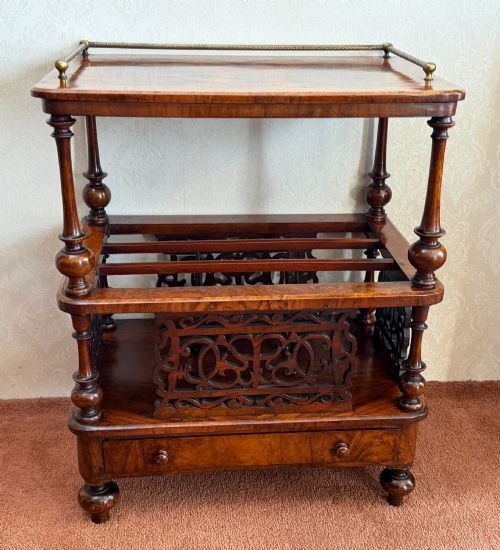
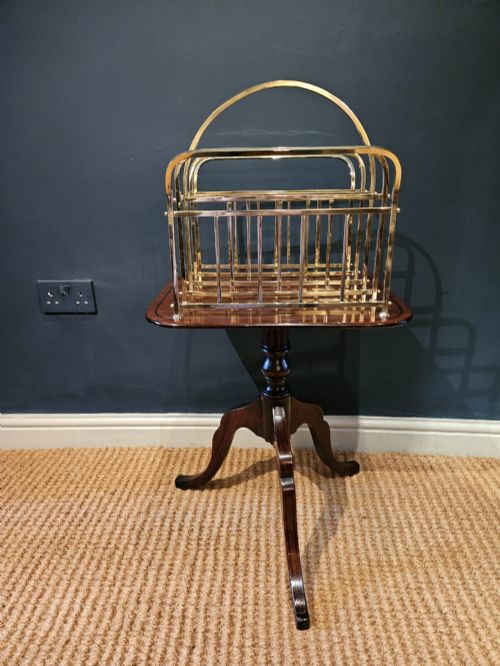
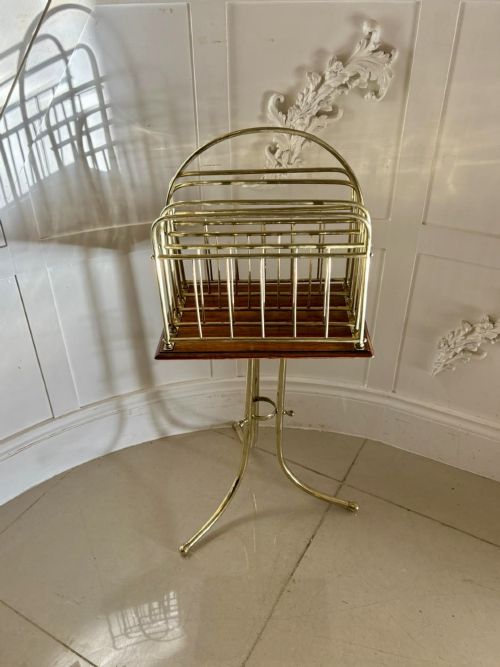
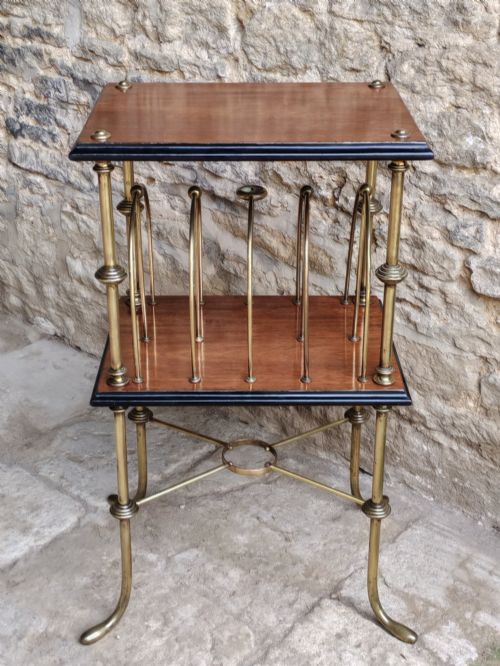
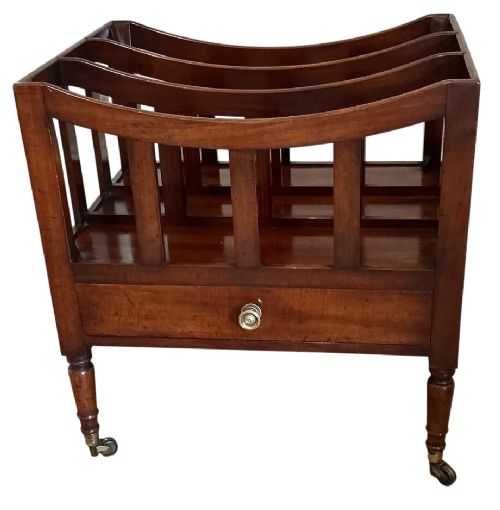
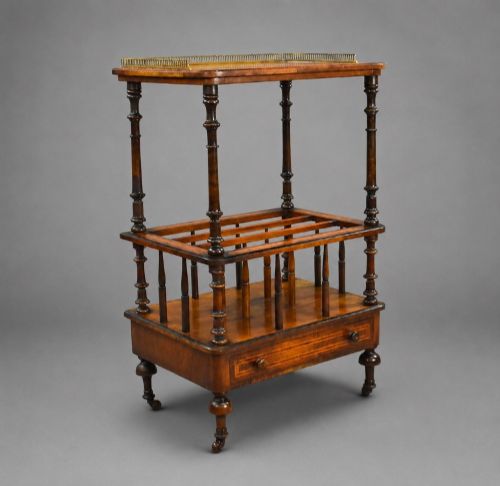
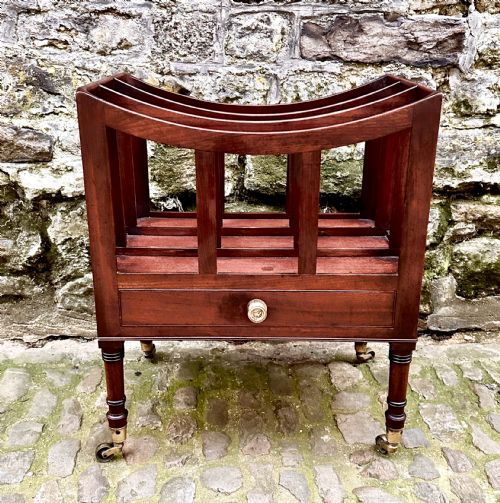
A brass paper stand encompasses magazine racks, newspaper stands, and letter racks designed to hold periodicals and correspondence. These pieces appear in forms ranging from revolving stands and boat-shaped canterburys to upright desktop racks.
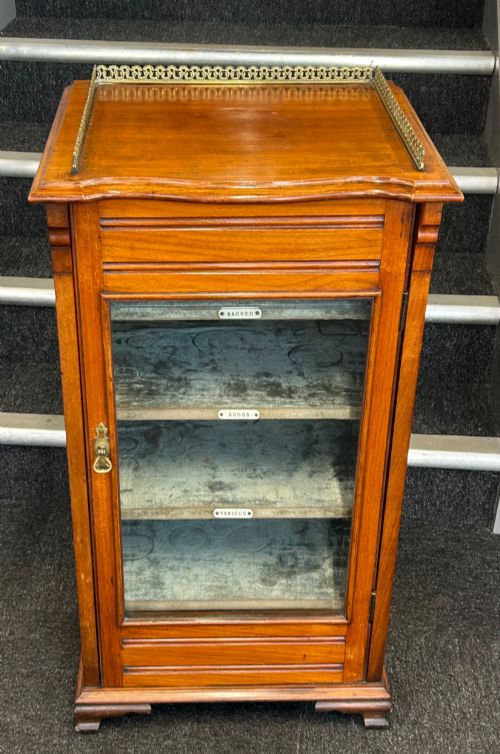
The selections span distinct eras, with Victorian, Edwardian, and Regency examples forming the core of the available pieces. Materials combine metal frames with timbers such as mahogany, walnut, and oak.
Makers and workshops of the nineteenth and early twentieth centuries produced these utilitarian items for domestic libraries, drawing rooms, and studies. The function remains consistent whether the frame takes a stationary or revolving form.
Materials and construction
Metalworking techniques shape tubular brass, copper, and cast brass into frames, spindles, and carrying handles. These metal components provide the structural framework and decorative accents for paper storage.
Cabinetmakers utilise hardwoods including mahogany, walnut, oak, and burr walnut for bases, shelves, and divisions. Inlaid details and turned supports complement the metal framework in many examples.
Brass Paper Stand Retail Price Guide 2026
Typical asking prices for brass paper stand among the pieces listed under this phrase on Sellingantiques today, from the lower quarter to the upper quarter. They describe what is for sale here now, not the wider market.
Listings feature Edwardian, Victorian, and Regency periods alongside materials including brass, copper, mahogany, walnut, and oak.
Judging quality and craftsmanship
The choice of timber and the precision of the joinery set apart the construction. Finely figured burr walnut and solid mahogany with detailed inlay represent higher standards of cabinetwork.
Metal components show variation in weight and finish, from heavy cast and turned brass to lighter tubular assemblies. The smoothness of the revolving mechanism on rotating stands indicates the precision of the original manufacture.
Gillows of Lancaster·William Tonks & Sons·Malby·Maison Jansen·Lebegue & Cie
The Brass Paper Stand Glossary
- Canterbury
- A low stand with divisions, originally designed for sheet music or periodicals. These pieces often feature partitioned sections above a drawer or lower shelf.
- Revolving stand
- A piece featuring a rotating mechanism that allows access to compartments from all sides. This construction appears frequently on desktop and floor-standing models.
- Burr walnut
- A veneer taken from the growth growths of a walnut tree, showing intricate swirling patterns. Cabinetmakers applied this timber to the surfaces of high-status furniture.
- Letter rack
- A desktop accessory with upright partitions for sorting correspondence and papers. These items often combine brass wirework with wooden bases.
Brass Paper Stand: Frequently Asked Questions
What is a brass paper stand used for?
These pieces serve to organise and display periodicals, newspapers, and letters in domestic settings.
Their partitioned sections keep reading material upright and accessible in rooms where papers accumulate.
How do I date a brass stand?
Dating relies on combining the timber species, the manufacturing style, and any patent marks or maker attributions.
Victorian and Edwardian examples show distinct aesthetic choices in their brass casting and woodwork details.
Are revolving stands modern inventions?
Revolving newspaper and magazine stands date back to the nineteenth century, engineered for convenience in studies and libraries.
Maker signatures from firms like William Tonks demonstrate the early development of these rotating mechanisms.
How do I care for brass and wood?
Maintenance involves dusting timber surfaces regularly and using appropriate cleaning methods for brass components without harsh abrasives.
Keeping pieces away from direct heat sources preserves both the metal finish and the integrity of the wood.