

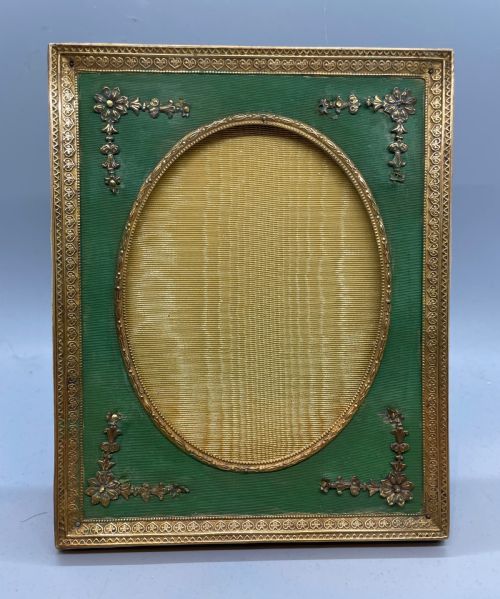
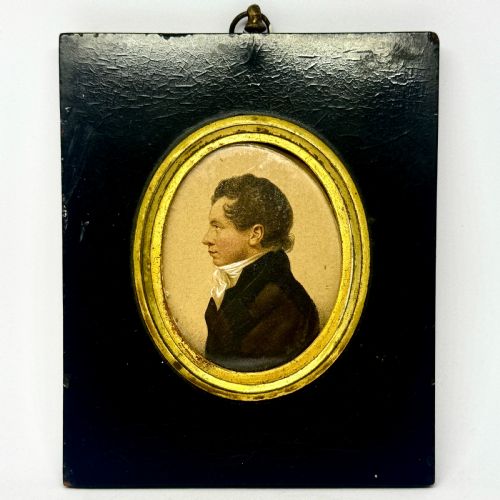
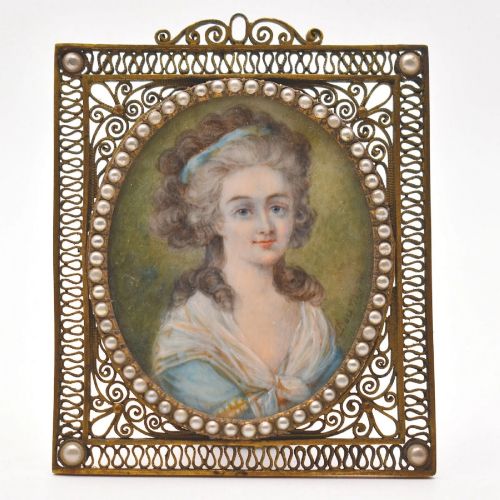


Brass Oval Portrait
These brass oval portrait pieces bring intimate likenesses and ornate metalwork together in small, collectable formats.
Brass Oval Portrait
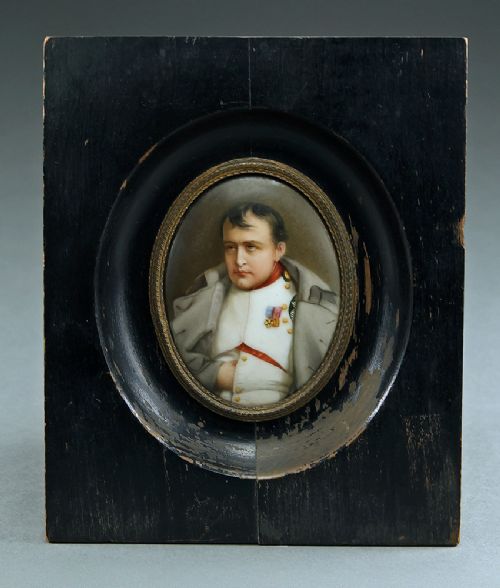
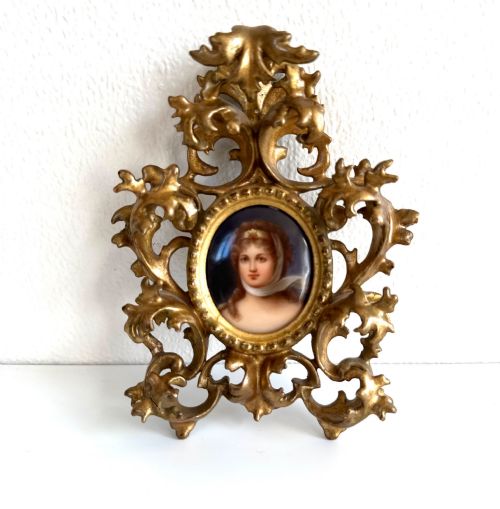
A brass oval portrait encompasses miniature paintings, silhouettes, and photographs housed in shaped metal surrounds, often dating from the Georgian, Regency, and Victorian eras. Buyers encounter delicate watercolours on card or ivory alongside cut paper silhouettes and enamel plaques, all designed for tabletop display or wall hanging.
The form spans centuries of domestic portraiture, originating in eighteenth-century painted miniatures and silhouettes before evolving through nineteenth-century Victorian frames and early twentieth-century art deco studies. Most examples found here combine portraiture with metal housings made of brass, gilt bronze, or ormolu.
How they were made
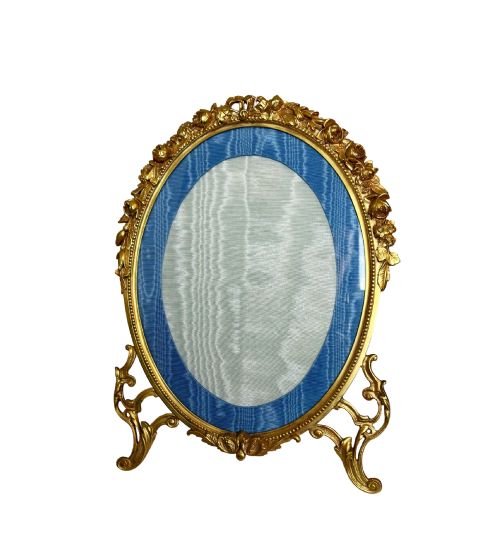
Makers constructed the surrounds using cast brass, gilt metal, or ormolu, frequently shaping them into vertical ovals with integral stands or suspension rings. Portraits within these frames rely on varied techniques, from detailed watercolour and enamel work to hollow-cut paper silhouettes mounted over plaster or contrasting grounds.
Protection of the delicate interior artwork required fitted glass held securely within the metal bezels, often backed by ebonised wood or simple card panels. Seed pearls, gilt accents, and hand-painted details completed the decorative scheme of the finer examples.
Listings feature works created across the eighteenth, nineteenth, and early twentieth centuries, spanning the Georgian, Regency, Victorian, and Art Deco periods.
What varies in quality
The refinement of the painted likeness or silhouette determines much of the piece's standing, with skilled brushwork and precise profile cutting distinguishing master works from simpler output. The crispness of the cast brass or ormolu frame, along with the retention of original glass and backing, also separates standard items from superior survivals.
Signatures by recorded artists or established silhouette studios elevate certain pieces significantly, as do documented historical subjects and original matching pairs. The harmony between the artwork and its specific frame contributes to the overall cohesion of the object.
George Atkinson·James Gillespie·John Miers·Archibald Skirving·Susie Lassam·Jeremiah Steele
The Brass Oval Portrait Glossary
- Silhouette
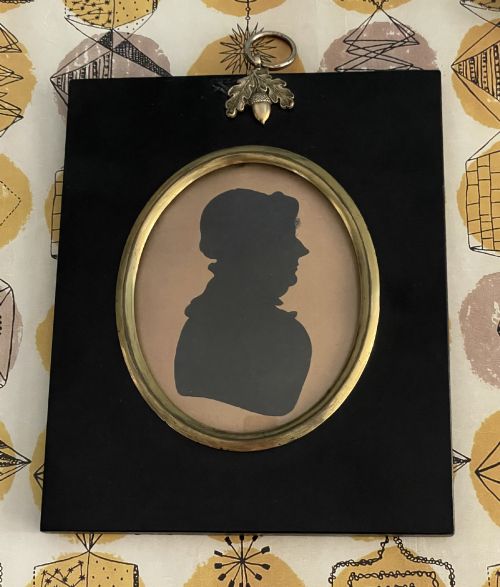
- A solid profile portrait, typically cut from black paper or painted on card, plaster, or glass. These studies capture the subject's outline in sharp monochrome detail.
- Ormolu
- Gilded bronze produced by applying a finely ground high-carat gold-mercury amalgam to a bronze object. The technique imparts a rich, warm metallic finish common on finer period frames.
- Pinchbeck
- An alloy of copper and zinc invented in the eighteenth century to imitate gold. It provides a durable, lustrous yellow metal housing for miniatures.
- Plumbago
- An early form of pencil drawing utilising native graphite. Artists used this medium to produce finely detailed miniature portraits in monochrome.
Brass Oval Portrait: Frequently Asked Questions
How do I hang a brass oval portrait?
Many examples include small top rings intended for wall suspension using fine picture wire or ribbon.
Alternatively, pieces with integrated easels sit securely on mantelpieces, desks, or enclosed display cabinets without wall mounting.
Are these portraits painted on ivory?
Certain early nineteenth-century miniatures utilise thin slices of ivory as a painting ground to impart a luminous quality to the skin tones.
Other examples employ watercolour on card, enamel on copper, or cut paper, depending on the period and the artist's medium of choice.
How do I identify a Georgian silhouette?
Georgian silhouettes often feature hollow-cut black paper backed by white silk or card, sometimes enhanced with delicate gold highlights by hand.
They frequently appear in simple ebonised wood or brass oval frames bearing period signatures or trade labels on the reverse.
Can I replace the glass in an old frame?
Replacing glass requires caution to avoid damaging the delicate paper, paint, or exposed metal edges within the antique housing.
Collectors generally prefer to retain original convex or flat window glass whenever possible to preserve the historical integrity of the piece.