




Brass Opaline Light Shade
These brass opaline light shade pieces bring diffused, milky illumination and warm metalwork into a room.
Brass Opaline Light Shade
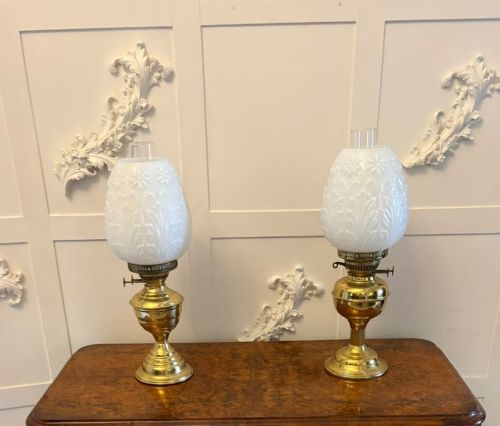
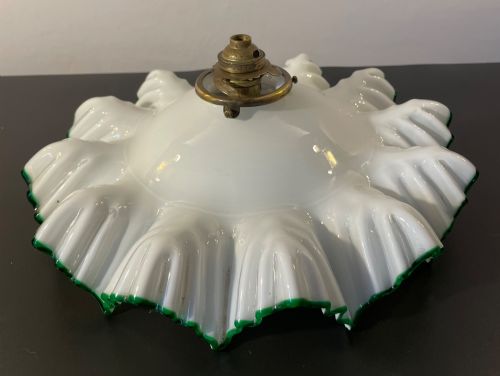
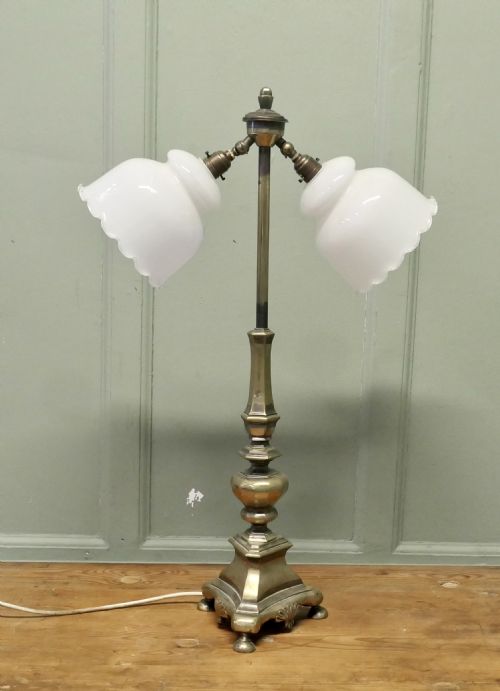
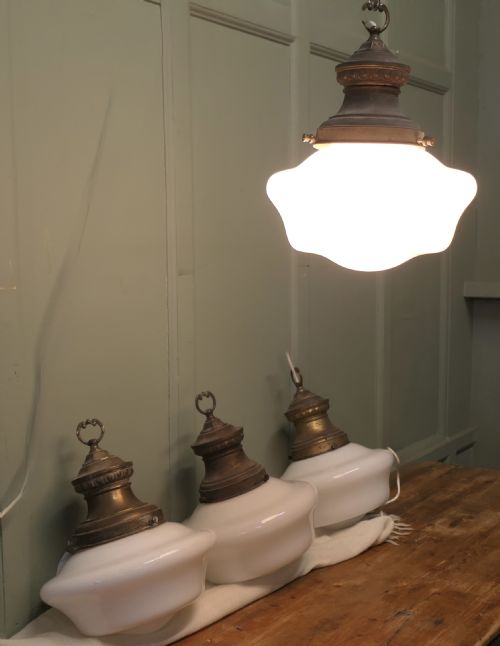
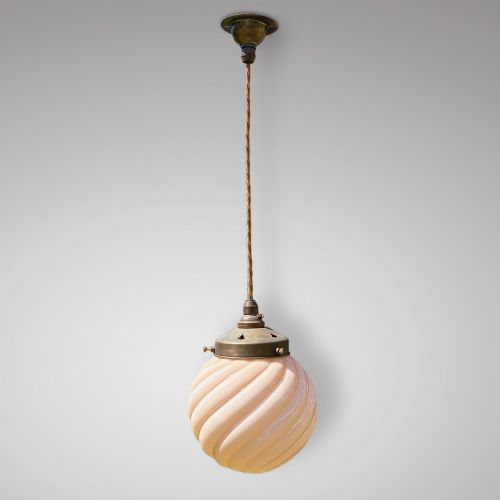
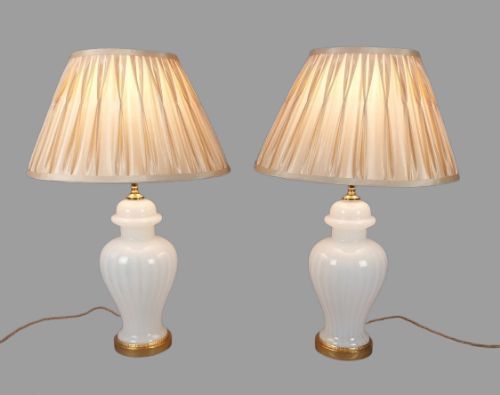
A brass opaline light shade combines lustrous metal fittings with milky white or tinted glass to soften glare. Buyers seeking a brass opaline light shade will discover various forms ranging from hanging pendants to converted oil lamps.
The pieces span periods from the Victorian and Edwardian eras through to the Art Deco and mid-century movements. Pendant lights, table lamps and ceiling fixtures dominate the selection.
Early twentieth-century examples frequently feature conical or pear shapes designed for functional yet elegant illumination. Victorian iterations often originate from oil lamp conversions incorporating heavy brass bases.
How they were made
Glassmakers created opaline glass by adding bone ash or metal oxides to the molten batch to achieve its characteristic opacity. This milky medium diffuses light evenly without harsh hotspots.
Metalworkers shaped the supporting galleries, collars and bases from solid brass, sometimes casting ornate details or spinning sheet metal on a lathe. Components were joined with threaded screws, galleries or brass arms to secure the fragile glass shades.
Listings span the Victorian era, Edwardian period, nineteen-twenties and nineteen-thirties, utilising brass, bronze, gilt bronze and opaline glass.
What varies in quality
Quality rests in the weight of the brass and the density of the opaline glass. Thicker metal castings and heavier gauge brass components hold their shape and support the shade securely over decades.
Superior glass shows an even distribution of milky opacity without thin patches or distortion. Finer examples retain original patination on the metal and crisp detailing in the brass galleries.
The Brass Opaline Light Shade Glossary
- Opaline glass
- A semi-translucent white or tinted glass developed to diffuse light softly while concealing the internal bulb. It became widely popular for domestic lighting during the nineteenth and twentieth centuries.
- Gallery
- The metal ring or collar designed to grip and support a glass lampshade securely. Galleries often feature three or more thumbscrews to tighten against the glass rim.
- Pendant light
- A hanging lighting fixture suspended from the ceiling by a cord, chain or rigid brass rod. These fixtures direct illumination downwards into a space.
- Plafonnier
- A ceiling-mounted light fixture where the glass shade sits flush or very close to the ceiling surface. This style suits rooms with lower ceiling heights.
Brass Opaline Light Shade: Frequently Asked Questions
How do I clean an opaline shade?
Wash the glass gently in warm soapy water using a soft cloth to avoid scratching the surface. Dry thoroughly before reattaching it to the brass fitting.
Keep brass components free of abrasive cleaners to preserve the natural metal finish over time.
Are these lights converted from oil lamps?
Many Edwardian and Victorian pieces began life as oil or paraffin lamps before being adapted for electricity. These conversions retain substantial brass reservoirs and heavy weighted bases.
Wiring is typically updated to meet modern safety standards while preserving the historic metalwork and original glass shades.
What rooms suit these pendant lights?
Pendant lights and ceiling fixtures work well in hallways, kitchens and dining spaces where direct yet softened illumination is needed. The milky glass prevents harsh glare at eye level.
Table lamps and reading lamps fit neatly onto desks, side tables or bedside surfaces to create layered ambient lighting.
How do I date an opaline shade?
Victorian and Edwardian pieces usually feature heavier brass castings, hand-finished components and oil lamp ancestry. Art Deco examples tend towards geometric shapes, stepped galleries and streamlined silhouettes from the nineteen-twenties and thirties.
Examine the construction methods of the brass fittings and the thickness of the glass to determine the likely era of manufacture.