


Vintage Brass Pendant Pair
A vintage brass pendant pair brings matched illumination and period character to a room.
Vintage Brass Pendant Pair
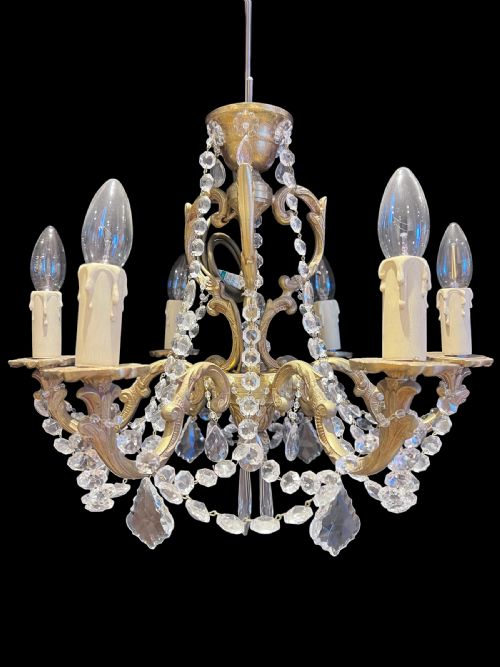
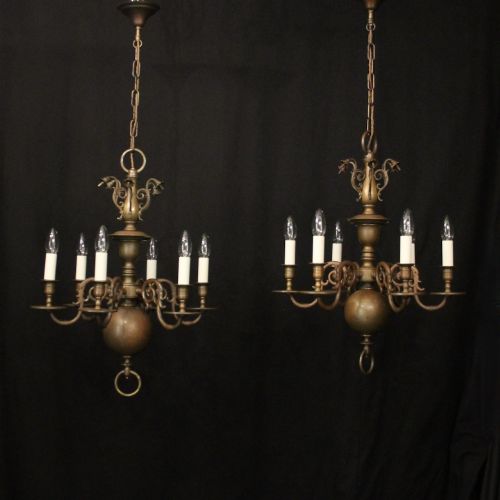
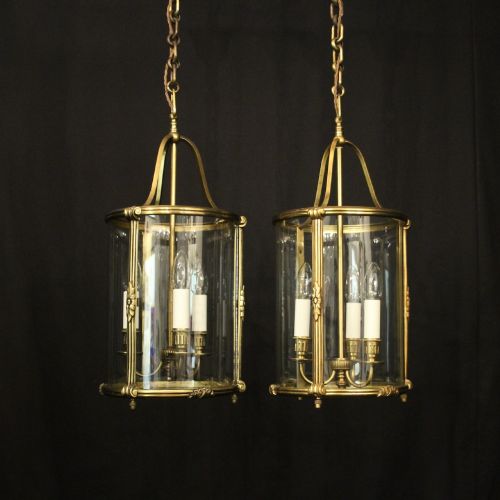
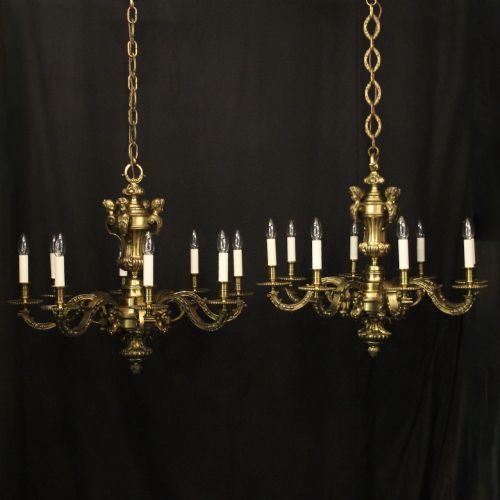
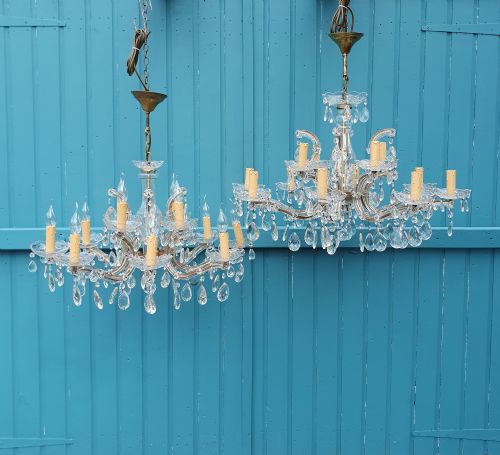
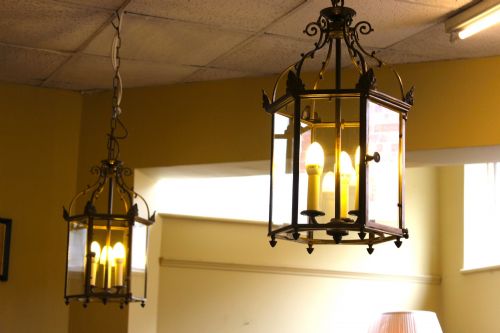
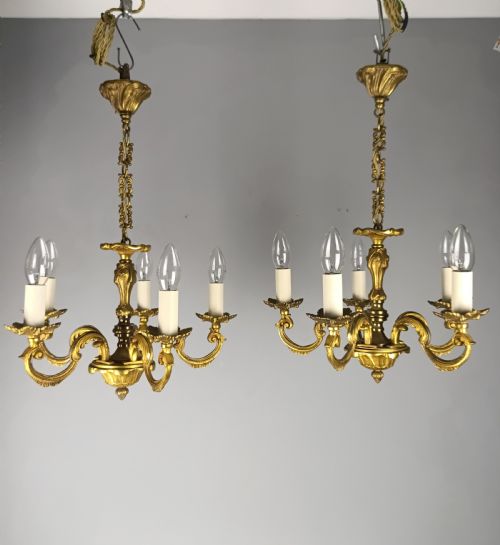
A vintage brass pendant pair comprises matching ceiling-hung light fixtures fashioned primarily from brass and related copper alloys, often incorporating glass or crystal elements. When hunting for a vintage brass pendant pair, buyers encounter various forms ranging from multi-armed chandeliers to enclosed hall lanterns and single drop shades.
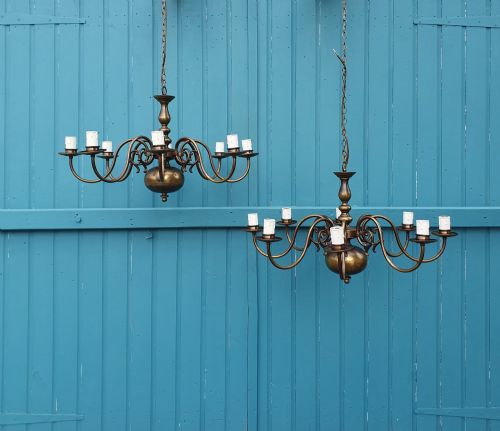
The selection spans from the Edwardian era through the nineteen-twenties and nineteen-thirties, with French provincial, classical, and Art Deco styles heavily represented. Many examples demonstrate continental craftsmanship, particularly French styles including chateau, rococo, empire, and neoclassical designs alongside Dutch Flemish and English pieces.
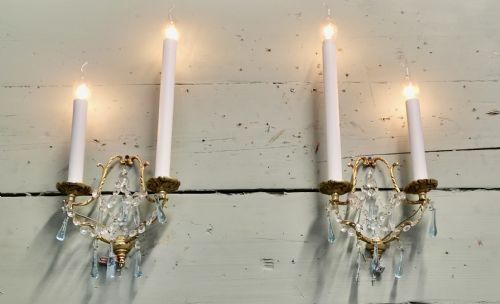
Common configurations include pendant lights, ceiling lights, and wall sconces produced in pairs to balance interior illumination across larger spaces. Buyers frequently choose these matching sets for hallways, dining rooms, and principal chambers where symmetrical lighting completes the decorative scheme.
Materials and Construction
Makers utilised cast and spun brass, bronze, and gilded bronze as the structural foundation for these hanging fixtures, pairing metallic frames with transparent glass, cut crystal, and opaline or mercury mirrored shades. Metal components were shaped through casting, chasing, and metalspinning to create ornate frames, arms, and protective lantern casings.
Glass elements were mouth-blown, moulded, or cut to refract light from multiple internal bulbs or candles, held securely within brass bezels and frames. Additional detailing involved gilt finishes, steel supports, and specialised glass shades such as holophane prisms designed to manipulate illumination effectively.
Some early twentieth-century spike chandeliers measure a mere six inches across, proving that grand illumination occasionally arrives in miniature proportions.
Judging Quality and Execution
Quality in these hanging fixtures rests upon the crispness of the metal casting, the weight and clarity of the glass or crystal drops, and the integrity of the original gilt or bronze surface finish. Superior pieces exhibit deeply chased brass work, hand-cut crystal prisms that retain sharp facets, and substantial gauge metal rather than thin pressed sheet.
The architectural proportion and harmony between the matching pair dictate the level of distinction, as does the preservation of original patination and period wiring components. Maker attribution and complex multi-tiered configurations, such as birdcage frames or extensive arm structures, elevate the standard of manufacture.
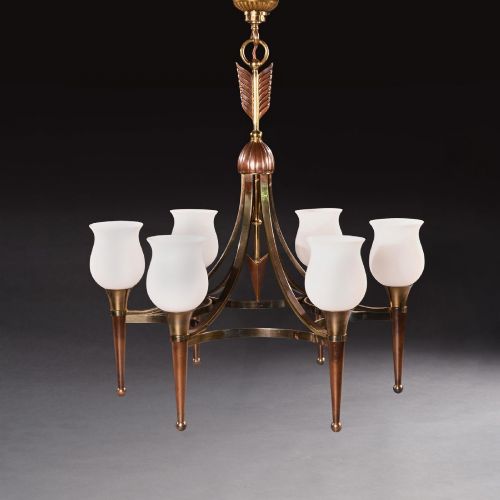
Maison Jansen·Andre Arbus
The Vintage Brass Pendant Pair Glossary
- Ormolu
- Gilded bronze, where a finely ground gold-mercury amalgam is applied to a bronze object and heated to drive off the mercury. This technique creates a rich, durable golden surface finish seen on finer antique mounts.
- Holophane
- A brand of prismatic glass designed to direct and diffuse light efficiently while reducing glare. These specialised industrial and commercial glass shades feature distinctive moulded ribs.
- Opaline glass
- An opaque or translucent pale glass, often white or pastel, popular in Victorian and early twentieth-century lighting for softening bulb glare. It diffuses a warm, even glow across a room.
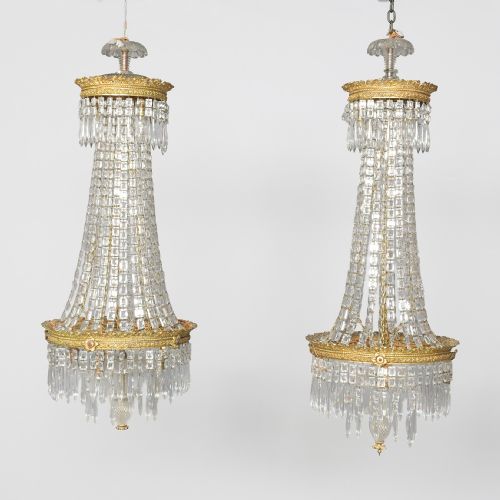
- Bag chandelier
- A light fixture featuring a flattened lower bowl or bag shape formed of strung crystal beads beneath a brass crown. This compact form maximises sparkle while maintaining a shallow profile.
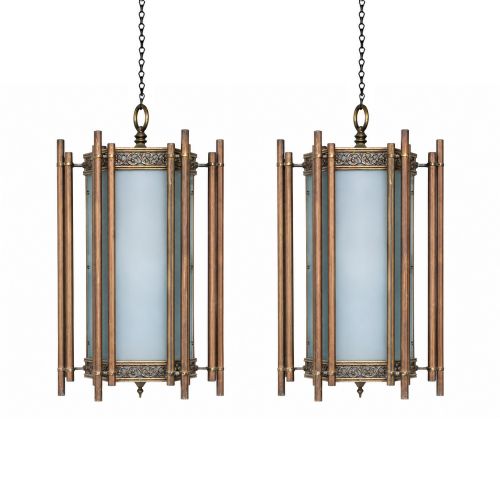
- Hall lantern
- An enclosed hanging light designed specifically for corridors, vestibules, and entrance spaces. These fixtures protect the light source within glazed brass or bronze frames.
Vintage Brass Pendant Pair: Frequently Asked Questions
How do I hang a heavy brass pendant?
Heavy fixtures require direct anchoring into ceiling joists or structural nogging using appropriate steel hooks and mounting plates rather than relying on standard plasterboard fixings. Professional installation ensures the weight of the brass frame and glass elements is supported safely.
Electrical loads should also be assessed by a qualified electrician to ensure the ceiling wiring can accommodate multi-arm configurations safely.
Can these antique lights be rewired?
Most antique lighting is routinely rewired to meet modern electrical safety standards and local regulations. Professional rewiring preserves the original brass or bronze sockets and internal channels where possible while updating the cable.
Retaining original lamp holders is often desirable, provided they can be restored safely or fitted with modern internal insulation.
How do I clean vintage brass and glass?
Dust brass and glass components regularly with a soft, dry cloth to prevent grime accumulation. Avoid abrasive commercial metal polishes that can strip away desirable aged patination and historic gilt surfaces.
Glass shades and crystal drops can often be removed carefully, washed in warm soapy water, and dried thoroughly before being reattached to the brass frame.
What rooms suit a pair of lanterns?
Hanging lanterns suit entrance halls, stairwells, and high-ceilinged reception rooms where their enclosed design directs light downward. Placing a matched pair in a long hallway or flanking a grand doorway creates visual symmetry and balanced illumination.
They also function effectively over large dining tables or kitchen islands when matched in height and scale.