




Brass Opaline Glass Light
A brass opaline glass light brings a soft, diffused glow to a room through milky glass paired with warm metal.
Brass Opaline Glass Light
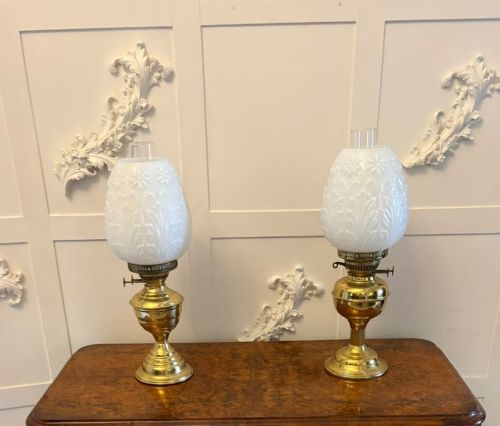
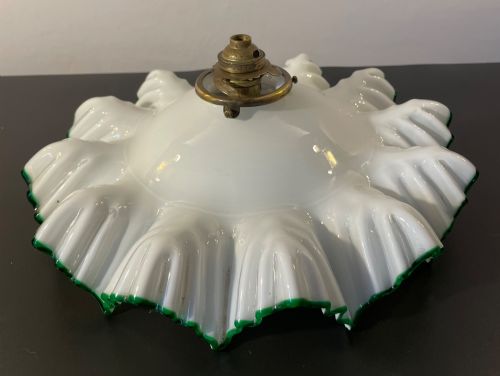
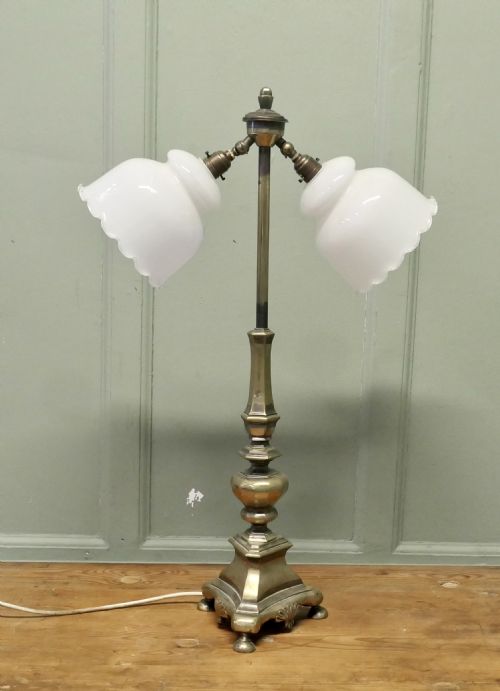
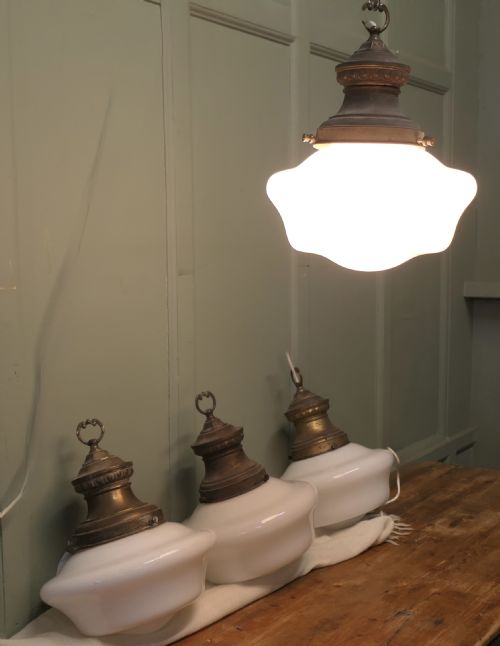
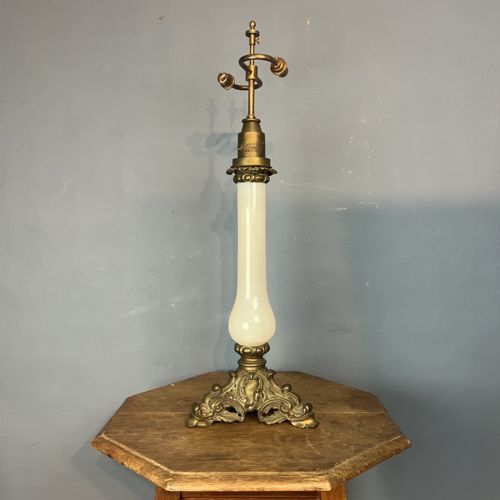
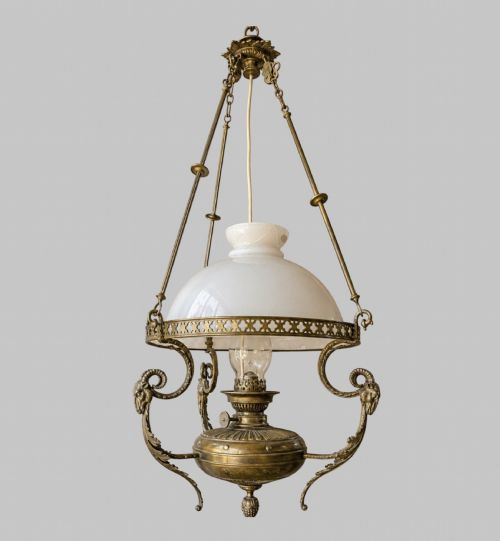
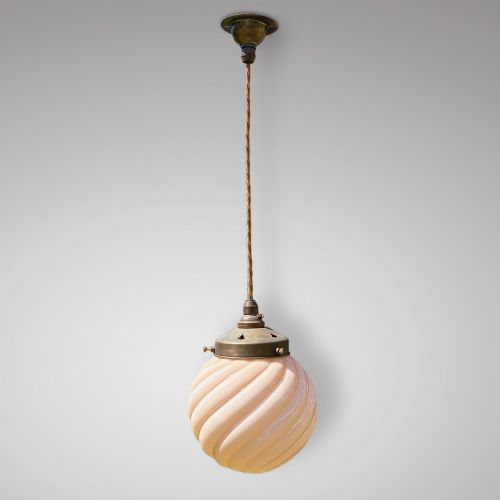
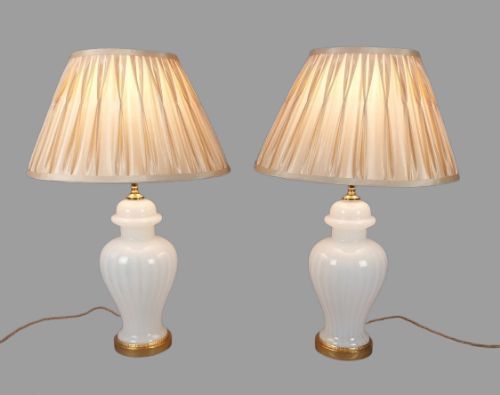
When you search for a brass opaline glass light, you are looking at illuminating fixtures that combine solid metalwork with translucent milk glass shades. The items appearing here span multiple decades, from the Victorian era and Edwardian period through to the 1920s and 1930s. You will encounter various forms, including table lamps, pendant lights, ceiling lights, and converted oil lamps.
The most common versions on this page are Edwardian and Victorian oil lamps alongside Art Deco pendants. Many early examples began life as paraffin or oil lamps before later conversion to electricity. Industrial ceiling fixtures and pear-shaped or conical hanging pendants also feature regularly across the selection.
What varies in quality
Quality in these lights rests on the weight and finish of the metal components and the depth of the opaline glass. Finer examples display crisp casting, substantial brass or bronze mounts, and even glass density that diffuses light without dark patches. Maker attribution and original components also elevate a piece above standard utility items.
Simpler production shows in lighter gauge metal and standard moulded glass lacking distinct proportions or maker marks. The integration of specialised mechanisms or decorative mounting separates standard domestic lighting from higher-grade salon and hall fixtures.
The listings show pieces spanning the Victorian and Edwardian eras, through the 1920s and 1930s, utilising brass, opaline glass, bronze, and marble.
Mc Gary·Perry And Co·Wild And Wessel
The Brass Opaline Glass Light Glossary
- Opaline glass
- A pale, translucent milk glass popular for softening light output. It appears frequently in Victorian and Edwardian shades.
- Plafonnier
- A ceiling-mounted dome light that sits flush or close to the surface. These often feature decorative glass bowls held in metal mounts.
- Hinks burner
- A specific type of dual-draft oil burner common on nineteenth-century lamps. It regulates airflow to improve the brightness of the flame.
- Ormolu
- Gilt bronze ornamentation applied to decorative objects and light fittings. This technique provides a rich, gold-coloured finish to metal mounts.
Brass Opaline Glass Light: Frequently Asked Questions
What is a brass opaline glass light?
It is an illuminating fixture that pairs a brass or bronze body with a milky, translucent glass shade. These pieces range from converted Victorian oil lamps to Art Deco ceiling pendants.
They serve as both functional illumination and decorative items, utilising opaline glass to soften and diffuse light evenly across a space.
How do I date a brass opaline glass light?
Dating relies on stylistic clues, manufacturing techniques, and mechanical hardware like burners or switches. Victorian and Edwardian pieces often feature heavier brass castings and conversion components from oil to electricity.
Later pieces from the 1920s and 1930s tend to adopt cleaner geometric lines associated with Art Deco design and industrial interiors.
Were these lights originally electrical?
Many examples from the nineteenth century and Edwardian period started as oil or paraffin lamps. These were later adapted for electrical wiring during subsequent decades to suit modern homes.
Other forms, particularly 1930s pendants and industrial fixtures, were manufactured specifically for electrical use from the outset.
How do I live with antique lighting?
Living with these pieces involves pairing their period character with safe, modern electrical setups. They suit a variety of interiors, functioning effectively as reading lamps on desks or as central pendants in hallways and dining rooms.
Regular dusting of the brass and careful cleaning of the opaline glass keeps the materials looking their best without damaging historic surfaces.