


Brass Mounted Vase Lamps
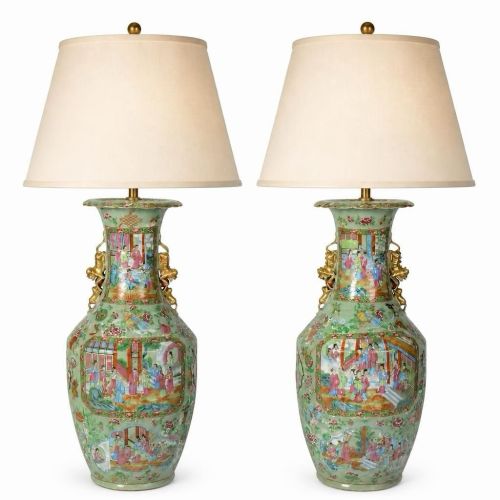
Brass mounted vase lamps combine transformed ceramic vessels with metalwork fittings to provide functional illumination.
Brass Mounted Vase Lamps
These pieces are lighting fixtures created by converting antique ceramic vessels into table lamps, often retaining their original structural character while receiving electrical fittings. When exploring brass mounted vase lamps, buyers encounter diverse ceramic bodies that span Chinese export porcelain, Japanese Satsuma and Imari wares, and European porcelains and majolica.
The majority of pieces met on this page originate from the nineteenth century, utilising porcelain bodies decorated in palettes such as Famille Verte, Famille Rose, and blue and white. Alongside these, earthenware and stoneware vessels appear, mounted with brass or gilt bronze collars and bases.
Materials and construction
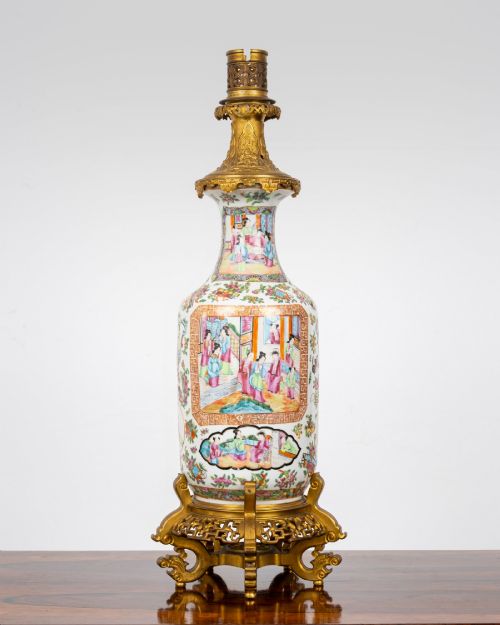
Makers utilised ceramic vessels as the central body, combining porcelain or earthenware with cast brass, gilt bronze, and ormolu mounts that secure the electrical wiring and provide a stable base. Fabric and silk shades frequently complete the assembly, resting atop metal hardware fitted to the neck of the vase.
The conversion process involved securing metal collars, handles, and feet to existing vessels, sometimes incorporating drilled bases to route electrical cords safely through the ceramic body.
Several vases hide their electrical cords so cleverly that guests occasionally try to fill them with water.
Assessing quality in mounted lamps
Quality rests upon the harmony between the ceramic vessel and its metal mounts, where precision in brass casting and the integrity of the original porcelain dictate the tier of the piece. Superior examples display crisply chased ormolu or brass mounts that conform closely to the contours of the vase without compromising the underlying ceramic.
The artistic merit of the painted decoration on the porcelain body, whether hand-painted Chinese enamel or Japanese Imari patterns, further separates standard conversions from exceptional decorative objects.
Samuel Alcock·Meissen·Samson
The Brass Mounted Vase Lamps Glossary
- Famille Verte
- A palette of Chinese porcelain enamels dominated by green, developed during the Qing dynasty. It appears frequently on nineteenth-century lamp conversions.
- Ormolu
- Gilt bronze mounts applied to furniture and ceramics. This technique provides decorative metal collars and bases for mounted vase lamps.
- Imari
- Japanese export porcelain decorated in underglaze blue, iron red, and gold. These colourful wares form a significant portion of the listed lamp bases.
- Majolica
- Tin-glazed earthenware produced in Italy and Europe. It provides colourful, opaque ceramic bodies for nineteenth-century lamp conversions.
Brass Mounted Vase Lamps: Frequently Asked Questions
Are these lamps converted from old vases?
Many examples originate as antique ceramic vessels that have been adapted for lighting through the addition of electrical components and metal mounts.
Some pieces were assembled using period vases, while others incorporate mounts applied during the nineteenth or twentieth centuries.
How do I identify the period of the ceramic?
Dating relies on examining the painting style, glaze characteristics, and ceramic body to determine whether the vessel is eighteenth-century, nineteenth-century, or later.
Stylistic cues such as Famille Rose palettes or Imari patterns provide primary indicators of the era of manufacture.
What metals are used for the mounts?
Mounts typically consist of brass, gilt bronze, or ormolu, which are fitted to the rim, neck, or base of the ceramic vessel.
These metal elements secure the lamp hardware and add structural stability and decorative detail to the piece.
How should I style a vase lamp?
These lamps function effectively on side tables, desks, or chests, where their decorative ceramic bodies and metal mounts serve as focal points.
Pairs work well on matching sideboards or mantelpieces, while single monumental lamps anchor larger interior spaces.