
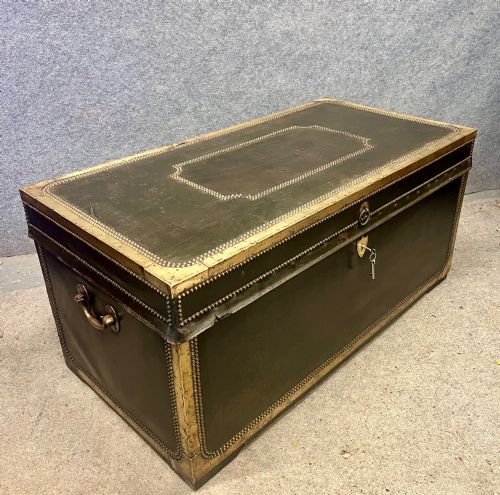

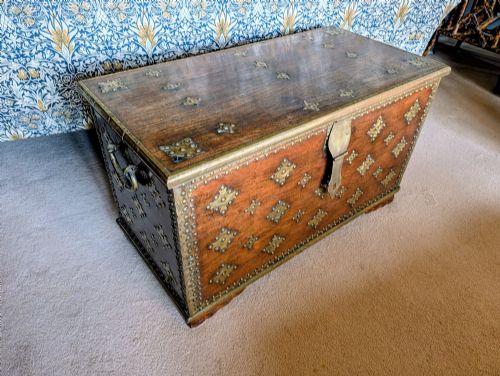
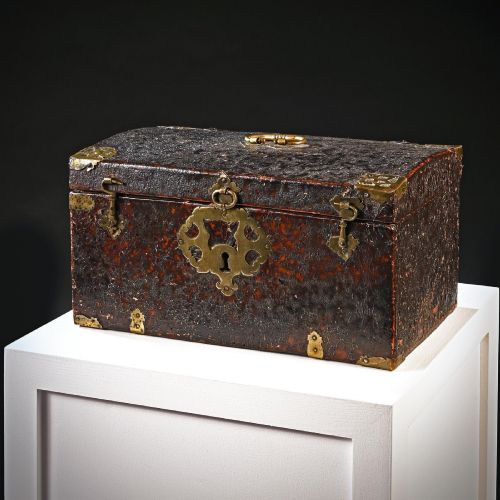
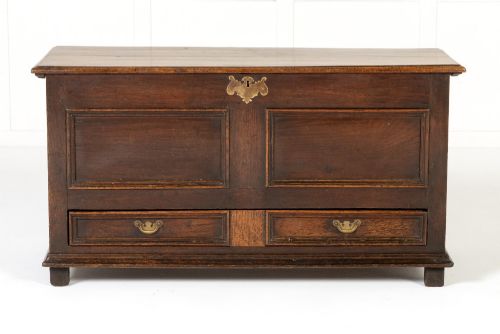
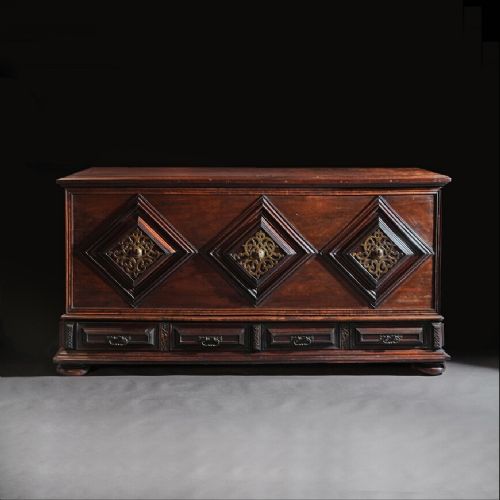
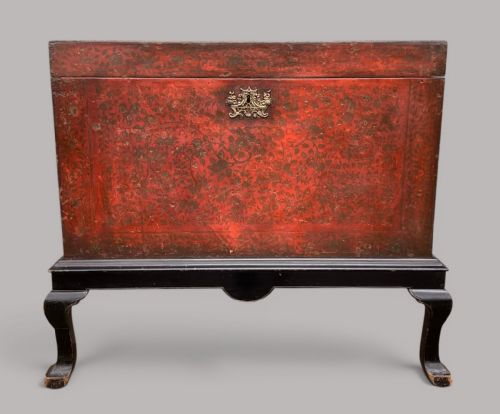
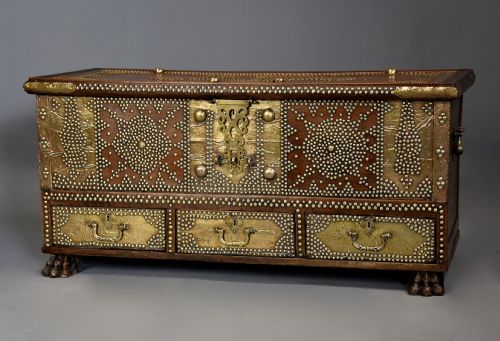

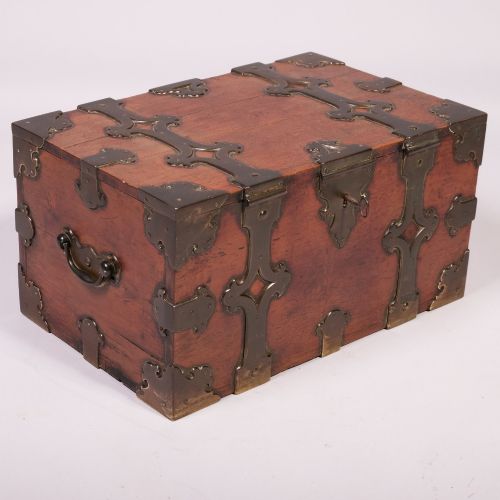
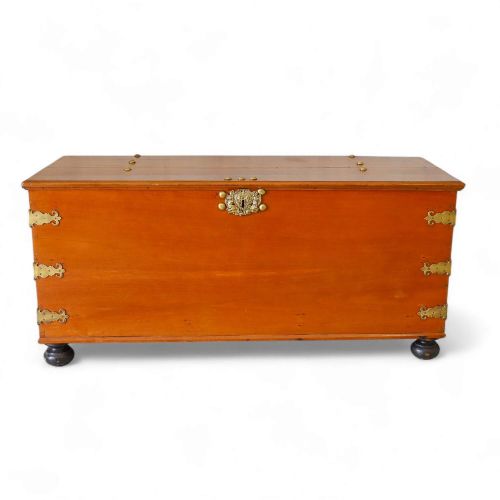
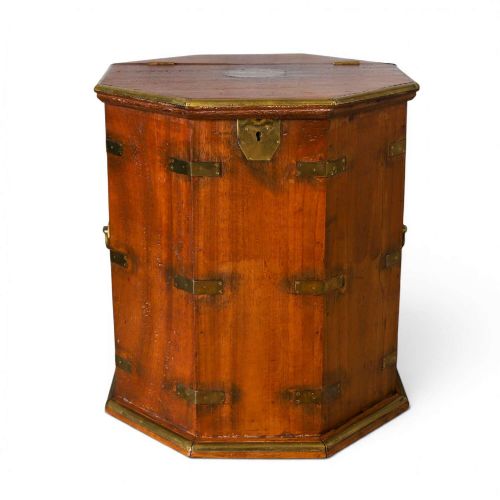
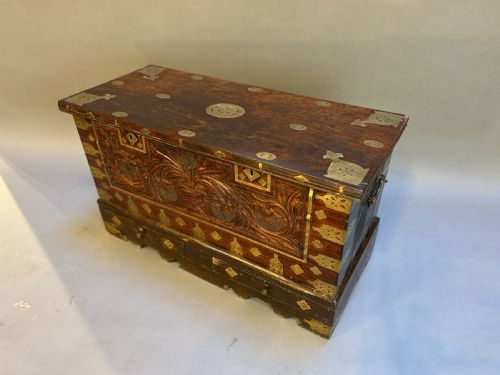

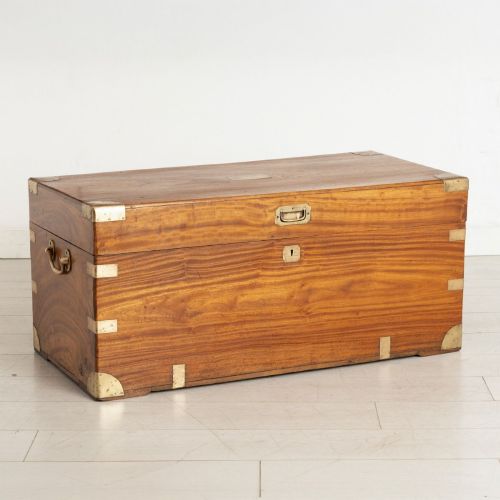

Brass Mounted Storage Trunk
A brass mounted storage trunk delivers enduring utility alongside travelled character, offering robust storage shaped by colonial trade and military movement.
Brass Mounted Storage Trunk
When you search for a brass mounted storage trunk, you encounter a specialised category of heavy chests designed for travel, trade and domestic storage across centuries. These pieces originate from distinct geographical contexts, including Anglo-Indian workshops, Dutch colonial outposts, China trade routes and Victorian military campaigns.
The versions most commonly met on this page span the seventeenth to the nineteenth centuries, reflecting periods of global expansion and maritime transport. Forms range from compact camphor caskets and blanket boxes to large travelling trunks and coaching chests built to withstand arduous journeys.
Makers utilised resilient regional timbers to protect contents from climate and insects, equipping each box with protective metalwork. The resulting objects serve as functional furniture that retains a strong narrative of historical transit.
Materials and Construction Techniques
Makers constructed these pieces using dense regional timbers such as camphor wood, teak, padouk, oak and mahogany, often selected for durability and resistance to humidity. Camphor wood was particularly favoured for storage boxes due to its aromatic properties, which naturally deterred pests.
Exterior surfaces frequently incorporated brass fittings, straps, corner brackets and stud decoration to reinforce joints exposed to heavy handling during transport. Leather, iron and pitch pine also appear across various examples, secured with traditional joinery methods suited to long-distance carriage.
Centuries later, many surviving camphor trunks still retain a faint, unmistakable trace of their original medicinal wood scent.
Distinctions in Quality
The standard of a brass mounted storage trunk depends heavily on the integrity of its primary timber and the execution of its metalwork. Superior examples display dense, well-figured hardwoods with original brass hardware intact, demonstrating precise hand-cut joinery and robust structural framing.
Finer pieces retain integral locking mechanisms, substantial carrying handles and decorative studwork applied with uniform spacing. Conversely, later or heavily altered pieces may show replaced hardware or diminished timber stability, separating utilitarian transit boxes from high-status merchant or campaign items.
The Brass Mounted Storage Trunk Glossary
- Campaign trunk
- A portable chest designed for military officers or travellers, typically constructed in sections with recessed brass handles and corner brackets to endure frequent transit.
- Zanzibar chest
- A distinctive storage box originating from East African trade routes, characterised by heavy brass studding, decorative straps and often incorporating concealed internal compartments.
- Camphor wood
- A fragrant timber native to Asia, utilised for storage chests because its natural scent protects woollens and textiles from insect damage.
- Padouk
- A heavy, durable tropical hardwood displaying rich reddish-brown tones, frequently employed in colonial furniture and trade chests for its strength.
- Coffer
- A sturdy wooden box used historically for storing valuables, textiles or documents, generally featuring a hinged lid and robust structural reinforcement.
Brass Mounted Storage Trunk: Frequently Asked Questions
What were brass mounted storage trunks used for?
These trunks served primarily to transport personal belongings, uniforms, documents and trade goods across long distances by sea and land. Their robust construction protected contents from moisture, dust and rough handling during military campaigns and merchant voyages.
In domestic settings, they transitioned into functional furniture pieces used to store blankets, linens and valuables while adding decorative presence to rooms.
How do I identify a campaign trunk?
Campaign trunks are typically characterised by recessed brass handles, reinforced metal corners and sectional construction intended for ease of packing and transport. They often utilise dense timbers like camphor wood or mahogany to withstand the rigours of military travel.
Many examples feature maker plaques, hinged lift-up tops and internal compartments designed to secure officer provisions on the move.
Why are so many trunks made of camphor wood?
Camphor wood was chosen because its strong, natural aroma repels moths and insects, making it ideal for protecting woollens, silks and linens during long voyages. The timber is also resilient to humidity and warping.
Its distinct scent often lingers in antique examples, serving as a reliable indicator of period authenticity in trade and campaign chests.
How should I care for a wooden storage chest?
Keep the chest away from direct heat sources and drastic humidity changes to prevent the timber from splitting or warping. Dust regularly with a soft, dry cloth and apply occasional natural wax to nourish hardwood surfaces.
Avoid polishing brass hardware with harsh chemical cleaners that might damage the surrounding wood or strip historical patina.
What is the difference between a coffer and a trunk?
A coffer is traditionally a heavy, stationary chest used for storing valuables and documents, often featuring deep panel construction and elaborate carving. A trunk is generally lighter and designed for travel, frequently fitted with carrying handles and metal reinforcements.
Over time, terminology overlapped as merchants and travellers adapted box designs for both storage and transit.