
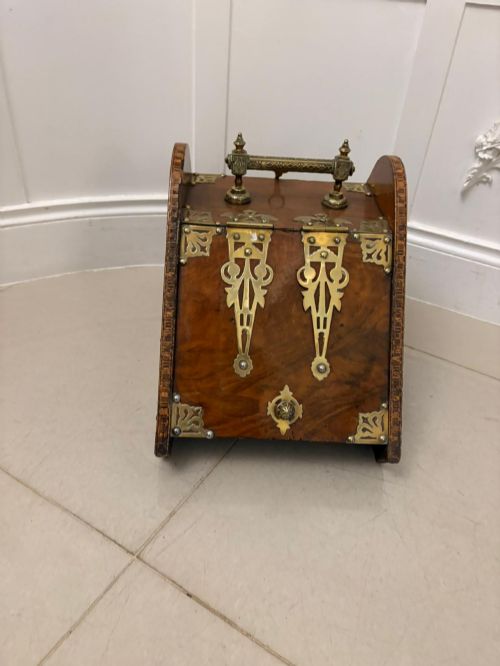


Brass Mounted Purdonium
A brass mounted purdonium is a fireside coal scuttle designed to keep fuel tidy beside a hearth.
Brass Mounted Purdonium
A brass mounted purdonium is a dedicated fireside storage box built to hold coal or logs neatly beside the fireplace. When you search for this phrase, you are looking at practical nineteenth and early twentieth-century containers that combined domestic utility with formal parlour display.
The versions you are most likely to meet on this page date from the Victorian and Edwardian periods, stretching from eighteen eighty up to nineteen hundred. These pieces typically take the form of wooden coal boxes or scuttles fitted with metal linings and carrying handles.
Makers of the period turned everyday hearth accessories into decorative items using cabinet woods and polished metal mounts. You will find examples ranging from simple oak coal boxes to ornate walnut and rosewood vessels finished with ormolu or brass fittings.
How they were made
Cabinet makers built these coal boxes using solid timbers and veneers including oak, walnut, mahogany, and rosewood. These woods provided a sturdy carcase capable of bearing the heavy weight of coal and logs.
Metalwork played a defining role in construction, utilising cast and sheet brass, iron, and ormolu for hinges, handles, and decorative mounts. Many examples also include an original metal liner to protect the wood from moisture and dirt.
Listings feature items spanning from eighteen eighty to nineteen hundred, covering Victorian and Edwardian periods with Rococo Revival influences.
What varies in quality
Quality in a brass mounted purdonium rests on the choice of timber and the sophistication of the cabinet work. Finer examples display figured walnut or rosewood veneers, intricate inlay, and heavier cast brass mounts rather than stamped sheet metal.
The presence of original internal fittings, such as the metal liner and the matching coal shovel, separates a complete survival from a modified box. Higher grade pieces also show superior joinery and more refined decorative carving in styles like Rococo Revival.
The Brass Mounted Purdonium Glossary
- Purdonium
- A Victorian coal box or scuttle designed to store solid fuel near the fireplace. This term often denotes a more refined cabinet style rather than a simple metal bucket.
- Ormolu
- Gilded bronze or brass applied to furniture and decorative objects as mounts. It adds a bright metallic contrast to dark cabinet woods.
- Liner
- The removable metal insert housed inside a coal box to contain dirt and debris from the fuel. Original liners are a sign of completeness.
- Veneer
- A thin layer of decorative wood applied to a secondary timber carcase to create a figured surface. Walnut and rosewood veneers were favoured for formal parlour pieces.
Brass Mounted Purdonium: Frequently Asked Questions
What is a purdonium?
A purdonium is a specialised box or scuttle made to hold coal or logs by the fireplace. They became popular in the nineteenth century as a way to hide messy fuel inside an attractive wooden cabinet.
Most examples open with a hinged lid or a drop-front door, often accompanied by an internal metal liner and a small shovel.
How old are these coal boxes?
The pieces seen on this page date primarily from the Victorian and Edwardian eras, spanning from eighteen eighty to nineteen hundred. This period represents the height of domestic hearth ornamentation.
Cabinet makers used woods like oak, walnut, and mahogany, outfitting them with brass handles, hinges, and decorative mounts.
Do they still have their original liners?
Many surviving examples retain their original metal liners, which protected the wooden structure from coal dust and dampness. Finding a piece with both the liner and shovel intact is a notable advantage.
Liners were typically made of galvanized iron or tin, shaped to lift out easily for emptying and cleaning.
How do I style a purdonium at home?
These boxes sit naturally beside an active fireplace or an empty period hearth as a decorative storage container. You can use them to hold rolled blankets, kindling, or magazines instead of coal.
The polished brass mounts and dark wood tones complement both traditional interiors and rustic living spaces.