




Brass Mounted Lady Desk
A brass mounted lady desk is a refined writing piece designed for private correspondence, bringing compact elegance and historical charm to modern interiors.
Brass Mounted Lady Desk
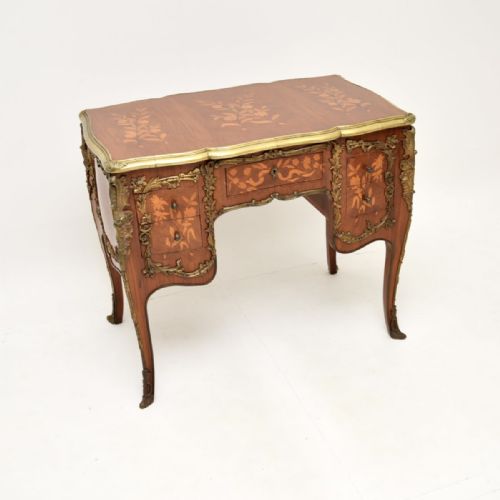
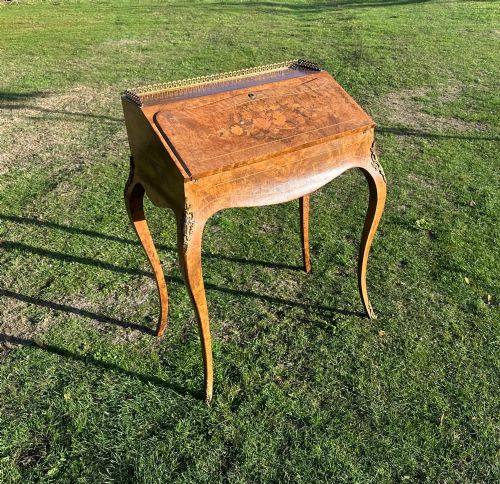
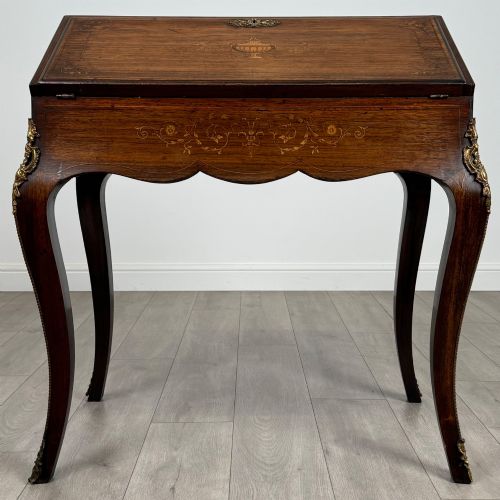
A brass mounted lady desk encompasses compact writing furniture designed for domestic use, predominantly appearing on this page as French-influenced forms such as the bonheur du jour and bureau de dame. These pieces emerge chiefly from the Victorian era and the nineteenth century, alongside Regency and twentieth-century interpretations.
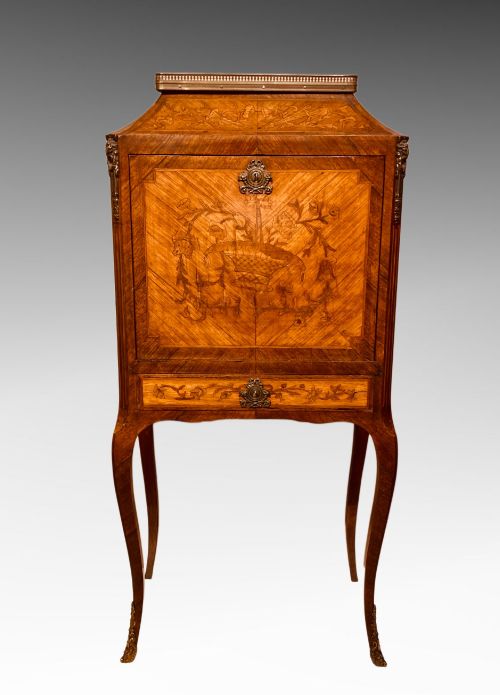
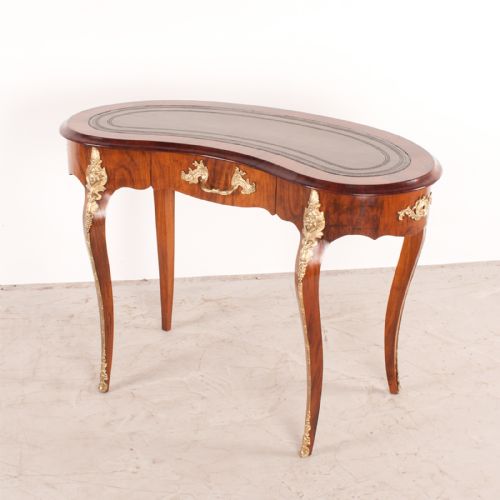
The dominant varieties on this page take the form of kidney-shaped writing tables and tiered writing cabinets fitted with raised superstructures. Walnut, rosewood, and mahogany form the primary timber bodies, frequently enriched by distinctive brass mounts, ormolu, and marquetry inlays.
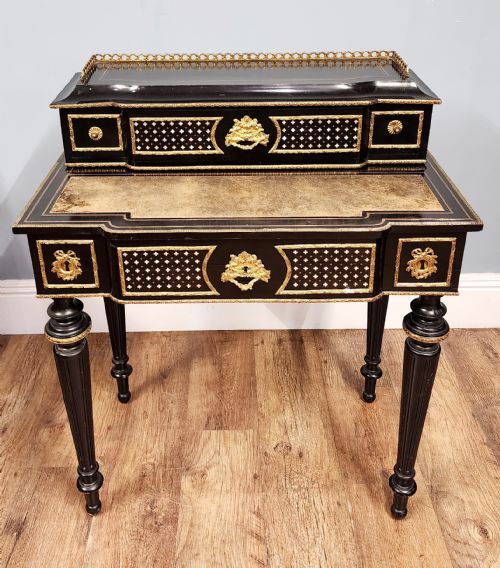
Makers drew heavily upon Louis XV and Louis XVI revival styles, creating refined desks that balance decorative cabinetry with practical writing surfaces. The selection ranges from neat proportions suited for intimate spaces to elaborate boulle-inlaid and porcelain-plaqued examples.
Materials and Cabinetry Techniques
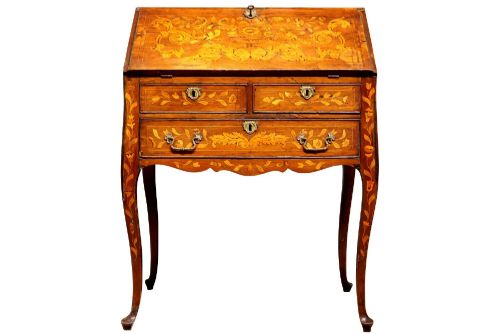
Craftsmen built these desks using sturdy foundational timbers like mahogany and walnut, overlaid with decorative veneers of rosewood and kingwood to create rich surface patterns. Marquetry inlay work added intricate floral or geometric designs directly into the timber skin.
Gilt bronze, ormolu, and brass mounts were cast and applied to frame drawers, outline legs, and highlight structural contours. Leather inserts frequently lined the writing surfaces to provide a suitable texture for pen and paper work.
Brass Mounted Lady Desk Retail Price Guide 2026
Typical asking prices for brass mounted lady desk among the pieces listed under this phrase on Sellingantiques today, from the lower quarter to the upper quarter. They describe what is for sale here now, not the wider market.
The furniture styles represented span French Louis XV and XVI revivals, Napoleon III, and Dutch Rococo interpretations.
Distinctions in Execution and Detail
Quality rests upon the crispness of the cast brass and ormolu mounts, where sharp detail and substantial weight separate superior examples from softer, mass-produced castings. The precision of the marquetry and the choice of dense, highly figured veneers further indicate the maker's investment of time and skill.
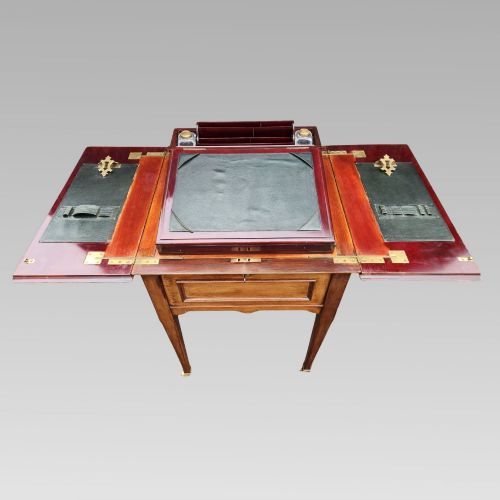
Structural integrity reveals itself in the smooth operation of drawers, secret compartments, and fold-action mechanisms. Refined proportions and balanced execution across both visible surfaces and secondary timbers distinguish the finest ateliers from standard commercial production.
John MaClean·Linke
The Brass Mounted Lady Desk Glossary
- Bonheur-du-jour
- A small light lady desk featuring a raised superstructure with shelves, drawers, or cupboards above the writing surface. This French form gained popularity during the eighteenth century and remained a staple of revival design.
- Bureau de dame
- A lady writing desk, typically small in scale, designed for private correspondence and boudoir use. These pieces often incorporate fitted interiors and secret drawers.
- Ormolu
- Gilded bronze used for decorative mounts and furniture trim. High-quality ormolu displays sharp hand-chiseled detail after casting.
- Boulle
- Marquetry technique utilising brass and tortoiseshell inlay, named after French cabinetmaker André-Charles Boulle. It creates striking metallic patterns against a dark ebonised background.
- Poudreuse
- A combination dressing table and work table featuring folding tops and internal compartments. These items share the compact scale of the lady desk.
Brass Mounted Lady Desk: Frequently Asked Questions
What is a brass mounted lady desk used for?
These pieces served historically for private correspondence, diary writing, and managing household accounts within a private parlour or bedroom. Their compact layout provided dedicated compartments for stationery without dominating the room.
In modern homes, they function effectively as writing desks, laptop stations, or decorative focal points in sitting rooms and hallways.
How do I identify the period of a desk?
Dating relies upon examining timber selection, construction methods, and stylistic revival cues. Nineteenth-century examples frequently combine walnut or rosewood with elaborate brass ormolu mounts in French revival styles.
Later Edwardian and twentieth-century versions often show lighter internal construction and simplified mechanisms while maintaining traditional proportions.
What distinguishes a bonheur du jour from a standard desk?
A bonheur du jour incorporates a raised cabinet tier above the main writing surface, providing pigeonholes, small drawers, or enclosed cupboards. Standard writing tables offer a flat top without upper superstructures.
This raised section allows for decorative brass mounts and marquetry panels to be displayed at eye level.
How should I care for timber and brass mounts?
Maintenance requires regular dusting with a soft, dry cloth and avoiding direct sunlight to protect sensitive rosewood, walnut, and mahogany veneers. Wax polishing helps preserve the natural sheen of the wood.
Brass and ormolu mounts should be left unpolished or gently cleaned with a dry microfiber cloth to avoid disturbing the patination.