

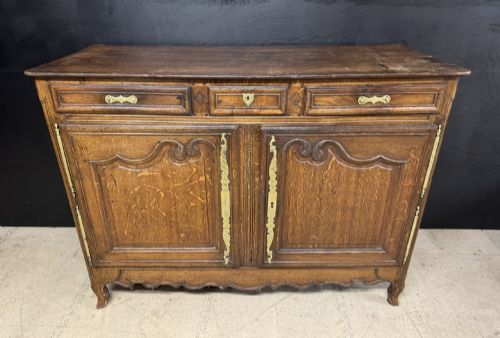
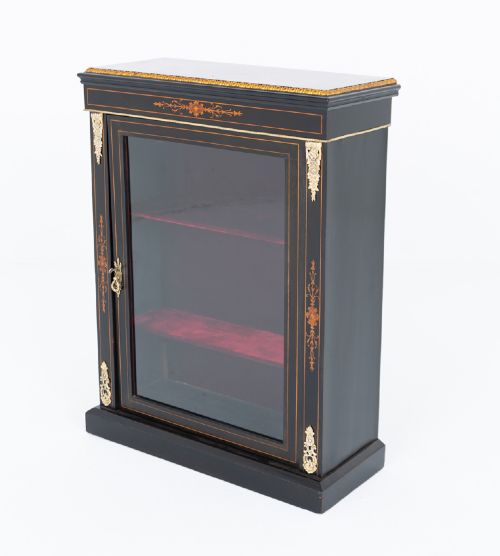


Brass Mounted French Credenza
When you seek a brass mounted french credenza, you encounter elaborate nineteenth-century display furniture framed in gleaming metal and rich timbers.
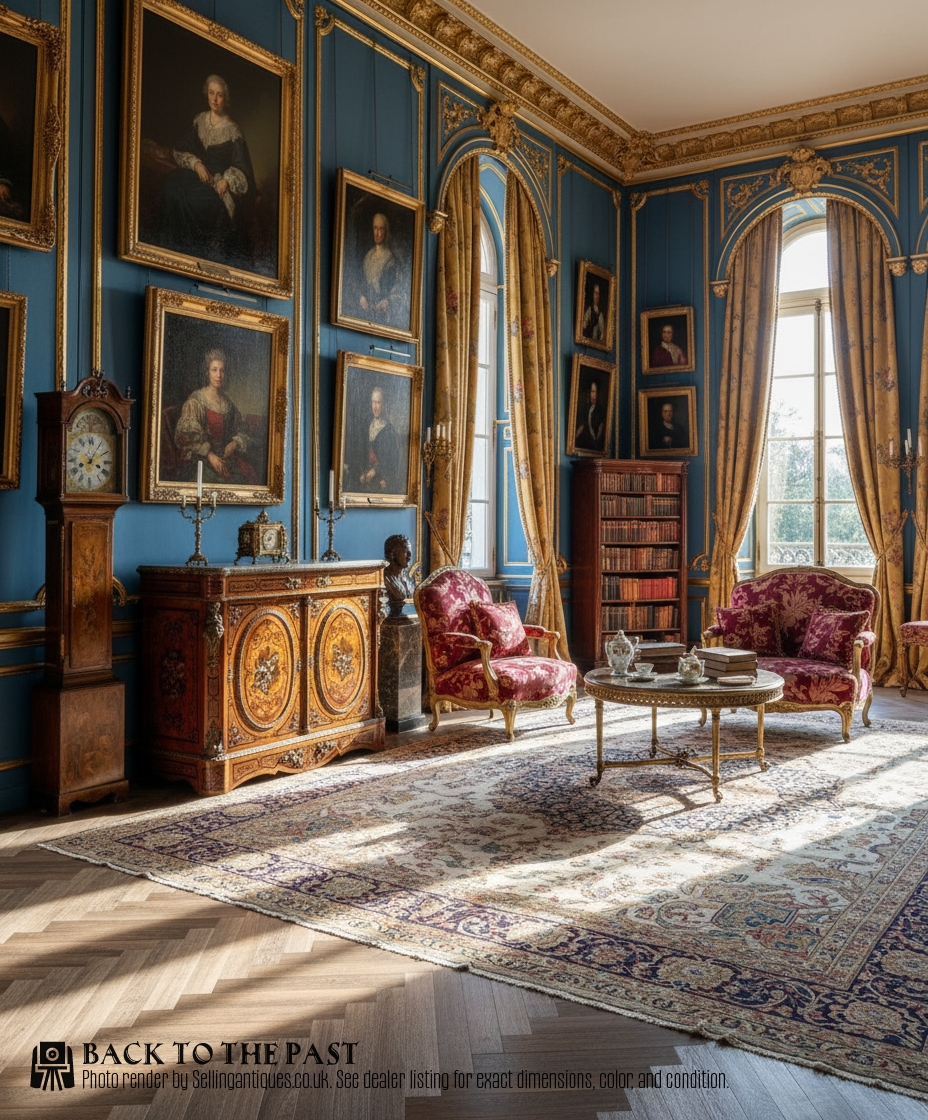
Brass Mounted French Credenza
A brass mounted french credenza combines continental cabinet-making traditions with display surfaces intended for formal reception rooms. These pieces originate predominantly across the nineteenth century, including Victorian interpretations and Napoleon III designs.
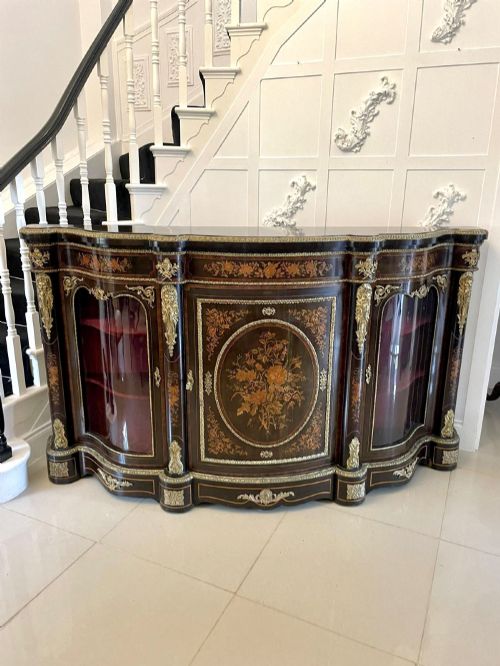
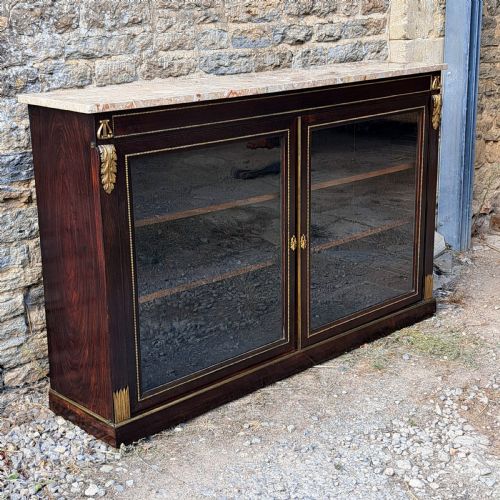
Forms span serpentine credenzas, side cabinets, and pier cabinets outfitted with glass doors or open shelving. Walnut, ebonised wood, and rosewood form the foundational carcases for these decorative items.
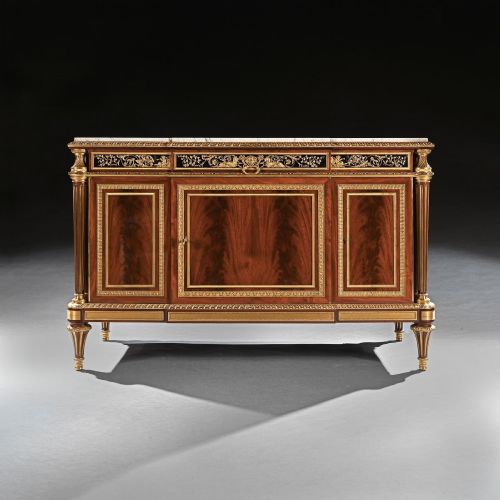
Makers frequently drew upon earlier monarchical aesthetics, resulting in Louis XV and Louis XVI revivals. Buyers meet these variations through shaped marble tops and gilt mounts.
How They Were Made
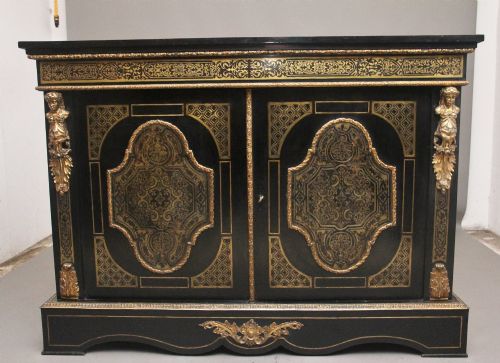
Craftsmen built these credenzas using dense timbers such as walnut, mahogany, and kingwood over sturdy softwood carcases. Ebonised finishes provided a dark, uniform ground for intricate brass inlay.
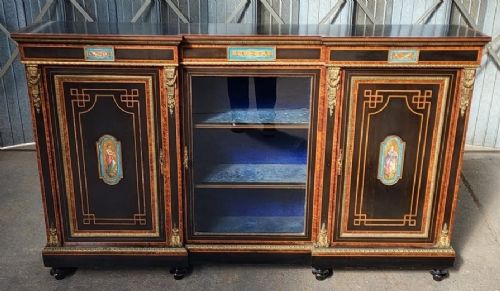
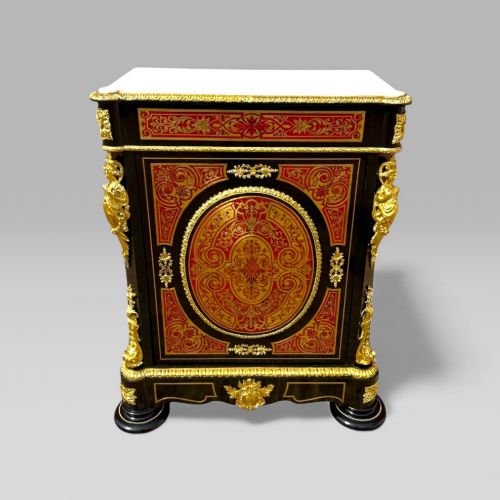
Ormolu mounts, cast and gilded bronze or brass elements, framed the doors, corners, and feet to accentuate the sculptural contours. Tortoiseshell and cut brass were worked into elaborate boulle marquetry patterns across panel surfaces.
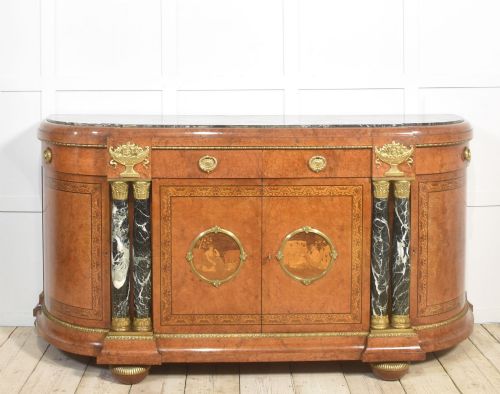
Plaques of painted porcelain, notably Sevres style ceramics, were inset into the timber friezes and doors alongside floral marquetry in lighter fruitwoods.
Brass Mounted French Credenza Retail Price Guide 2026
Typical asking prices for brass mounted french credenza among the pieces listed under this phrase on Sellingantiques today, from the lower quarter to the upper quarter. They describe what is for sale here now, not the wider market.
Listings feature extensive nineteenth-century examples using ebonised wood, ormolu, and boulle marquetry across various side cabinet forms.
What Varies in Quality
The precision of the boullework and the crispness of the cast ormolu mounts distinguish finer examples from standard production. Finely chased metalwork retains sharp relief and careful detailing along every edge.
Timber selection and marquetry execution dictate the upper tier of these pieces, visible in the complexity of floral motifs and the depth of natural grain. Carcase construction and the fit of curved glass doors demonstrate the original joiner's skill.
Henry Dasson·Weisweiler·Riesener
The Brass Mounted French Credenza Glossary
- Ormolu
- Gilded bronze or brass applied as decorative mounts on furniture. This material provides bright metallic contrast against dark ebonised wood.
- Boulle
- Marquetry technique utilising tortoiseshell and brass inlay. It derives from the seventeenth-century practitioner André-Charles Boulle.
- Pier cabinet
- Narrow display cabinet designed to stand against the wall space between windows. These tall, slender units often feature glass doors.
- Serpentine
- Form describing a front edge curved in a wave shape with a convex centre flanked by concave sides. This contour adds movement to case furniture.
- Marquetry
- Decorative veneer work arranged in pictorial or geometric patterns using various coloured woods. Craftsmen cut these thin slices to fit flush across tabletops and cabinet doors.
Brass Mounted French Credenza: Frequently Asked Questions
Where did these cabinets go in a Victorian home?
These display cabinets stood principally in formal reception rooms and drawing rooms where hosts entertained visitors. Their glass doors and mirrored backs allowed families to exhibit prized ceramics and small collectibles.
They occupied prominent wall spaces or fitted between tall windows to reflect available daylight across the interior.
How do I care for ebonised wood and ormolu?
Dust these surfaces regularly with a soft, dry lint-free cloth to prevent particulate accumulation within the delicate brass inlay and carved mounts. Avoid liquid polishes and silicone sprays that can damage the historical polish.
Maintain stable room humidity to protect the timber carcase and prevent warping in the applied tortoiseshell panels.
What distinguishes Napoleon III style from Victorian work?
Napoleon III pieces lean heavily into French court revivals with abundant boulle marquetry and elaborate gilt-metal mounts. They reflect Parisian taste under the Second Empire.
Victorian counterparts often adapt these same French motifs using native English timbers or simpler ebonised finishes tailored to domestic British interiors.
Are marble tops original to these credenzas?
Slab marble tops served as durable, decorative surfaces on many nineteenth-century sideboards and commodes. They provided a contrasting cool texture above the warm wood and brass.
Most surviving pieces retain their fitted white or coloured marble tops secured directly to the upper carcase.