


Brass Marble Table Light
A brass marble table light combines heavy stone foundations with cast metalwork, bringing a steady weight and traditional warmth to a room.
Brass Marble Table Light
A brass marble table light brings together polished stone and cast metal to illuminate a space with traditional character. When searching this phrase, a buyer examines pieces that blend heavy mineral bases with metallic fittings, often adapted from older oil lamps or candelabras.
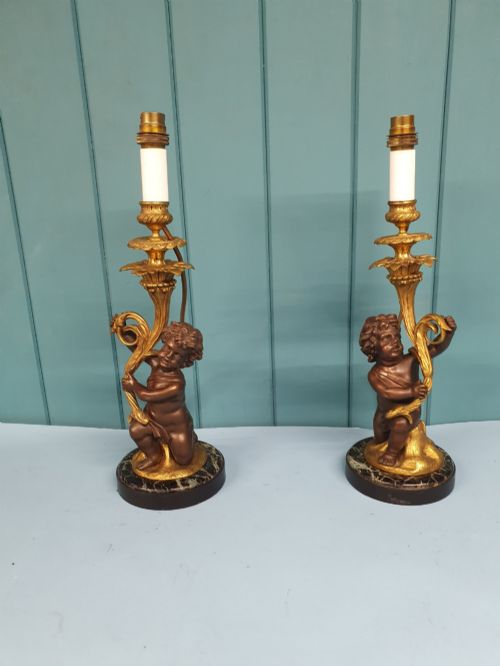
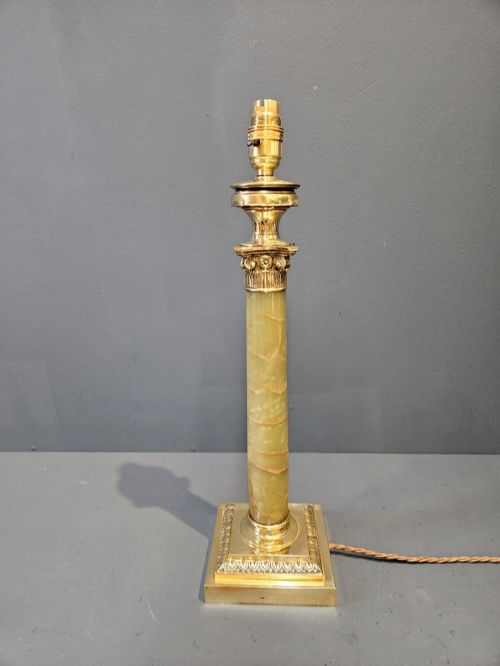
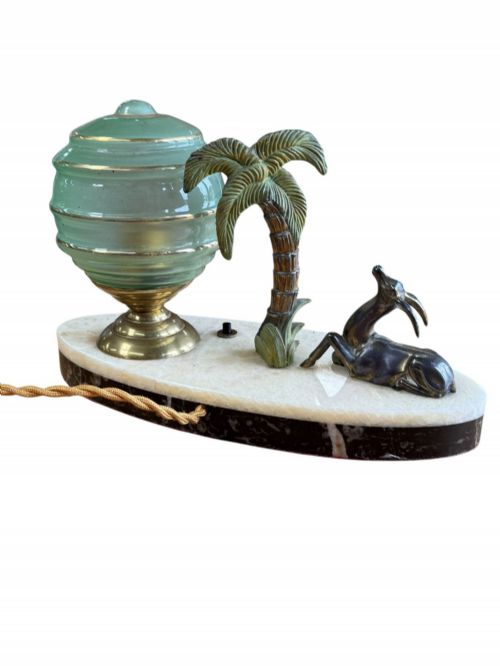
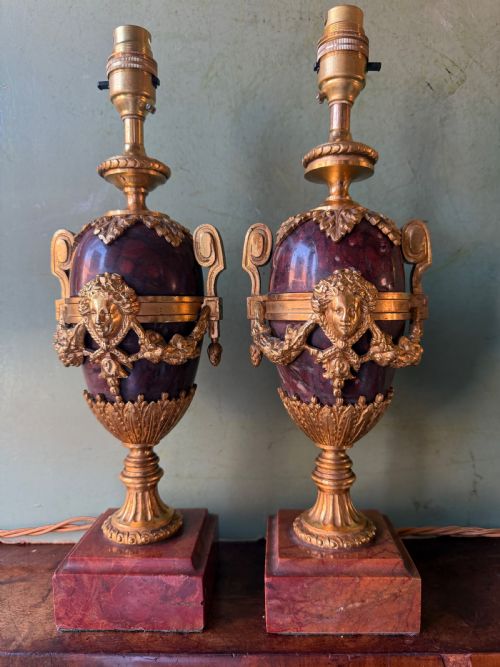
The most common versions on this page originate from nineteenth-century and early twentieth-century workshops, drawing on French Neoclassical, Louis XVI, and Art Deco design vocabularies. These range from simple columnar designs to figurative bronzes mounted on rouge or green marble bases.
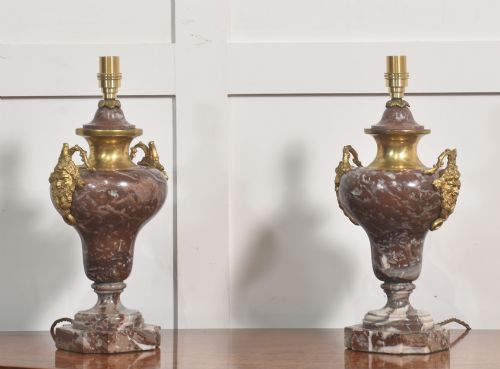
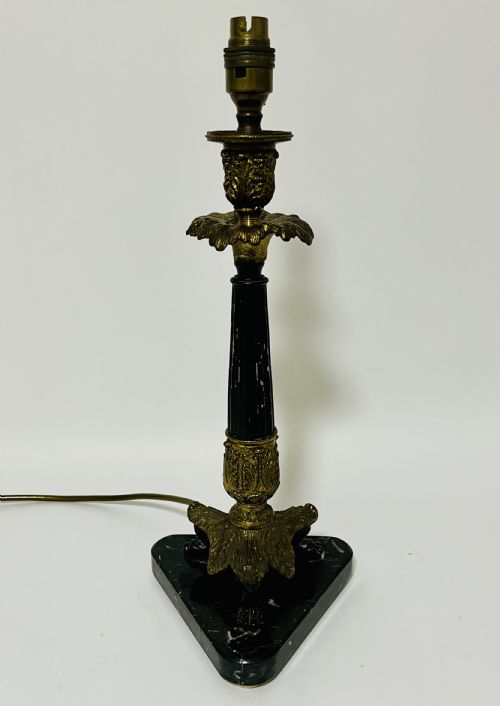
Many examples utilise converted candelabras, cassolettes, or classical urn forms, giving domestic lighting a substantial architectural presence. The interplay between the veining of the stone and the polished surface of the brass or ormolu defines the visual appeal of these objects.
How they were made
Makers utilised turned and polished natural stones such as rouge marble, green marble, onyx, and alabaster to form stable, decorative plinths and columns. These mineral bases were selected for their rich veining and then combined with heavy cast brass, bronze, gilt metal, or ormolu mounts.
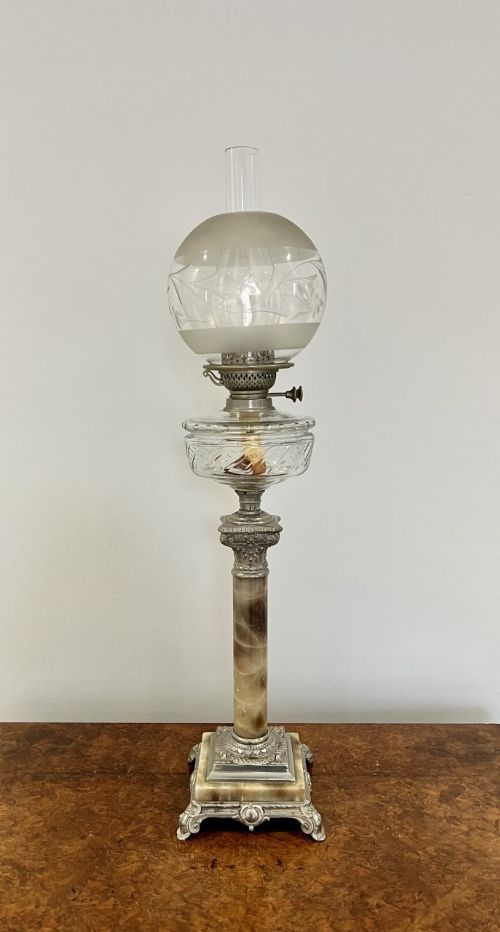
Metal components typically involved lost-wax casting or sand casting, followed by chasing and gilding to achieve crisp decorative detail. Wiring and electrical fittings are almost invariably later additions, as these bodies originated as oil lamps, candlesticks, or decorative urns before conversion.
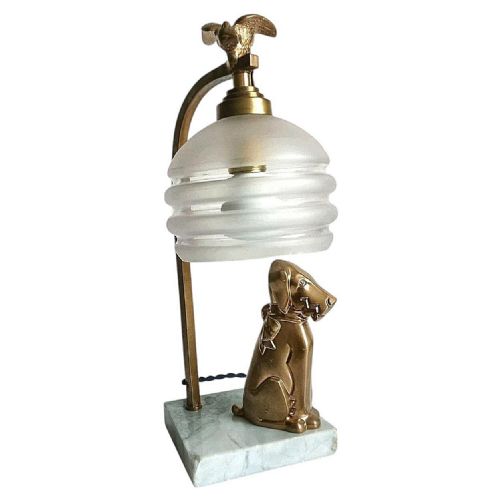
Several lamps disguise their domestic purpose entirely by turning playful bronze dogs, parrots, and cherubs into unexpected switchbearers.
What varies in quality
The distinction between ordinary and superior pieces rests on the crispness of the metal chasing and the depth of finish in the ormolu or gilt bronze. Heavy, finely detailed mounts soldered or pinned accurately to substantial marble bases separate standard production items from exceptional workshop output.
Proportion and material selection also drive the hierarchy, with dense, evenly veined marbles and patinated bronze figures commanding greater regard than lighter cast-metal alloys paired with plain stone. The integration of original decorative elements, such as paw feet or classical collars, determines the cohesion of the design.
The Brass Marble Table Light Glossary
- Ormolu
- Gilt bronze produced by applying a finely ground high-carat gold mercury amalgam to a bronze object before heating. This French technique yields a warm, matte golden surface that resists tarnishing.
- Cassolette
- A decorative vessel shaped like an incense burner or urn, often featuring a reversible lid. In lighting, these bodies are frequently adapted into table lamps.
- Neoclassical
- A style drawing inspiration from the classical art and architecture of ancient Greece and Rome. It emphasises symmetry, straight lines, and classical motifs such as urns and acanthus leaves.
- Patina
- The surface sheen and coloration developed through age, handling, and oxidation. On bronze and brass, it indicates historical depth.
- Casting
- The process of pouring molten metal into a prepared mould to form intricate shapes. Hand-chased castings reveal sharper detail after the mould is removed.
Brass Marble Table Light: Frequently Asked Questions
Are these lamps originally electric?
Most of these pieces started as oil lamps, candelabras, or decorative urns during the nineteenth or early twentieth centuries. They were subsequently converted to run on electricity for modern domestic use.
Buyers encounter wiring and sockets that reflect various twentieth-century and contemporary installation standards. The original metal and stone bodies retain their antique integrity despite these functional updates.
How do I identify French styles?
French lighting often displays distinct regional characteristics associated with periods like Louis XVI, Empire, or Art Deco. Look for symmetrical mounts, classical motifs such as acanthus leaves, and cast brass paw feet.
Maker choices and material combinations, including rouge marble paired with fire-gilt bronze, point directly to Parisian workshop traditions from the nineteenth century.
How heavy are these lamps?
The combination of solid natural stone and cast metal results in a remarkably substantial weight. This heaviness ensures the fixtures remain stable on side tables and desks.
When lifting or positioning a piece, support the stone base directly rather than relying on the upper metal stem or shade fittings.
What maintenance do they need?
Care involves gentle dusting of the stone and metal surfaces with a dry, soft cloth. Avoid harsh chemical cleaners that can strip the historic patina from the brass or damage polished marble.
Periodical checks by a qualified electrician ensure that modern internal wiring remains safe for continued daily use.