




Antique Onyx Desk Light
An antique onyx desk light brings a heavy, polished stone base and warm metal mountings to a workspace, combining practical illumination with solid decorative presence.
Antique Onyx Desk Light
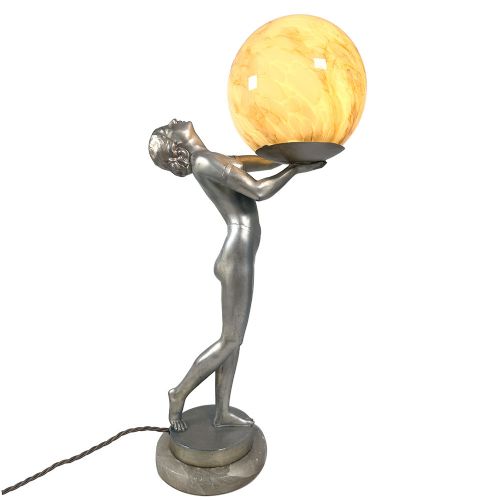
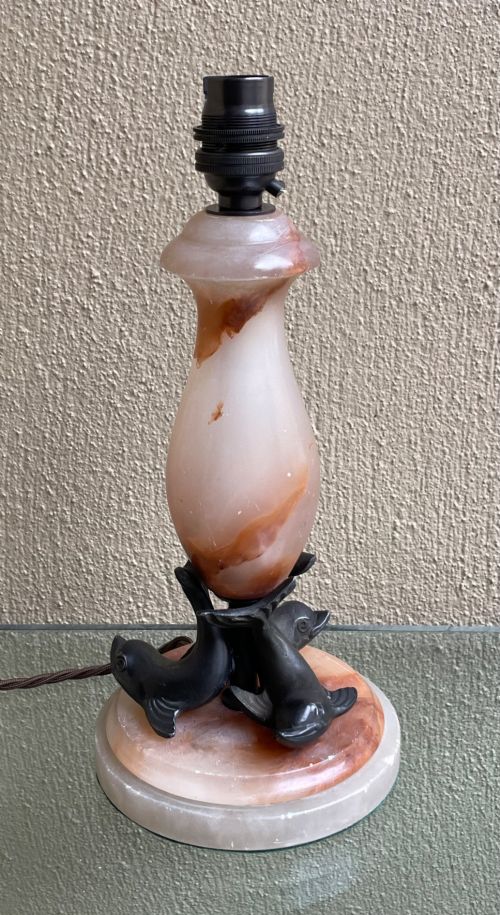
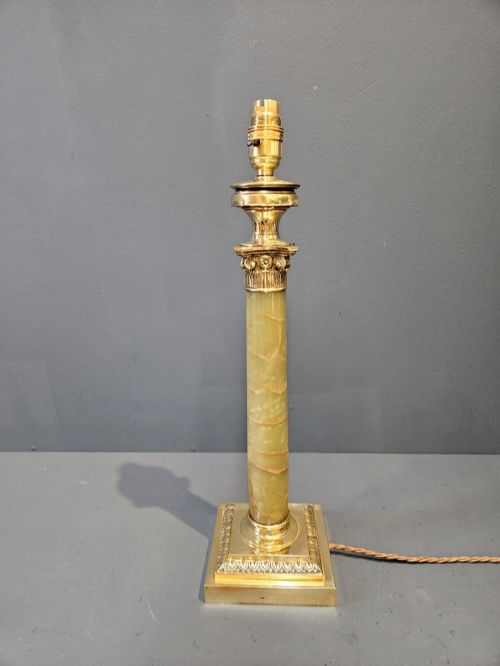
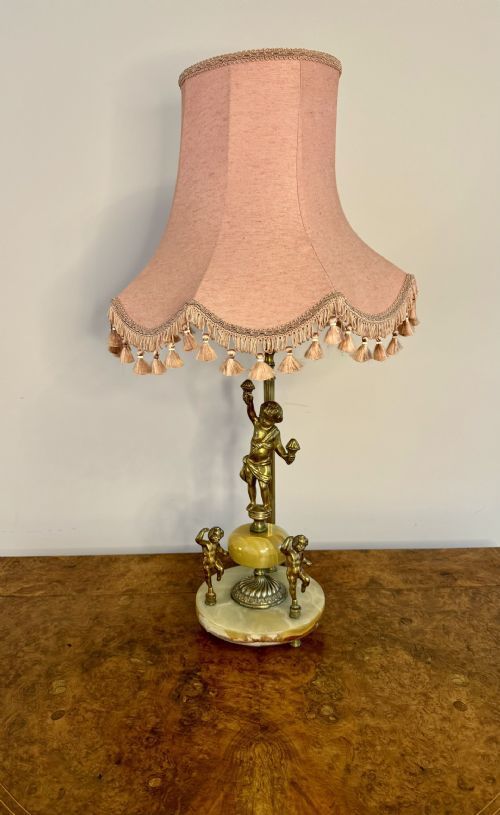
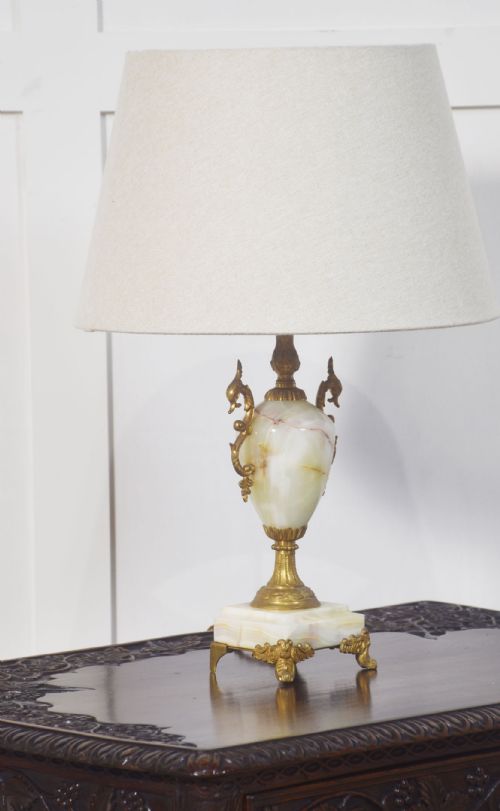
An antique onyx desk light is a sturdy table lamp built around a polished stone body, most frequently paired with brass, ormolu, or gilt metal mountings. These pieces draw on French Neoclassical, Art Deco, and Victorian design traditions, spanning the late nineteenth and early twentieth centuries. You will regularly encounter column forms, amphora shapes, and figural bases incorporating cherubs or dolphins.
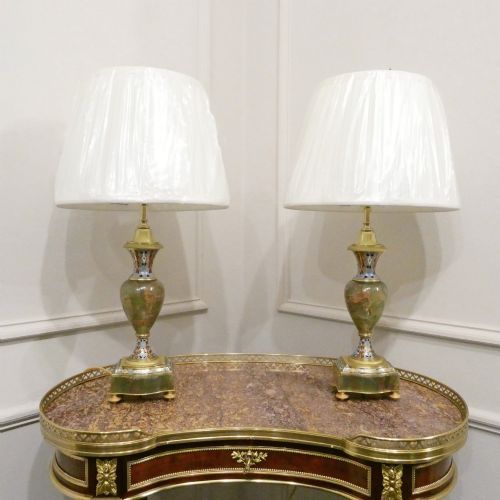
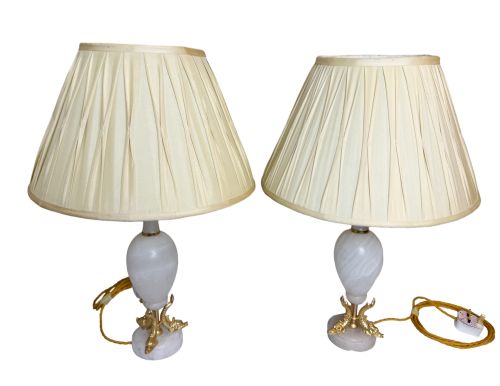
The selection ranges from single sculptural examples to matched pairs, often incorporating champleve enamel, fabric shades, or detailed metal claw feet. While many originate from French workshops, others reflect English Victorian and Edwardian domestic lighting tastes. The stone itself varies from white varieties to deeper banded tones, providing a dense and durable pedestal for domestic or office use.
How they were made
Makers shaped natural onyx and marble into columns, urns, and urn-like amphora bodies, turning the stone on lathes before hand-polishing the surface to a smooth finish. Metal components such as brass, gilt bronze, and ormolu were cast and chased separately, then fitted closely to the stone using threaded rods, collars, or pinned mounts.
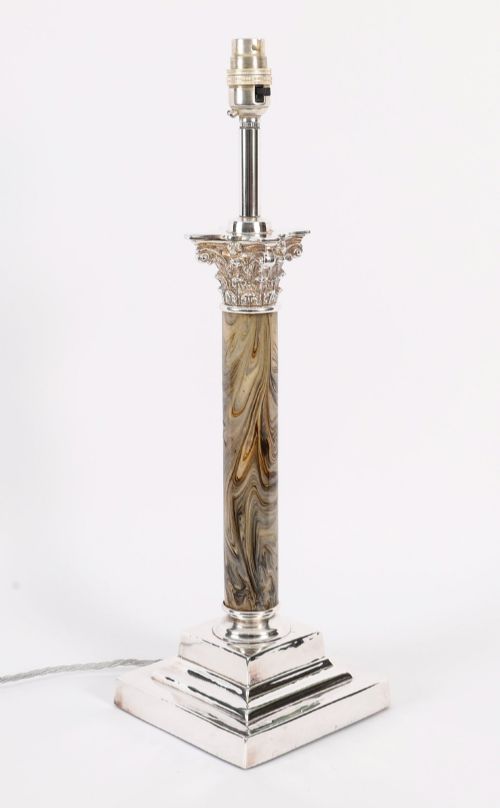
Detailing often included champleve enamel work, intricate Corinthian capitals, and cast metal paw feet attached directly to the stone plinth. Wiring configurations visible today generally reflect later rewiring for modern safety standards, while retaining the original heavy metal and stone construction of the base.
Listings feature table lamps combining onyx, marble, and alabaster with brass, gilt bronze, and silver-plated metal mounts.
What varies in quality
The standard of an antique onyx desk light rests on the crispness of the metal chasing and the integration between the stone body and its bronze or brass mounts. Finer examples display deeply sculpted cherubs, sharp acanthus leaves on Corinthian capitals, and tightly fitted stone joints without visible gaps.
The visual depth of the onyx and the weight of the cast metal parts distinguish standard domestic lighting from more ambitious decorative objects. Superior pieces maintain a balanced proportion where the polished stone grain complements the quality of the surrounding gilt bronze or ormolu mounts.
The Antique Onyx Desk Light Glossary
- Onyx
- A translucent, banded variety of chalcedony or calcite used for lamp bodies. It provides a heavy, decorative foundation with natural variations in colour and pattern.
- Ormolu
- Gilt bronze produced by applying a mercury and gold amalgam to cast bronze. This technique creates a rich, durable golden finish on decorative metal mounts.
- Champleve
- An enamelling technique where troughs are dug into a metal surface and filled with vitreous enamel. These coloured enamel areas decorate the metal components of the lamp.
- Corinthian
- A classical architectural order featuring ornate capitals decorated with carved acanthus leaves. This motif appears frequently on the metal columns of these lamps.
- Amphora
- A two-handled ancient jar shape adapted for decorative lamp bases. French makers utilised this classical silhouette during the late nineteenth and early twentieth centuries.
Antique Onyx Desk Light: Frequently Asked Questions
How do I clean an onyx lamp base?
Wipe the polished stone gently with a soft, slightly damp cloth to remove dust without damaging the surface. Avoid harsh chemical cleaners that can dull the natural gloss of the stone or harm adjacent metal mounts.
Keep moisture away from any electrical components and dry the stone thoroughly immediately after cleaning. Gentle care preserves the original polish and the integrity of the metal fittings.
Are these lamps safe to use today?
Most surviving examples require professional rewiring to meet modern electrical safety standards. Have a qualified electrician check the internal wiring and bulb holders before connecting the lamp to a power supply.
Retaining the original switchgear or external brass components is usually possible while updating the internal flex and plug. This approach combines historic character with safe everyday operation.
What periods do these lamps come from?
The pieces span from the late Victorian era through the Edwardian period and into the Art Deco years of the 1930s. Design details such as classical columns or geometric silhouettes help indicate the specific decade of manufacture.
French workshops produced many of the gilt bronze and onyx combinations around nineteen hundred, while simpler column lamps often date to the early twentieth century.
Why are some lamps offered as pairs?
Makers originally produced matched pairs to flank a large desk, sideboard, or mantelpiece in formal rooms. Surviving pairs remain desirable for creating symmetrical lighting arrangements in a traditional interior.
Single lamps more commonly served as individual desk accessories or reading lights. Finding a matched pair from the early twentieth century is less frequent than encountering solo pieces.