



Brass Marble Gueridon
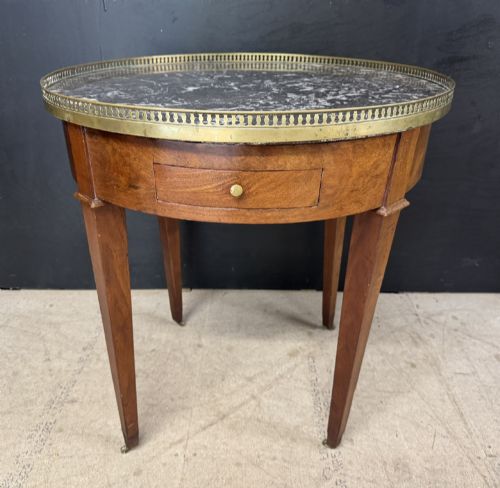
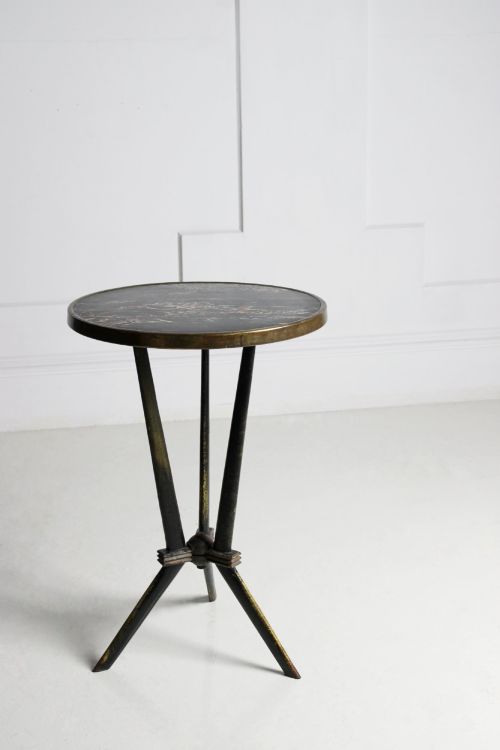
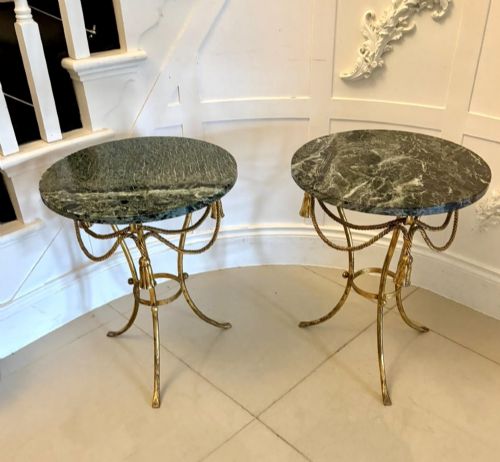
A brass marble gueridon brings neoclassical elegance to a room, offering a sturdy stone surface upon a slender metal frame.
Brass Marble Gueridon
When you search for a brass marble gueridon, you are looking at small circular or occasional tables featuring stone tops supported by metal or wooden frames. These pieces originate predominantly from French design traditions spanning the nineteenth and early twentieth centuries.
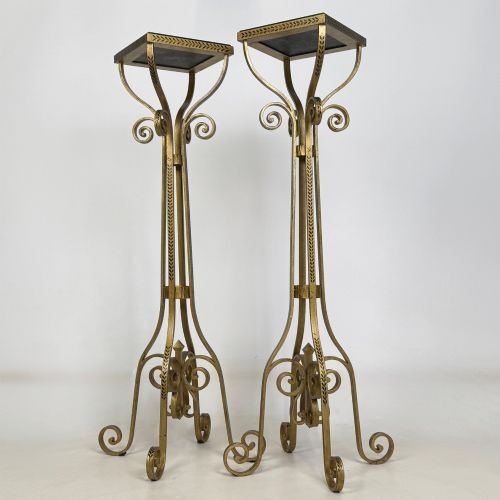
The versions most commonly met on this page include nineteenth-century French occasional tables and plant stands, alongside twentieth-century iterations in styles such as French Empire and Louis XV. They function practically as lamp, side, or wine tables while serving as decorative focal points.
Makers and workshops often drew upon classical motifs, incorporating materials like gilt bronze, ormolu, and fine hardwoods alongside the characteristic marble and brass. The form adapts easily to modern interiors as a compact surface for lamps and decorative objects.
How they were made
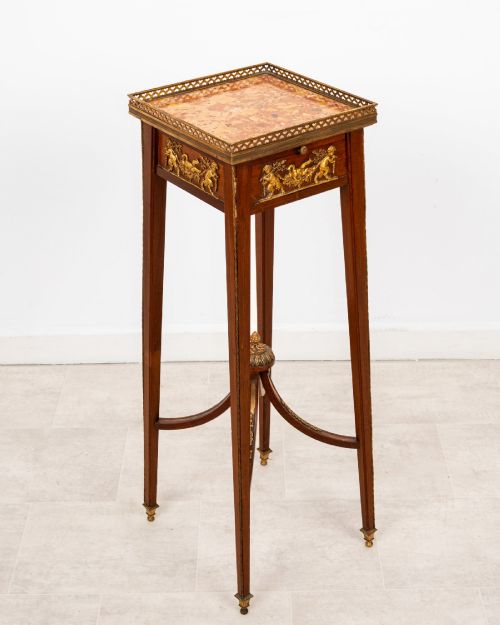
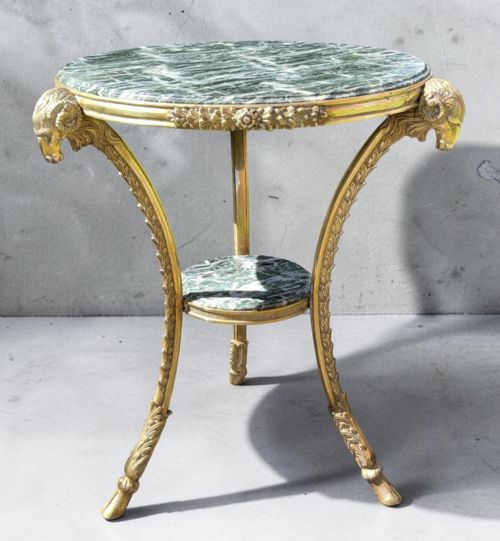
Craftsmen combined cast and chased brass, gilt bronze, or ormolu mounts with structural timbers such as mahogany, walnut, and kingwood. The metal components provide structural support and decorative detailing, including mounts shaped as rams' heads or floral motifs.
Tops feature various marbles, ranging from white and rouge varieties to verde and specimen marbles, often edged with brass galleries. Ebonised wood, onyx, and coromandel also appear as foundational materials in these diverse French and Italian workshops.
Some nineteenth-century examples incorporate cast brass rams' heads guarding the table base.
What varies in quality
The refinement of the cast brass and ormolu mounts separates standard production from exceptional pieces. Sharply chased details and heavy bronze casting indicate superior workshop standards compared to simpler pressed metal.
The selection and fit of the marble top also dictate quality. Solid stone slabs with rich figuring, securely fitted within integrated brass galleries or timber rims, distinguish the finer examples in this category.
François Linke
The Brass Marble Gueridon Glossary
- Gueridon
- A small circular table on a central pillar or multiple legs, originating in seventeenth-century France. The form evolved through various revival styles into the nineteenth and twentieth centuries.
- Ormolu
- Gilded bronze applied as decorative mounts on furniture. The technique involves coating cast bronze with a mercury and gold amalgam before heating.
- Galleried
- Featuring a raised metal or wooden rim around the edge of a table top. This border prevents items from slipping off the marble surface.
- Specimen marble
- A top assembled from multiple small geometric pieces of different coloured marbles. This mosaic technique creates intricate decorative patterns.
- Verde marble
- A dark green ornamental stone with lighter veining. It was frequently utilised in Italian and French decorative tables.
Brass Marble Gueridon: Frequently Asked Questions
What is a gueridon table?
A gueridon is a small occasional table, typically circular, designed for use as a plant stand, lamp table, or wine table.
Originating in France, these tables combine decorative metal bases with stone or wooden tops to suit smaller spaces.
How do I style a marble top table?
Use the piece as a bedside table, an end table in a sitting room, or a plant stand to showcase decorative objects.
The cool stone surface provides a durable platform for lamps and glassware while adding texture to an interior.
Are these tables French?
Many examples on this page reflect French design traditions, including Empire, Louis XV, and Louis XVI styles.
Craftsmen across France produced these occasional tables in mahogany, walnut, and gilt brass throughout the nineteenth and early twentieth centuries.
How do I identify the period?
Dating relies on stylistic markers such as neoclassical mounts, ormolu chasing, and the choice of timbers like kingwood or coromandel.
Nineteenth-century pieces often display heavier cast brass and detailed carving, while later twentieth-century items reflect revival aesthetics.