




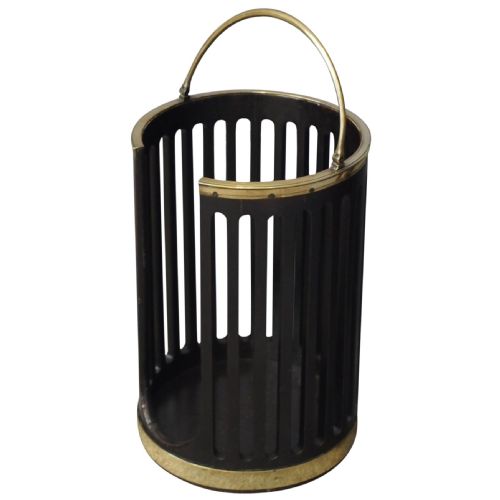


Brass Mahogany Carrier
A brass mahogany carrier is a timber and metal vessel built to move plates or bottles, offering functional utility and rich period character.
Brass Mahogany Carrier
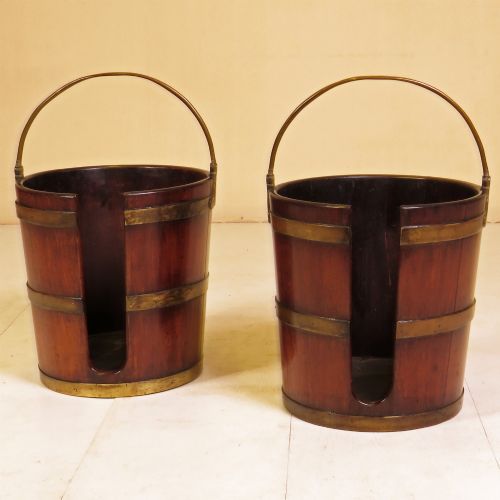
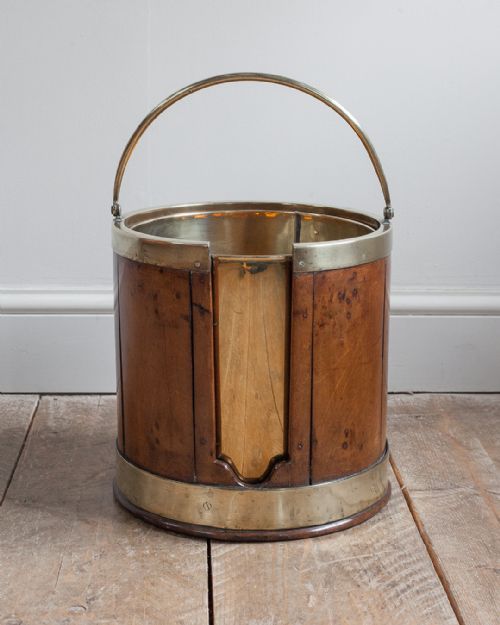
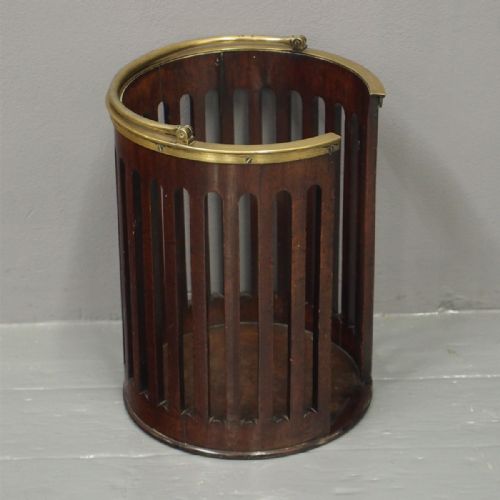
A brass mahogany carrier brings together timber and metal to create robust vessels for dining and hearth use. The brass mahogany carrier category encompasses plate buckets, wine bottle carriers, presentation cases, and peat buckets spanning several centuries.
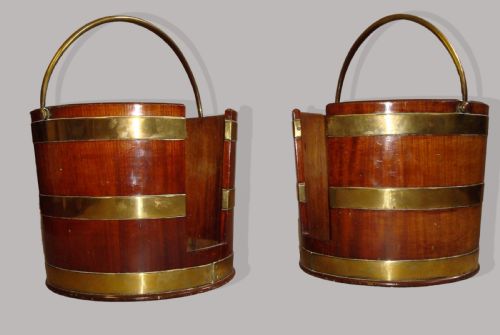
Most examples appearing on this page belong to the Georgian and George III eras, constructed from rich mahogany timber and secured with stout brass bands. These utilitarian objects served grand dining rooms and drawing rooms, designed to withstand heavy daily lifting.
The form ranges from circular stave-built buckets with brass carrying handles to compartmentalised caddies built specifically for wine bottles. Buyers encounter both single examples and matched pairs created to flank a sideboard or hearth.
How they were made
Craftsmen built these vessels using dense mahogany staves joined with precision, mirroring the traditional methods of cooperage. Stout brass hoops, bands, and swing handles were then fitted around the timber bodies to provide structural reinforcement.
Many items incorporate cast or beaten brass mounts, sometimes featuring fixed drop handles or sturdy vertical brackets secured with small brass pins. Iron components occasionally appear in internal framing or fixings, hidden beneath the primary timber and metal exterior.
Brass Mahogany Carrier Retail Price Guide 2026
Typical asking prices for brass mahogany carrier among the pieces listed under this phrase on Sellingantiques today, from the lower quarter to the upper quarter. They describe what is for sale here now, not the wider market.
One cheerful nineteenth-century carrier clearly spent decades enjoying social gatherings, carrying the quiet dignity of spilled port and old wax deep within its staves.
What varies in quality
The distinction between standard examples and superior pieces lies in the choice of timber and the weight of the brass work. Dense, deeply figured mahogany and thick, hand-finished brass bands mark out items made for high-status interiors.
Joinery execution dictates longevity, with tight stave construction and secure handle mountings separating robust vessels from loose ones. The proportion and tactile presence of the metal hardware relative to the timber body reveal the maker's eye for balance.
The Brass Mahogany Carrier Glossary
- Plate bucket
- A deep cylindrical vessel designed for storing and transporting ceramic plates around a dining room. These containers typically feature sturdy brass swing handles and protective metal hoops.
- Stave
- An individual vertical strip of wood shaped to form the curved sides of a rounded bucket or carrier. Coopers joined multiple staves tightly together before securing them with external metal bands.
- Caddy
- A small partitioned box or container built to hold multiple bottles or containers securely in place. George III examples often incorporated carved internal divisions for four individual sections.
- Peat bucket
- A specialised timber container utilised for holding fuel beside a hearth or fireplace. These domestic items combined heavy mahogany construction with iron or brass elements to endure rough handling.
- Regency
- A design period spanning the early nineteenth century characterised by classical restraint and refined proportions. Pieces from this era often display cleaner lines and restrained metal mounts.
Brass Mahogany Carrier: Frequently Asked Questions
What is a brass mahogany carrier used for?
These vessels served practical roles in historic households, primarily moving dining plates, champagne magnums, or wine bottles from pantries to tables. Some larger variants functioned near fireplaces to hold peat fuel for the hearth.
Today, owners utilise them as decorative wastepaper bins, umbrella stands, or standalone focal points in traditional and contemporary interior schemes.
How do I date a brass mahogany carrier?
Dating relies on examining the timber grain, the construction methods of the staves, and the style of the brass hardware. Georgian and George III pieces exhibit hand-turned elements and specific patination on the mahogany.
Later Victorian or twentieth-century interpretations often display machine-cut components and brighter, less weathered brass surfaces that lack eighteenth-century wear.
Are these carriers waterproof?
Most historic carriers feature wood-stave construction with internal gaps or dry joints that are not engineered to hold standing water. Placing wet items directly inside can cause timber expansion and damage the historic glue or lining.
Owners using them for fresh flowers or plants typically employ a modern waterproof liner inside the vessel to protect the antique wood.
How should I care for the wood and brass?
Maintenance requires occasional dusting with a soft, dry cloth and avoiding harsh chemical polishes that strip historic wax. The brass bands benefit from gentle cleaning if tarnish obscures the metal, though light patination is generally preferred.
Keeping these pieces away from direct heat sources and sudden humidity changes prevents the mahogany staves from shrinking or cracking.