


Brass Lion Head Handles
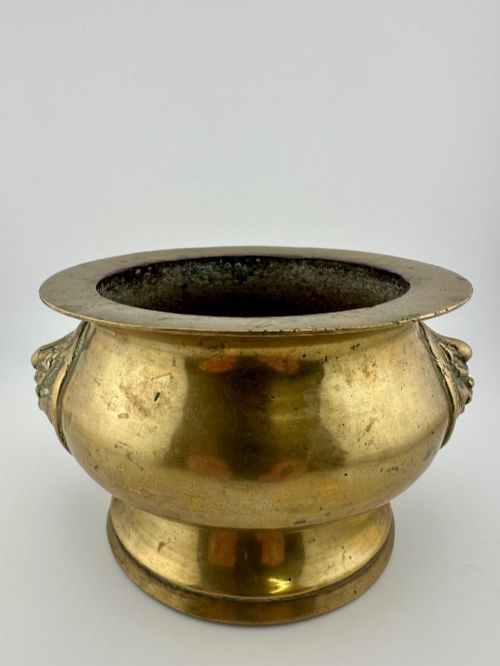
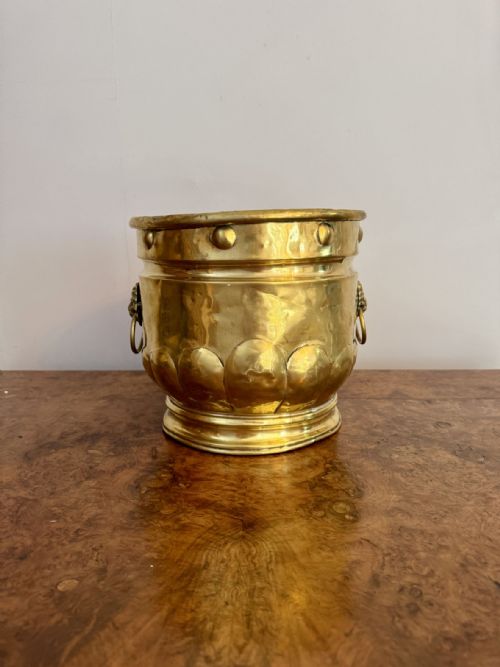
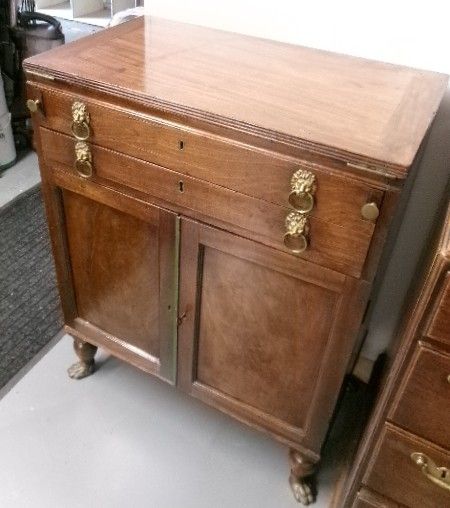
Brass lion head handles provide a bold, classical terminal to heavy timber chests, coal buckets and display vessels.

Brass Lion Head Handles
Brass lion head handles appear predominantly on nineteenth-century campaign chests, cellarettes, log bins and heavy plant holders. These cast mounts serve both a structural purpose for lifting weighty vessels and a decorative function rooted in classical revival design.
The version most commonly met on this page is the brass ring handle suspended from a detailed feline mask, often mounted to mahogany or copper bodies. They cross several distinct periods, from Georgian revival forms down to early twentieth-century decorative copperware.
How they were made
Makers cast these fierce masks in brass, bronze, and copper using traditional sand-casting methods before finishing the details by hand with chisels and files. This leaves crisp mane texture and deep expression lines around the snout and jaw.
Mounts are typically fixed to timber carcases like mahogany and walnut, or to heavy sheet metal vessels such as coal buckets and jardinières, secured by rear bolts or heavy screws passing through the backing plate.
Listings show brass lion head handles spanning Victorian, Regency, and Georgian periods across mahogany, copper, and bronze.
What varies in quality
The distinction between ordinary production and finer work lies in the sharpness of the casting and the depth of the relief work on the lion mask. Crisp detailing around the eyes and mane indicates a careful hand in the foundry.
Integration with the object itself matters greatly, as top-tier examples feature handles that sit flush against polished mahogany, oak, or heavy copper without wobble, utilising substantial backplates that distribute the weight of the lift evenly.
The Brass Lion Head Handles Glossary
- Jardiniere
- A decorative pot or stand designed to hold growing plants or flowers, frequently fashioned from copper or brass with side handles.
- Cellarette
- A lockable container used for storing bottles of wine or spirits, often fitted with heavy carrying handles on the flanks.
- Log Bin
- A robust metal or wooden vessel intended for holding firewood by the hearth, commonly decorated with cast metal mounts.
- Regency
- A period of British design spanning the early nineteenth century defined by heavy classical influence and Greco-Roman motifs.
- Mount
- A piece of decorative metal fitted to furniture or vessels to reinforce corners, keyholes, or lifting points.
Brass Lion Head Handles: Frequently Asked Questions
What pieces feature brass lion head handles?
These cast mounts appear on a range of heavy domestic items, most notably mahogany chests of drawers, coal buckets, copper cauldrons and cellarettes. They provide a sturdy grip while adding a formal, classical motif to the piece.
You will also encounter them on jardinières and planters, where the heavy metal rings assist in moving wet earth and ceramic liners.
How do I clean these brass handles?
Maintenance requires minimal intervention to preserve the natural oxidation and dark patination accumulated over the centuries. Gentle dusting with a soft dry cloth is usually sufficient for day-to-day care.
Harsh metal polishes should be avoided because they strip away the historic finish that collectors value on nineteenth-century brassware.
Are these handles original to the furniture?
Assessing originality involves looking closely at the screw slots, the indentation in the surrounding timber or metal, and the consistency of the brass patina. Period replacements often match the age of the piece closely.
Matching wear patterns between the handle and the mounting plate generally indicate that the hardware has remained in place since manufacture.
How do I date a piece with these handles?
Dating relies heavily on the secondary woods, construction methods of the carcase, and the styling of the casting itself. Georgian and Regency pieces show sharper neoclassical detailing, whereas later revival items often have heavier, softer casts.
Comparing the object type against known manufacturing periods helps narrow down the decade of production.