


Brass Letter Box
When you search for a brass letter box, you are looking at nineteenth and early twentieth-century desk accessories designed to hold household post and correspondence.
Brass Letter Box
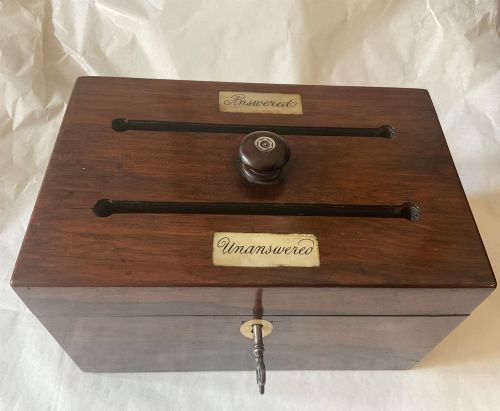
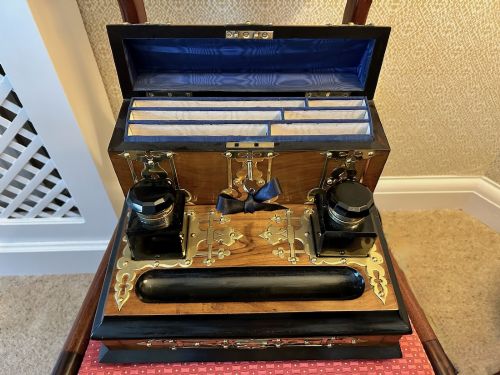
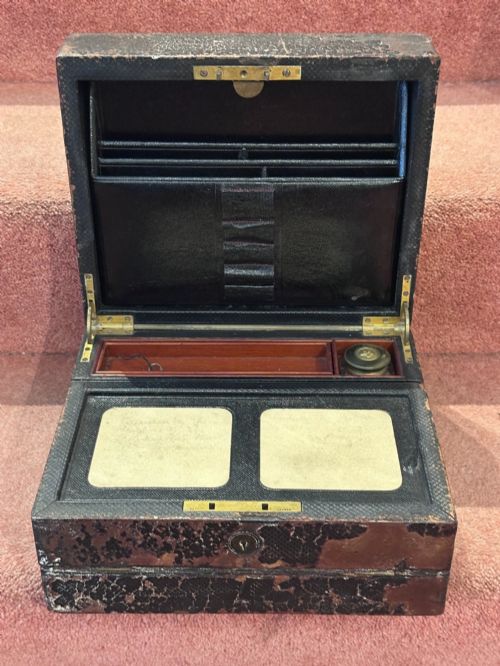
A brass letter box is a desktop or wall-mounted receptacle built to receive incoming mail, often featuring fitted compartments for stationery and envelopes. These pieces appear frequently as country house post boxes from the Victorian and Edwardian periods.
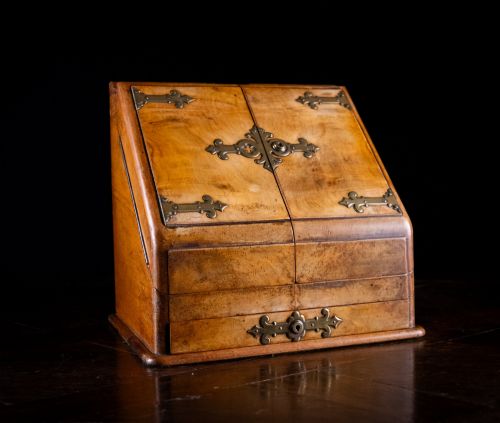
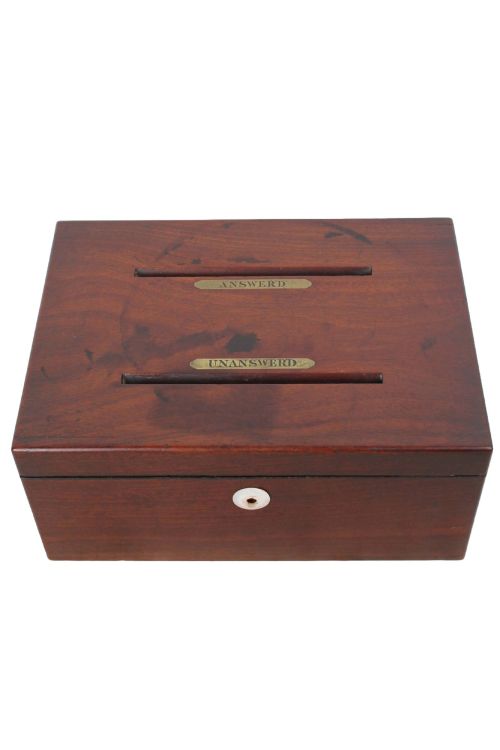
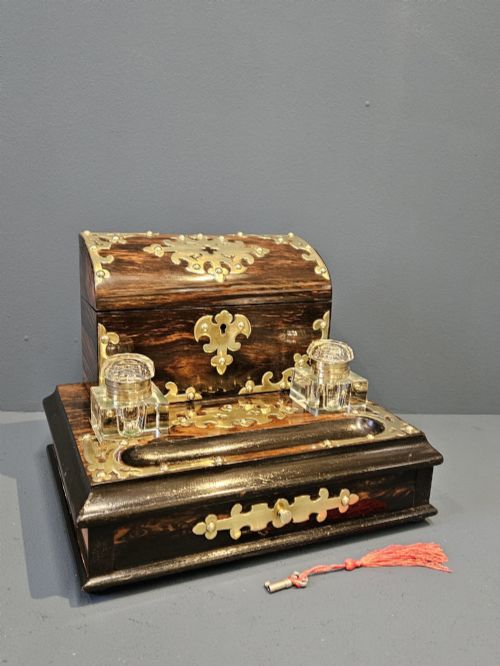
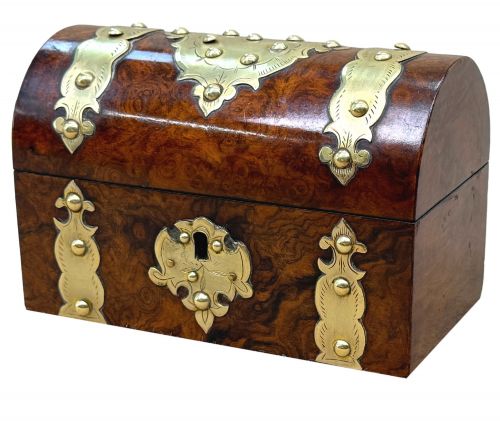
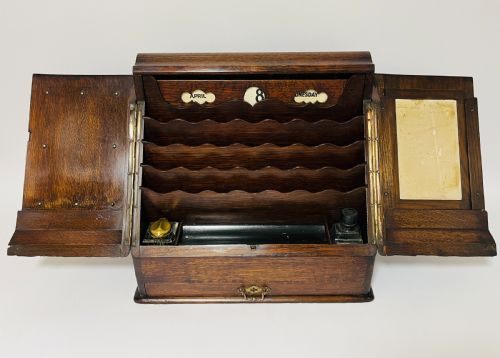
The form ranges from tabletop stationery cabinets with fall-front doors and dome tops to wall-mounted oak and brass receptacles marked for post and delivery. Makers also produced heavy brass letter flaps for doors alongside portable document caddies.
Originating primarily in English domestic and institutional settings, these boxes reflect the heavy correspondence of the nineteenth century. They served families and staff alike in sorting daily mail before it reached the main household.
How They Were Made
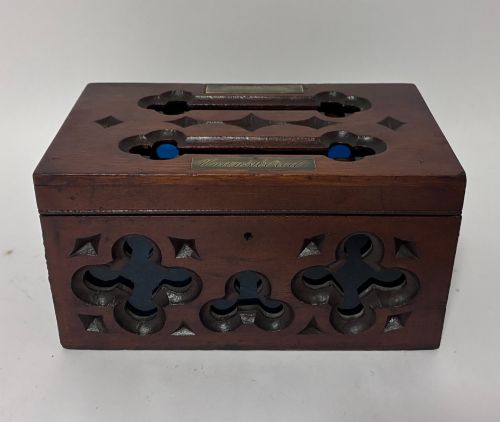
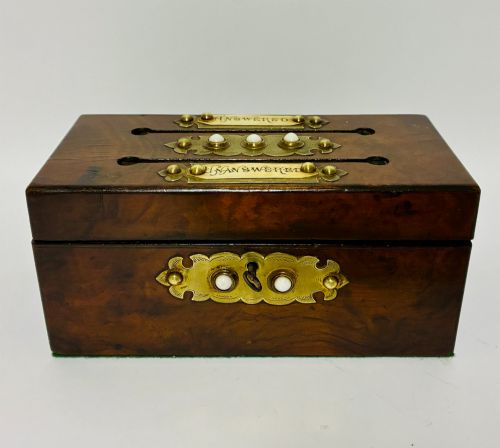
Cabinetmakers constructed the wooden carcases of these pieces using dense hardwoods such as oak, mahogany, walnut, and exotic coromandel, often framing them with substantial brass mounts, hinges, and corner brackets.
Metalworkers fabricated solid brass plates, straps, and escutcheons, frequently incorporating applied embossing, bevelled glass panels, or cut brass inlay into rosewood and pollard oak surfaces.
Listings show a strong presence of Victorian oak and coromandel constructions paired with heavy brass mounts.
What Varies in Quality
The weight and gauge of the brasswork separate standard production items from pieces commissioned for substantial country houses, where thicker metal mounts and secure locks indicate higher standing.
The selection of timber grain, particularly in figured walnut, burr walnut, and coromandel veneers, dictates the visual presence of the cabinet alongside the precision of its internal stationery divisions.
The Brass Letter Box Glossary
- Fall-front
- A hinged front panel that drops downward to reveal internal letter slots and stationery compartments. This mechanism allows easy access to desk tidies and correspondence boxes.
- Dome top
- A rounded upper lid profile seen on nineteenth-century stationery boxes and post boxes. This curved construction accommodates taller documents and adds architectural height.
- Escutcheon
- A protective brass plate surrounding a keyhole. These fittings often feature decorative engraving or Gothic Revival motifs.
- Stationery box
- A tabletop desk accessory designed to hold writing paper, envelopes, and ink bottles. They frequently incorporate sloping lids or tiered internal partitions.
Brass Letter Box: Frequently Asked Questions
How were these boxes used?
Household staff placed incoming daily post into these boxes for family members to collect and sort. They kept desks tidy by containing loose correspondence and envelopes.
Larger country house versions stood in hallways or dedicated writing rooms for collection before the daily post departed.
Can I mount these on a wall?
Certain examples were made specifically for wall hanging, featuring pre-drilled backplates or mounting brackets designed for hallway placement.
Tabletop boxes remain better suited to desks, sideboards, or tables where their base and feet can rest securely.
How do I date a piece?
Stylistic cues such as Gothic Revival arches, Art Nouveau whiplash lines, or Edwardian oak construction help narrow down the manufacturing decade.
Materials also offer clues, as coromandel and pollard oak appear predominantly on mid-to-late nineteenth-century Victorian pieces.