
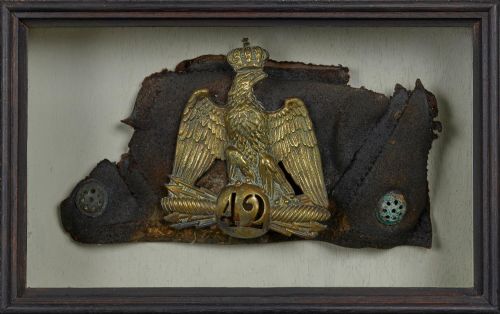


Brass Leather Helmet
These brass leather helmet examples unite sturdy hides and polished metals, offering tactile links to nineteenth- and early twentieth-century military campaigns.
Brass Leather Helmet
When you search for a brass leather helmet, you are looking at military headgear and nineteenth-century military antiques shaped from stiffened hides and metal mountings. The selection spans the Victorian military era, Imperial German Kaiserreich period, and early twentieth-century military contexts.
You are most likely to meet German Imperial officers' helmets, other ranks Pickelhaube pieces bearing eagle plates, and French or British regimental headgear. These military helmets and headdress specimens reflect standard military issue as well as distinct officers' variants from the nineteenth century onward.
Construction and materials
Construction relies heavily on boiled leather or standard leather formed over blocks to create rigid skull bases, paired with brass plates, spikes, and trim. Additional materials such as horsehair, wood, felt, glass, and silver plate appear across specific components and insignia.
Makers shaped the heavy hides and riveted metal mountings by hand, combining protective utility with elaborate regimental display. The integration of brass fittings onto leather bodies defines the core technique seen in these military antiques.
Some nineteenth-century cavalry helmets feature detachable horsehair plumes that presumably made rainy charges rather complicated.
Judging quality and condition
Quality rests on the original integrity of the leather body and the crispness of the brass stampings or plates. Pieces that retain their structural form without excessive distortion or replacement components stand apart from heavily altered examples.
The presence of original interior linings, chin scales, and intact horsehair plumes elevates an example above stripped shells. Finer specimens display unpolished patinas on the brass and firm, untreated leather rather than modern repairs.
The Brass Leather Helmet Glossary
- Pickelhaube
- A spiked helmet worn by nineteenth- and early twentieth-century German military forces. It typically combines a leather body with distinctive brass fittings and front plates.
- Shako
- A tall, cylindrical military headdress often featuring a visor and regimental plate. These pieces frequently incorporate leather bodies and metal mountings.
- Lance Cap
- A traditional square-topped military headdress associated with lancers and cavalry regiments. Examples utilise rigid leather structures combined with metal and cloth elements.
- Boiled Leather
- Leather treated through heating and immersion in wax or water to make it rigid and protective. This material forms the durable core of many nineteenth-century helmets.
Brass Leather Helmet: Frequently Asked Questions
What periods do these helmets cover?
The pieces span the nineteenth century up to the early twentieth century, taking in Victorian military eras and the Imperial German Kaiserreich.
Dates cluster around the 1860s to 1910, reflecting major periods of European military manufacturing and uniform regulation.
How were these helmets used?
They served as practical military headgear, parade dress, and operational headdress for infantry, cavalry, and dragoon regiments.
Officers and other ranks wore distinct versions suited for field campaigns, ceremonial duties, or garrison wear depending on the regiment.
How do I care for leather and brass?
Keep the pieces in stable, dry environments away from direct sunlight to prevent the leather from drying out or cracking.
Avoid aggressive metal polishes on the brass fittings to preserve the historical patina and avoid damaging the surrounding hide.
How do I identify a German Pickelhaube?
Look for the characteristic leather skull surmounted by a metal spike and adorned with a prominent front plate, such as an eagle.
These pieces typically date from the nineteenth century into the First World War period and reflect specific German state or imperial regiments.