




Brass Inlay Timepiece
A brass inlay timepiece brings mechanical precision and refined cabinet-making together in a single domestic object.
Brass Inlay Timepiece
A brass inlay timepiece is a domestic clock designed to measure hours without striking the hour, typically housed in a timber case embellished with metallic line work or ornamentation. When you search for a brass inlay timepiece, you encounter mantel clocks, wall clocks, and bracket clocks spanning the Georgian, Regency, Victorian, and Edwardian periods.
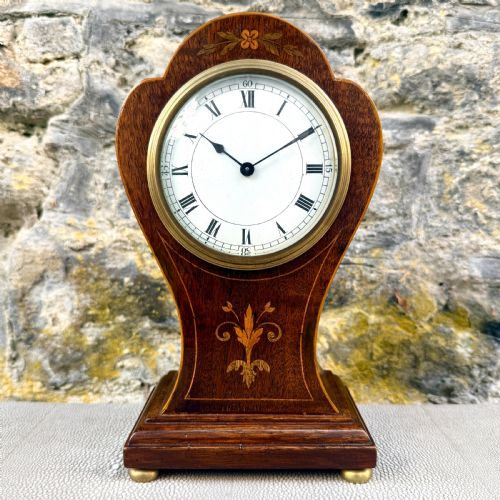
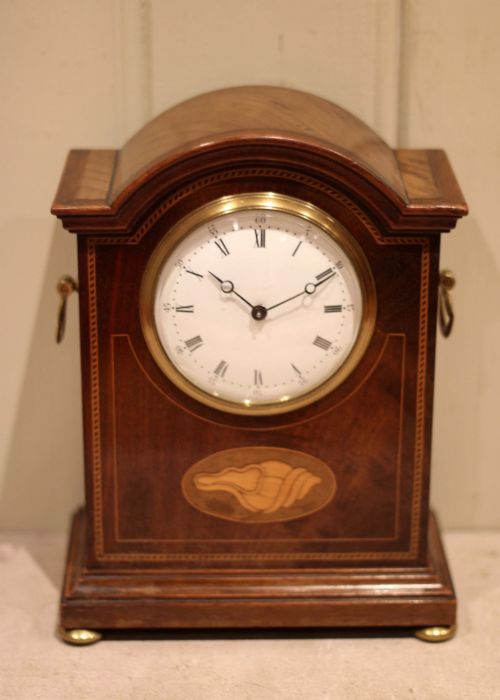
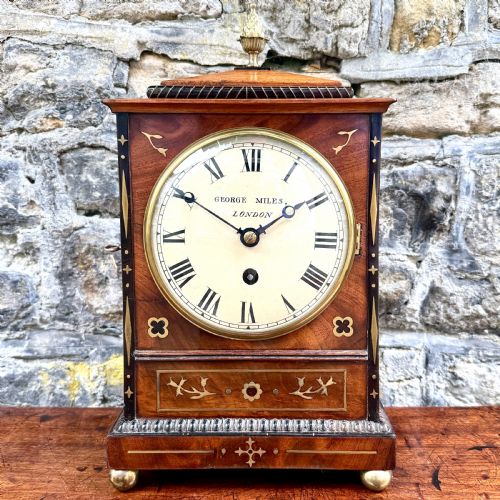
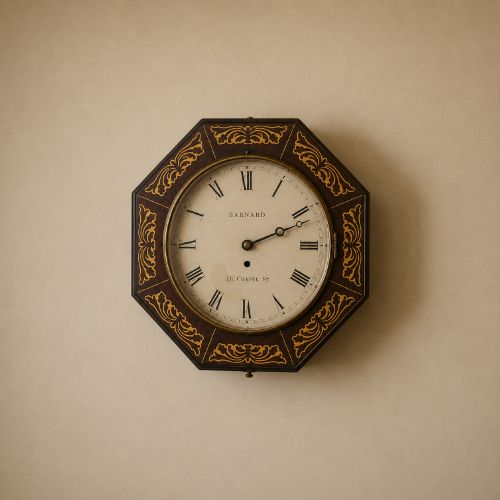
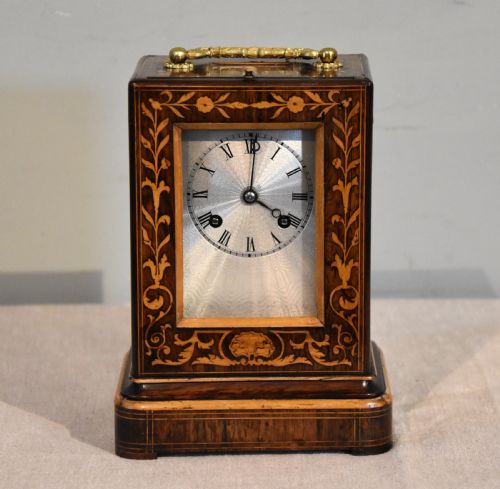
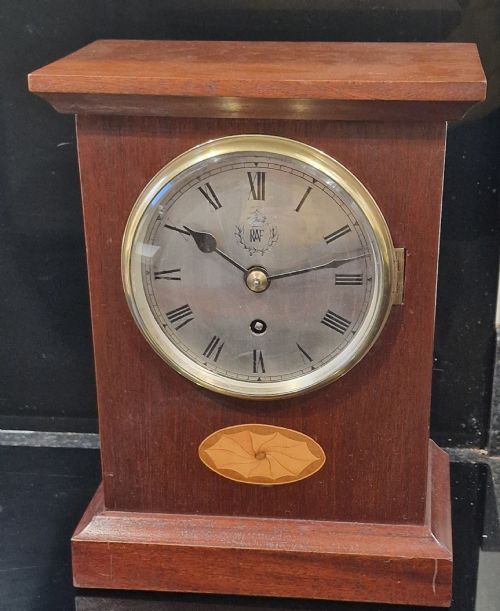
The version you are most likely to meet on this page is an Edwardian or nineteenth-century mahogany or rosewood mantel clock, often featuring delicate stringing or foliate motifs set into the wood face. These pieces originate from both British workshops and French makers, showing considerable variety in silhouette from octagonal wall dials to architectural portico and lancet mantel formats.
Makers ranged from provincial clockmakers in British market towns to prominent London firms and Parisian horologists. Cabinets utilised dense hardwoods to contrast with the bright yellow gleam of brass wire, escutcheons, and ormolu mounts.
Materials and Construction
Cabinet-makers constructed the cases using mahogany, rosewood, satinwood, and ebonised timbers, often over a stable pine or oak carcass. Sections of timber were channelled by hand to receive thin ribbons of brass, sometimes paired with boxwood, lemon wood, or marquetry details.
Dial construction combined cast brass bezels, convex glass, and white enamel or silvered metal chapter rings inscribed with Roman or Arabic numerals. Movements were fitted with mechanical gear trains, utilising fusee or spring-driven mechanisms housed within brass plates.
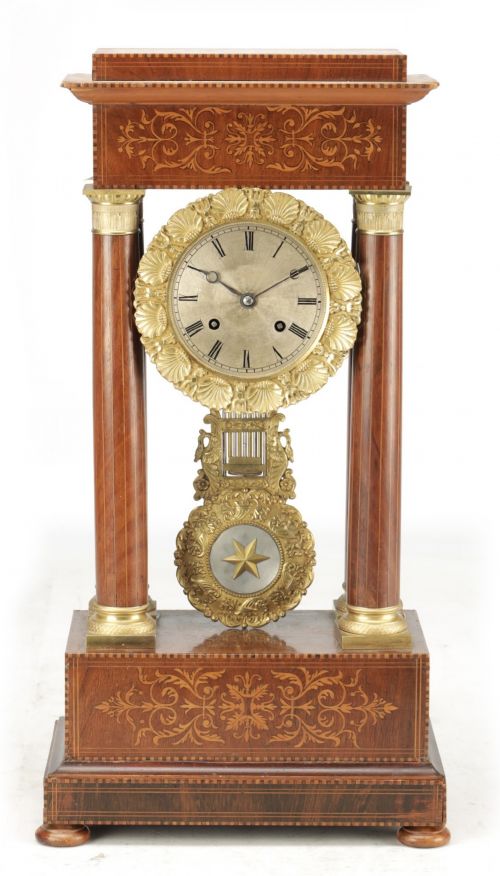
One exceptional portico clock pairs rich rosewood with lemon wood inlay and gleaming ormolu, proving that nineteenth-century time could be kept in style.
Distinctions in Quality
Quality rests in the crispness of the brass inlay work and the selection of figured timber veneers. Superior examples display tightly fitted brass lines flush with the polished wood surface, showing no gaps or filler in the channels.
The refinement of the clock movement and dial furniture further separates standard production from finer work. Finely engraved backplates, robust fusee movements, and heavy cast ormolu mounts indicate workshop production of a higher order.
Barnard·Bush of London·Bryson Edinburgh·John Bull of Bedford·Henry Marc·Hyde of Salisbury·Kleyser of London·Paul Garnier·Haley and Milner·Taylor of London
The Brass Inlay Timepiece Glossary
- Fusee
- A conical pulley used in spring-driven clocks to maintain equal power as the mainspring unwinds. This mechanism helps the clock maintain consistent timekeeping throughout its run.
- Timepiece
- A clock that measures and indicates the time without a striking mechanism for hours or quarters. Such movements focus purely on the escapement and gear train.
- Portico Clock
- A mantel clock styled after neoclassical architecture, featuring vertical columns supporting a central housing. These French designs frequently incorporate rosewood veneers and ormolu details.
- Bracket Clock
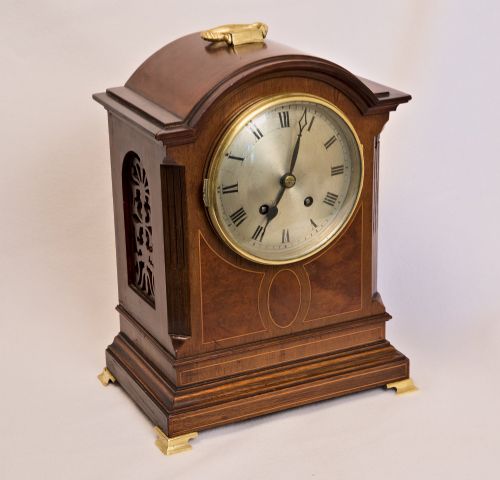
- A portable table or shelf clock historically designed to sit upon a matching wall bracket. They often feature arched or lancet tops and carrying handles.
- Boulle
- A form of marquetry utilising tortoiseshell and brass inlaid in contrasting patterns, named after the cabinet-maker André-Charles Boulle. Pieces utilising this technique display ornate metallic reflection against dark grounds.
Brass Inlay Timepiece: Frequently Asked Questions
What is a fusee movement?
A fusee is a conical pulley connected to the mainspring by a cord or chain. It equalises the declining pull of the spring as it unwinds.
This mechanical arrangement ensures the gear train receives even force, improving the precision of the clock over its running cycle.
Where should I place a mantel clock?
Select a stable, level surface away from direct sunlight, excessive humidity, and temperature fluctuations. Wooden cases and delicate veneers react poorly to extreme environmental changes.
Placing the clock on a solid mantelpiece or sideboard also ensures the escapement beats evenly without interference.
How do I identify a French clock?
French clocks often feature distinct architectural case designs, such as portico columns or Belle Epoque and Art Nouveau styling. Many house drum movements stamped with maker details on the backplate.
Enamel dials and ormolu mounts are also common indicators of nineteenth-century French manufacture.