


Brass Inlay Mirror
A brass inlay mirror brings warmth and striking geometric definition to a wall, combining rich timbers with bright metalwork.
Brass Inlay Mirror
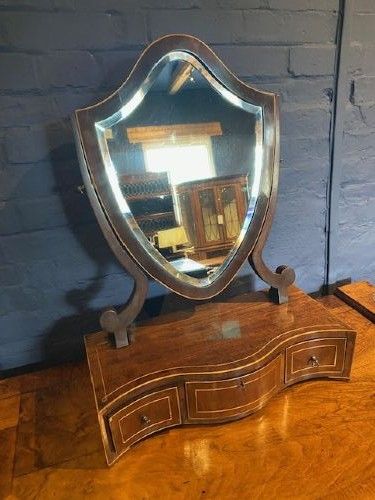
When you search for a brass inlay mirror, you enter a field defined by nineteenth-century craftsmanship, where timber frames are embellished with intricate metal detail. The items appearing here span varied forms, from wall-hung pieces to cheval and dressing mirrors mounted on stands.
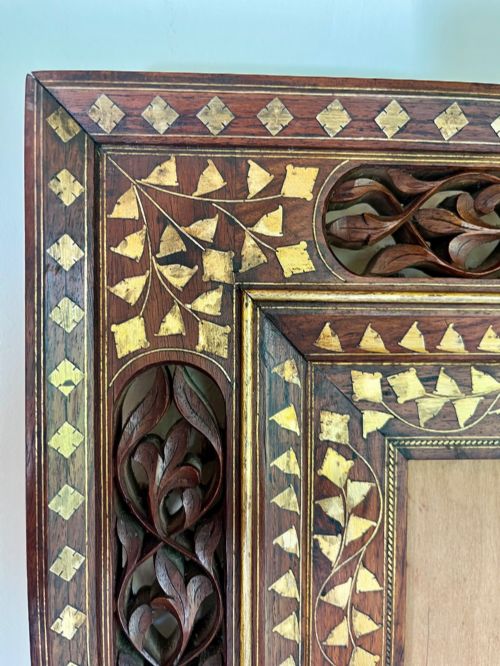
You are most likely to encounter mirrors framed in rosewood, mahogany, or ebonised wood, alongside specialised regional work such as Anglo-Indian Hoshiarpur or Kashmiri productions. These regional examples often feature dense pierced or flat metal ornamentation set flush into the wooden substrate.
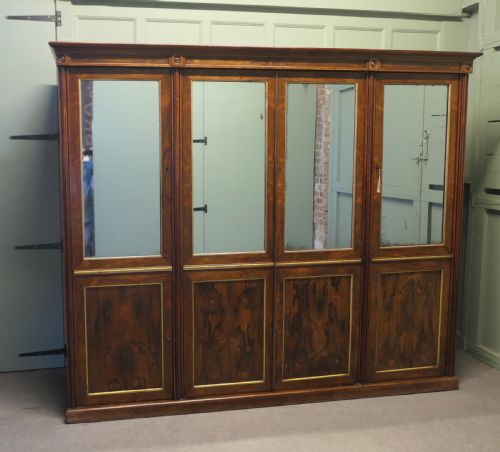
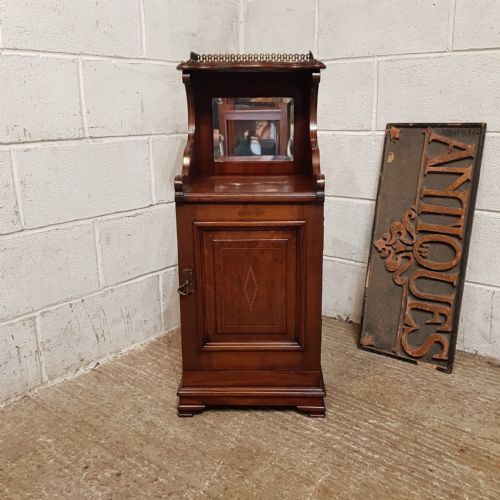
Periods represented stretch across the Regency, Victorian, and Edwardian eras, reflecting changing domestic tastes in interior decoration. Alongside dedicated wall mirrors, the broader selection includes furniture items incorporating mirror glass and brass work, such as chiffoniers and cabinets.
How they were made
Workshops utilised dense hardwoods including rosewood, mahogany, and walnut as the primary foundation for these frames. Craftsmen cut precise channels into the timber surface to receive thin strips or geometric motifs of sheet brass.
Regional makers in centres like Hoshiarpur and Kashmir combined carved wooden panels with intricate wire and sheet inlay. In European workshops, ebonising or black lacquer finishes provided a high-contrast background that made the bright metal detailing stand out sharply.
Some nineteenth-century makers concealed tiny wooden pegs so cleverly within the brass patterns that the frame appeared held together by magic alone.
What varies in quality
The precision of the metal fitting within the timber channel distinguishes standard production from superior examples. In finer pieces, the brass sits completely flush with the surrounding wood surface without gaps or excessive filler.
The complexity and depth of the frame carving also drive the distinction across the range, particularly in Anglo-Indian and French work. Original mirror glass with aged patination and clean timber joinery maintain the integrity of the piece over time.
The Brass Inlay Mirror Glossary
- Anglo-Indian
- Describing items made in the Indian subcontinent during the British colonial period, frequently combining local carving traditions with European furniture forms. These pieces often utilise dense hardwoods and intricate metal embellishment.
- Ebonised
- Wood treated with chemical stains or black finishes to imitate expensive ebony. This technique provides a dark, uniform background that heightens the visual impact of brass inlay.
- Cheval mirror
- A full-length dressing glass suspended on a vertical floor-standing frame, allowing the mirror to swing. They became popular for bedroom use during the Georgian and Victorian periods.
- Hoshiarpur
- A Punjabi town renowned for intricate woodwork and inlay traditions. Items from this region typically feature dense botanical or geometric patterns created with brass wire and sheet.
- Overmantel mirror
- A large mirror designed to hang directly above a fireplace mantelpiece. Nineteenth-century examples often incorporate wooden frames with carved details or metal accents.
Brass Inlay Mirror: Frequently Asked Questions
How do I clean a brass inlay mirror?
Dust the frame gently with a soft, dry cloth to prevent accumulation in the recesses of the metal and wood. Avoid harsh commercial polishes that can discolour the timber or seep beneath the brass edges.
Clean the mirror glass with a mild glass cleaner applied to a cloth rather than sprayed directly onto the surface. This protects the joinery and prevents moisture from damaging the historic backing.
Are these mirrors heavy to hang?
Many nineteenth-century frames utilise dense hardwoods like rosewood or mahogany, which add substantial weight to the overall piece. Proper wall anchors and sturdy fixings are essential for secure installation.
Check the structural stability of the frame joints before hanging any wall-mounted mirror. Professional framing support may be required for larger or more ornate examples.
How do I date a brass inlay mirror?
Examine the timber species, construction methods, and the style of the brass ornamentation to establish a period context. Regency and Victorian examples often feature distinct neoclassical motifs or bold geometric stringing.
Inspect the reverse of the frame and the condition of the mirror glass for signs of age. Hand-bevelled edges, old wood screws, and oxidized backing provide reliable indicators of nineteenth-century origin.
Can I place one in a bathroom?
High humidity and fluctuating temperatures can damage historic woods and cause the brass inlay to lift from its channels. Excessive moisture also accelerates degradation of the original mirror plate.
Dry, interior living spaces or hallways provide a safer environment for preserving these delicate materials. Maintaining stable ambient conditions prevents warping in the timber frame.